
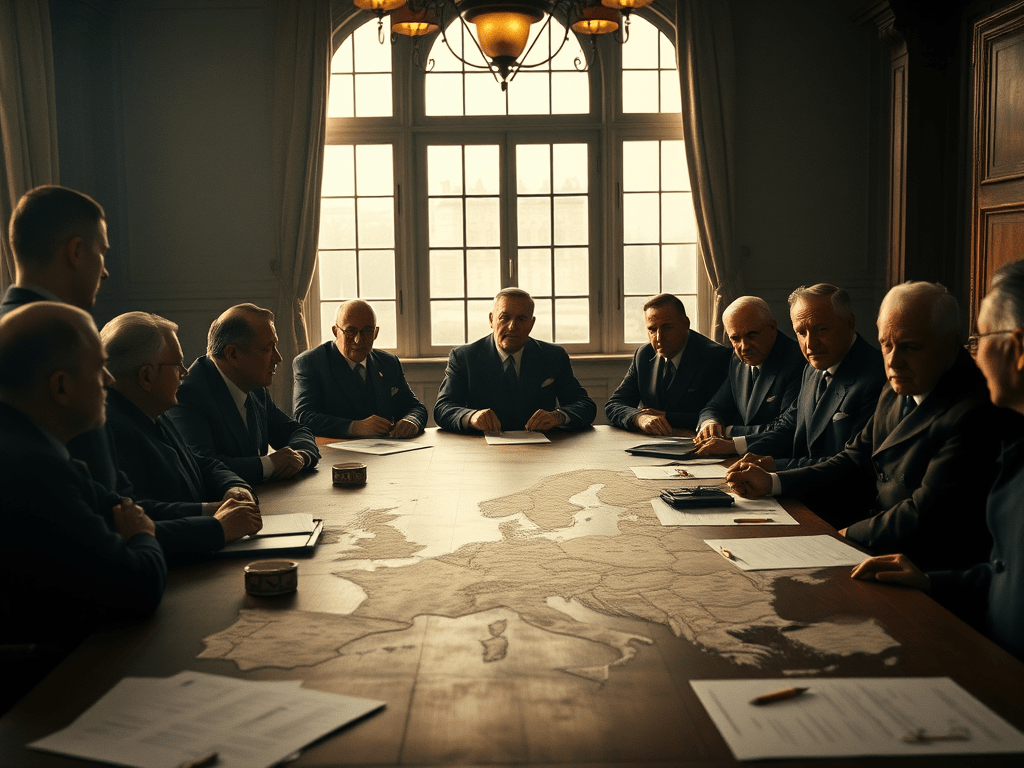
The Munich Agreement of 1938 remains one of the most controversial events in the lead-up to World War II. This blog explores the context of the Munich Agreement. It examines the policy of appeasement, as well as the varying perspectives. Grasping the complexities of pre-war Europe requires understanding this pivotal moment in international relations. It is crucial to comprehend the eventual outbreak of the deadliest conflict in human history.
Follow us on Instagram, Facebook and LinkedIn.
Historical Context
After World War I, Europe faced significant political and economic challenges. The Treaty of Versailles, which ended the war, imposed harsh penalties on Germany, leading to widespread resentment. This discontented atmosphere contributed to Adolf Hitler and the Nazi Party’s ascent. They promised to restore Germany’s former glory. As Hitler began to expand Germany’s borders, European leaders faced the daunting challenge of how to respond to his aggression.
The Policy of Appeasement
Appeasement was a diplomatic strategy aimed at avoiding conflict by making concessions to an aggressive power. In the years before the Munich Agreement, many European leaders believed they could prevent another devastating war. They thought satisfying Hitler’s demands would help. They thought these concessions might maintain peace in Europe. British Prime Minister Neville Chamberlain was particularly committed to this belief. This belief was rooted in the desire to maintain peace in Europe. People especially felt this way after the horrors of World War I.
Key Events Leading to the Munich Agreement
- Remilitarization of the Rhineland (1936): Hitler violated the Treaty of Versailles by sending troops into the Rhineland, a demilitarized zone. The lack of military response from France or Britain encouraged Hitler’s ambitions.
- Annexation of Austria (Anschluss, 1938): In March 1938, Hitler successfully annexed Austria without facing any military opposition, further emboldening him.
- Sudetenland Crisis (1938): The Sudetenland was a region of Czechoslovakia with a significant ethnic German population. It became the next target for Hitler. The Nazis claimed they were protecting ethnic Germans from persecution.
The Munich Agreement
On September 29, 1938, leaders from Britain, France, Germany and Italy met in Munich to discuss the Sudetenland issue. Czechoslovakia was not invited to the conference, which highlighted the disregard for its sovereignty. The agreement allowed Hitler to annex the Sudetenland in exchange for a promise of no further territorial expansion in Europe.
Key Figures Involved
- Neville Chamberlain: The British Prime Minister, who famously declared that the agreement would bring “peace for our time.”
- Édouard Daladier: The French Premier, who supported appeasement in hopes of maintaining stability.
- Adolf Hitler: The German Führer, whose aggressive tactics manipulated the situation to his advantage.
- Benito Mussolini: The Italian dictator, who played a role in mediating the agreement.
Reactions and Consequences
The Munich Agreement was met with mixed reactions. Many viewed it as a diplomatic triumph that had averted war. However, critics, including prominent figures like Winston Churchill, condemned it as a cowardly surrender to aggression.
Short-Term Consequences
- Immediate Expansion: Following the agreement, Hitler quickly occupied the Sudetenland, violating the terms of the Munich Agreement almost immediately.
- Erosion of Trust: The agreement undermined trust in the British and French governments and encouraged further Nazi aggression.
Long-Term Consequences
- Catalyst for War: The failure to confront Hitler emboldened him, leading to further territorial expansion. By March 1939, Hitler occupied the rest of Czechoslovakia.
- Shift in Policy: The Munich Agreement ultimately led to a re-evaluation of appeasement. When Germany invaded Poland in September 1939, the failure of appeasement was clear. Britain and France declared war on Germany.
Historical Debate
The Munich Agreement remains a subject of intense debate among historians. Some argue it was a necessary evil to buy time for military preparations. Others see it as a clear failure that emboldened a tyrant. The discussion highlights the complexities of international relations and the difficulties of predicting the consequences of appeasement.
Conclusion
The Munich Agreement and the policy of appeasement illustrate the challenges faced by European leaders in the late 1930s. The wish for peace was genuine. However, conceding to Hitler’s demands ultimately led to the unraveling of stability in Europe. Understanding this pivotal moment provides essential insights into the failures of diplomacy. It also shows the dangerous allure of appeasement in the face of aggression.
How Apollo Scholars Can Help
At Apollo Scholars, we understand the importance of comprehending historical events like the Munich Agreement and the policy of appeasement. We offer tailored support for GCSE and A-Level history students, helping you grasp complex concepts and develop critical analytical skills. Through online sessions, we aim to enhance your understanding of historical events. In-person tutoring also prepares you for your examinations effectively.
Book Your Session Today!
If you want to deepen your understanding of the Munich Agreement, book your tutoring session with Apollo Scholars today! You can choose between online or in-person sessions.
Book your online or in-person History tutoring session here.
Unlock our exclusive content in our Mission Control hub.
Find additional resources on History here.


Leave a comment