
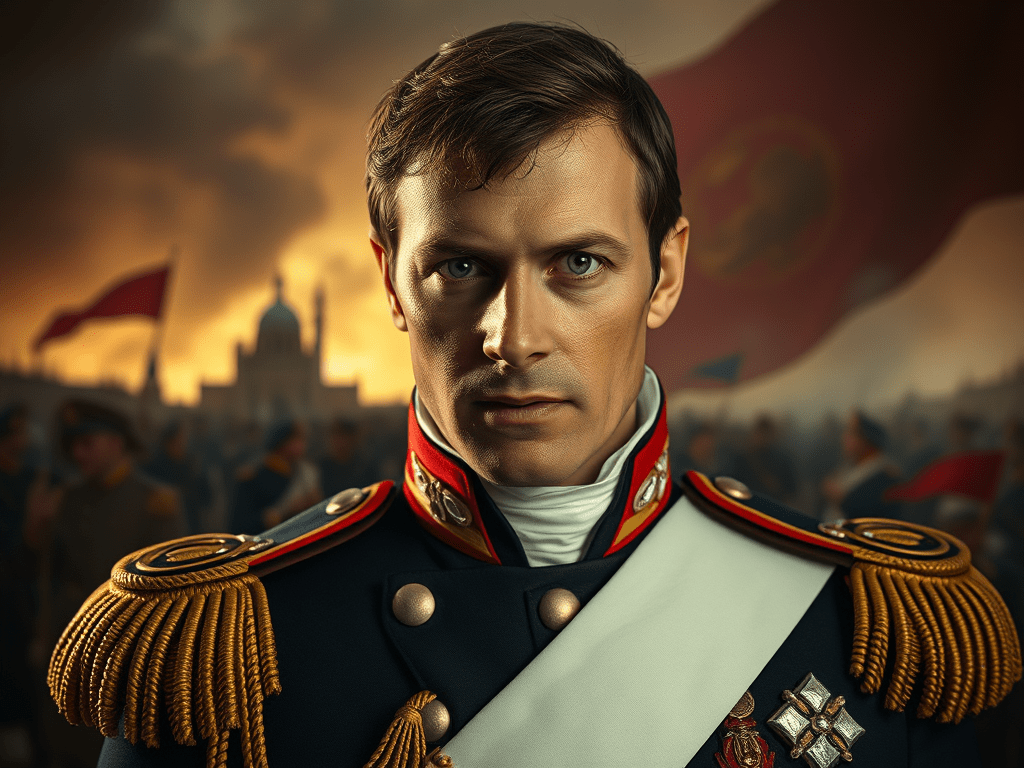
Napoleon Bonaparte is one of history’s most famous military commanders. He was a significant political leader, and his impact on Europe was profound. It was also far-reaching. Known for his sharp intellect, bold strategies and insatiable ambition, Napoleon rose from relative obscurity to become Emperor of France. He rose to power during the tumultuous events of the French Revolution. A series of victories in the battlefield also shaped his ascent. Additionally, he seized opportunities in moments of chaos.
In this blog, we will explore Napoleon’s early life. We will also examine his ascent through the ranks of the French military. Furthermore, we will discuss the key events that led to him seizing control of France. Along the way, we’ll see how this Corsican-born man rose to the highest political office in France. He forever changed the course of European history.
Follow us on Instagram, Facebook and LinkedIn.
FAQs: Who Was Napoleon Bonaparte?
To gain a better understanding of Napoleon Bonaparte’s life, achievements and influence, we’ve answered some common questions. These questions are frequently asked by students about this fascinating historical figure. These FAQs provide an accessible overview of key aspects of Napoleon’s life for GCSE and A-level history students.
What were Napoleon Bonaparte’s early life and background like?
Napoleon Bonaparte was born on the island of Corsica in 1769, a year after it became a French territory. Although born into a family of minor nobility, his early life was marked by the hardships of French rule. Napoleon attended military schools in mainland France, where he developed a strong passion for military strategy and leadership. His rise to power began after the French Revolution, where he quickly proved his military genius.
What made Napoleon so successful as a military leader?
Napoleon’s success came from his innovative military tactics, including rapid movements, decisive battles and the efficient use of artillery. He reorganised the French army, allowing it to move quickly and strike before enemies could gather their full strength. His ability to inspire and motivate his soldiers also contributed to his many victories on the battlefield.
What was the signifcance of the Napoleonic Code?
The Napoleonic Code, introduced in 1804, was one of Napoleon’s lasting legacies. It simplified and codified French law, promoting principles like equality before the law, the protection of property and religious freedom. This legal framework influenced France. It also affected many European and Latin American countries. It helped shape modern legal systems around the world.
Why did Napoleon’s empire ultimately fail?
Napoleon’s empire collapsed for several reasons. His decision to invade Russia in 1812 was a disaster, leading to the destruction of much of his army. Additionally, his aggressive expansion across Europe made him many enemies. A coalition of European powers, including Britain, Prussia, Austria and Russia, eventually united to defeat him. His defeat at the Battle of Waterloo in 1815 marked the end of his reign.
What impact did Napoleon have on Europe after his fall?
Although Napoleon was exiled and his empire dissolved, his influence persisted. His reforms in law, administration and education reshaped European society, and his military tactics were studied for generations. The Congress of Vienna was held after Napoleon’s defeat. It aimed to restore order to Europe. However, the ideas of nationalism and liberalism that Napoleon had spread continued to shape European politics for decades.
Early Life of Napoleon Bonaparte
Napoleon Bonaparte was born on August 15, 1769, on the Mediterranean island of Corsica. At the time, Corsica had recently been transferred from Genoa to France, and Napoleon’s family were of Italian heritage. His father, Carlo Buonaparte, was a minor noble and an attorney. He aligned himself with French rulers. This alignment enabled his children to receive a French education.
Napoleon’s upbringing was shaped by his sense of being an outsider. In Corsica, Napoleon was aware of his family’s modest standing. He resented the French occupation of his homeland. He felt alienated. His strong ambition and sharp intellect pushed him to pursue a military career. This career would eventually provide a path to greatness.
At the age of nine, Napoleon went to mainland France. He studied at a military school in Brienne and later at the prestigious École Militaire in Paris. He excelled in subjects like mathematics and artillery, setting the stage for his later career as a brilliant strategist. However, his early life was marked by isolation. His Corsican accent and background partly caused this, distinguishing him from his aristocratic peers.
Napoleon’s Early Military Career
Napoleon’s military career began during one of the most volatile periods in European history—the French Revolution. The revolution started in 1789. It radically transformed the French political landscape. It overthrew the monarchy and established the First French Republic. It was during this period of upheaval that Napoleon saw his first opportunities for advancement.
Napoleon’s first taste of military glory came in 1793. It happened during the Siege of Toulon, a crucial port city in the south of France. This city had been taken over by Royalist forces aligned with the British. As a young artillery officer, Napoleon played a key role in recapturing the city, demonstrating his tactical brilliance and decisiveness. His performance at Toulon earned him a promotion to brigadier general at the age of 24. This was a remarkable achievement for someone so young.
Following his success at Toulon, Napoleon’s rise continued. In 1795, he famously saved the French government from a Royalist uprising in Paris. He organised a defence that repelled the attackers. This action further bolstered his reputation as a capable and loyal commander. Soon, he was given command of the French Army of Italy. There, he achieved a series of impressive victories that would make him a national hero.
The Italian Campaign: Cementing His Reputation
Napoleon’s command of the French Army of Italy marked a turning point in his career. Napoleon was just 26 years old. He led his forces against the Austrian Empire and its allies in the Italian Peninsula. He used bold tactics and innovative strategies. These often involved rapid movements and surprise attacks. This approach led to a string of victories. These victories reshaped the balance of power in Europe.
One of his most famous victories came at the Battle of Rivoli in 1797. During this battle, Napoleon’s forces decisively defeated the Austrians. This victory secured French control of northern Italy. These victories expanded French territory. They also cemented Napoleon’s reputation as one of the most brilliant military minds of his time. He could motivate his troops effectively. He also out-thought his opponents on the battlefield. This combination earned him widespread admiration in France and across Europe.
Napoleon’s success in Italy also had political consequences back home. He became a symbol of the new, revolutionary France. He embodied both the ideals of the Revolution and the military prowess that could secure its future. However, as his fame grew, so did his ambitions.
The Egyptian Campaign and Napoleon’s Return to France
Following his victories in Italy, Napoleon was tasked with leading a military expedition to Egypt in 1798. The goal was to disrupt British trade routes to India and expand French influence in the region. Napoleon’s campaign in Egypt began with successes, including the famous Battle of the Pyramids. However, it ultimately ended in failure when the British destroyed his fleet at the Battle of the Nile.
Despite the military setbacks, Napoleon’s time in Egypt furthered his reputation as a leader with grand ambitions. During this campaign, he began to see himself as more than just a military commander. He had political aspirations that would soon come to fruition.
In 1799, with France facing political instability and military defeats in Europe, Napoleon returned to Paris. The French government, known as the Directory, was deeply unpopular and corrupt, and the situation was ripe for change. Sensing an opportunity, Napoleon quickly positioned himself as the saviour of the nation.
The Coup of 18 Brumaire: Napoleon Seizes Power
Napoleon’s return to France reached its peak with the Coup of 18 Brumaire on November 9, 1799. This event was named after the date in the French Revolutionary calendar. Napoleon, supported by key political figures and military leaders, overthrew the Directory. He established the Consulate, a new government that concentrated power in his hands.
As First Consul, Napoleon effectively became the ruler of France. He quickly consolidated his power. He used military force, political savvy and popular support to solidify his control over the country. One of his first actions as leader was to stabilise the French economy. The economy had been ravaged by years of war and political chaos. He introduced financial reforms, including the establishment of the Banque de France, which helped restore confidence in the French currency.
Napoleon also undertook legal reforms that would have a lasting impact on France and the world. His most famous legal achievement was the creation of the Napoleonic Code. It is a comprehensive set of laws that laid the foundation for modern legal systems in many countries. The Napoleonic Code emphasised equality before the law, property rights and civil liberties. These were principles that reflected the ideals of the French Revolution. They also reinforced Napoleon’s authority.
Napoleon’s Coronation as Emperor
Although Napoleon had consolidated his power as First Consul, he wasn’t content with that title. In 1804, after a referendum that showed overwhelming public support for his leadership, Napoleon declared himself Emperor of the French. The coronation ceremony took place at Notre-Dame Cathedral in Paris, with Pope Pius VII in attendance. In a symbolic gesture, Napoleon famously placed the crown on his own head. This act signaled that his authority came from his achievements. It did not come from divine right.
As Emperor, Napoleon expanded French influence across Europe. He did this through a series of military campaigns known as the Napoleonic Wars. His military genius and aggressive tactics allowed him to dominate much of the continent. He defeated powerful enemies like Austria, Prussia and Russia. He achieved victories in battles such as Austerlitz and Jena. By 1810, Napoleon controlled vast territories, and France was at the height of its power.
Conclusion: The Rise of Napoleon Bonaparte
Napoleon Bonaparte’s rise to power was a story of ambition, intelligence and seizing the right opportunities. Napoleon started with humble beginnings in Corsica. He advanced to command the French Army. Ultimately, he was crowned Emperor. Napoleon’s journey to the top was nothing short of remarkable. His military successes, political astuteness and legal reforms reshaped France and Europe in ways that are still felt today.
However, Napoleon’s rise was marked by his increasing ambition. His desire for control would eventually lead to his downfall. For a time, he stood as one of the most powerful figures in the world. He was a leader who embodied the spirit of the French Revolution. He also shaped the course of history through his own vision.
In the next blog of this series, we will explore Napoleon’s most significant military campaigns. We will see how these campaigns solidified his status as one of the greatest commanders in history.
How Apollo Scholars Can Help You Master Napoleon Bonaparte’s History
Understanding Napoleon Bonaparte’s life, military campaigns and political legacy is essential for GCSE and A-level history students. Napoleon’s influence on European history spans multiple topics. These range from the French Revolution to the Napoleonic Wars. Therefore, it is crucial to grasp key themes and concepts.
Apollo Scholars offers expert tutoring services. These services help students dive deeper into these complex topics. They also assist students in mastering the content needed to excel in history exams. We are experienced in explaining the intricate details of Napoleon’s rise to power and his lasting impact on European politics.
Here’s how Apollo Scholars can support your learning:
- Personalised Tuition: Whether you’re struggling with specific aspects of Napoleon’s campaigns, we can help. We can assist if you need a broader understanding of 19th-century European history.
- Exam Preparation: We provide expert guidance on how to approach GCSE and A-level history questions on Napoleon. This includes essay writing tips, source analysis and structuring arguments.
- Engaging Sessions: We make history come alive by connecting Napoleon’s story to broader historical themes. This approach helps students understand not only what happened. They also learn why it matters.
- Online and Local Tutoring: UK-wide online tuition is available. 1:1 in-person tuition is available in local areas like Addlestone, Byfleet, Chertsey, Cobham and more.
Let Apollo Scholars help you become an expert on Napoleon and his legacy. This will ensure you’re fully prepared to tackle your history exams with confidence.
Book your online or in-person History tutoring session here.
Unlock our exclusive content in our Mission Control hub.
Find additional history resources here.

Leave a comment