

John Dillinger remains one of America’s most notorious criminals, synonymous with the reckless lawlessness of the Great Depression. His life of crime reached its height with daring bank robberies and audacious escapes from law enforcement. These acts captured the public’s imagination. They transformed him into a folk hero. This blog examines Dillinger’s rise to notoriety. It discusses his dramatic encounters with the FBI, as well as the events that led to his death.
Follow us on Instagram, Facebook and LinkedIn.
Book your online or in-person tuition session here.
Unlock our exclusive resources in our Mission Control hub.
Frequently Asked Questions About John Dillinger
Who was John Dillinger?
John Dillinger was an American bank robber and gangster. He was active during the Great Depression. He was known for his daring heists and ability to evade law enforcement.
What made John Dillinger famous?
Dillinger became famous for his high-profile bank robberies, media sensationalism, and his ability to elude capture by law enforcement.
How did John Dillinger die?
FBI agents shot and killed Dillinger on July 22, 1934. This happened outside the Biograph Theatre in Chicago during a confrontation.
Why did people view Dillinger as a hero?
Many viewed Dillinger as a folk hero because he defied banks and law enforcement during the Great Depression. They interpreted his actions as a challenge to the established system.
What impact did Dillinger have on law enforcement?
Dillinger’s crime spree led to increased federal involvement in law enforcement. It prompted the FBI to develop more sophisticated investigative techniques.
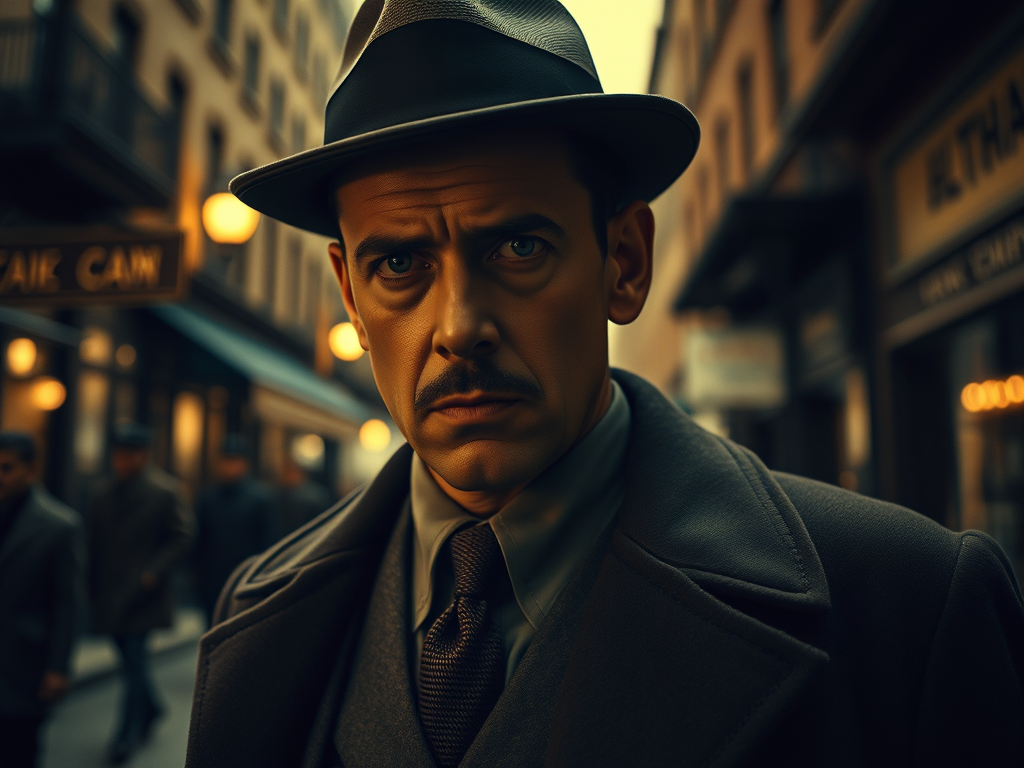
Early Life: The Foundations of a Criminal
John Herbert Dillinger was born on June 22, 1903, in Indianapolis, Indiana. He was raised in a working-class family. His early life faced several challenges. One major challenge was his parents’ divorce when he was just three years old. Dillinger’s father struggled to provide for the family, and his mother remarried, creating a tense household environment.
As a youth, Dillinger displayed rebellious tendencies, which led him to drop out of school at the age of 16. He began a life of petty crime, initially engaging in minor thefts and eventually graduating to more serious offenses. His criminal behaviour escalated during his late teens, and he was arrested for the first time in 1924 for robbery.
Dillinger’s early experiences with crime set the stage for his future. The socio-economic turmoil of the Great Depression exacerbated his path to becoming an infamous outlaw. The struggles of the era provided him with both motive and opportunity to pursue a life of crime.

Rise to Infamy: The Bank Heists
Dillinger’s profile began to rise significantly in the early 1930s. He formed a gang that committed a series of daring bank robberies across the Midwest. The Great Depression had left many Americans desperate, and Dillinger capitalised on this climate of unrest. He gained notoriety for his brazen tactics, often using violence and firearms to intimidate bank employees and law enforcement officers.
In 1933, Dillinger and his gang robbed the Central National Bank in Greencastle, Indiana. They escaped with over $75,000. This amount is equivalent to nearly $1.5 million today. This heist marked the beginning of a series of audacious robberies that would see Dillinger become a household name. The media sensationalised his exploits. They portrayed him as a Robin Hood figure. He stole from the banks while many Americans suffered from financial ruin.
One of Dillinger’s most infamous robberies occurred in June 1934 at the First National Bank in East Chicago, Indiana. The gang stormed in, firing their weapons and taking hostages. The robbery was meticulously planned, showcasing Dillinger’s strategic mind and his ability to execute high-stakes heists with military precision. The gang’s escape was swift, further solidifying Dillinger’s reputation as a criminal mastermind.

The FBI Takes Notice
As Dillinger’s infamy grew, so did the determination of law enforcement to capture him. The Federal Bureau of Investigation (FBI), led by J. Edgar Hoover, made Dillinger a top priority. During what would become known as the “Public Enemy Era”, the FBI employed new tactics in their hunt for Dillinger. They used informants and increased surveillance. Additionally, they launched an extensive manhunt that spanned multiple states.
Dillinger’s cunning and ability to evade capture became legendary. He was known to change his appearance frequently, employing disguises that helped him avoid detection. In one notable escape, Dillinger fashioned a wooden gun while in jail. He tricked guards into believing he was armed and made a daring getaway.
Despite his clever tactics, Dillinger’s luck would soon run out. The FBI’s relentless pursuit led them to track him to Chicago in mid-1934. He was living with Anna Sage. She was a Romanian prostitute who would play a crucial role in his downfall.

The Dramatic Final Showdown
On July 22, 1934, the FBI received a tip-off from Sage about Dillinger’s whereabouts. Seeking leniency for her own legal troubles, she informed agents that Dillinger was at the Biograph Theatre in Chicago. That night, the FBI set up surveillance outside the theatre, waiting for their most wanted man to exit.
As Dillinger left the theatre, he was approached by FBI agents. Sensing danger, he attempted to flee, but agents quickly surrounded him. In the chaos that ensued, gunfire erupted. Dillinger was shot multiple times by the agents, suffering fatal wounds. He collapsed on the sidewalk, dying at the young age of 31.
The dramatic showdown was covered extensively by the media, further cementing Dillinger’s status as a legendary figure in American history. His death marked the end of a tumultuous chapter in U.S. criminal history, as he had become a symbol of the lawlessness that plagued the country during the Great Depression.
The Legacy of John Dillinger
Dillinger’s life and death have had a lasting impact on American culture and criminal lore. His story has been romanticised in countless books, films and documentaries, transforming him into a cultural icon. Dillinger embodied the allure of the outlaw lifestyle.
His criminal exploits led to significant changes in law enforcement practices. The FBI’s hunt for Dillinger marked the agency’s evolution into a more modern investigative body. They employed advanced techniques and strategies to track and apprehend criminals. Dillinger’s notoriety led to discussions about how effective law enforcement was. It also highlighted the complexities of crime during a time of economic despair.
Conclusion: The Enduring Legend of John Dillinger
John Dillinger’s life story is a gripping tale of crime, charisma and conflict. It encapsulates the turbulent era of the Great Depression. His dramatic final showdown with the FBI is a powerful reminder of law enforcement’s battle. It is a battle with those who choose a life outside the law. It highlights the struggle between law enforcement and those who defy it. Dillinger’s legacy endures, captivating audiences and inspiring discussions about crime, justice and the human condition.
At Apollo Scholars, we are dedicated to making history engaging and relevant, offering expert tutoring in history and other subjects. If you’re interested in diving deeper into historical figures like John Dillinger, contact us today. If you need academic support in your studies, reach out to learn more. Our tutoring services are available in Addlestone, Byfleet, Chertsey, Cobham, Egham and Esher. We also cover Hersham, Ottershaw, Oxshott, Shepperton and Sunbury-on-Thames. Additionally, we offer tutoring in Virginia Water, Walton-on-Thames, West Byfleet, Weybridge and Woking.

Leave a comment