
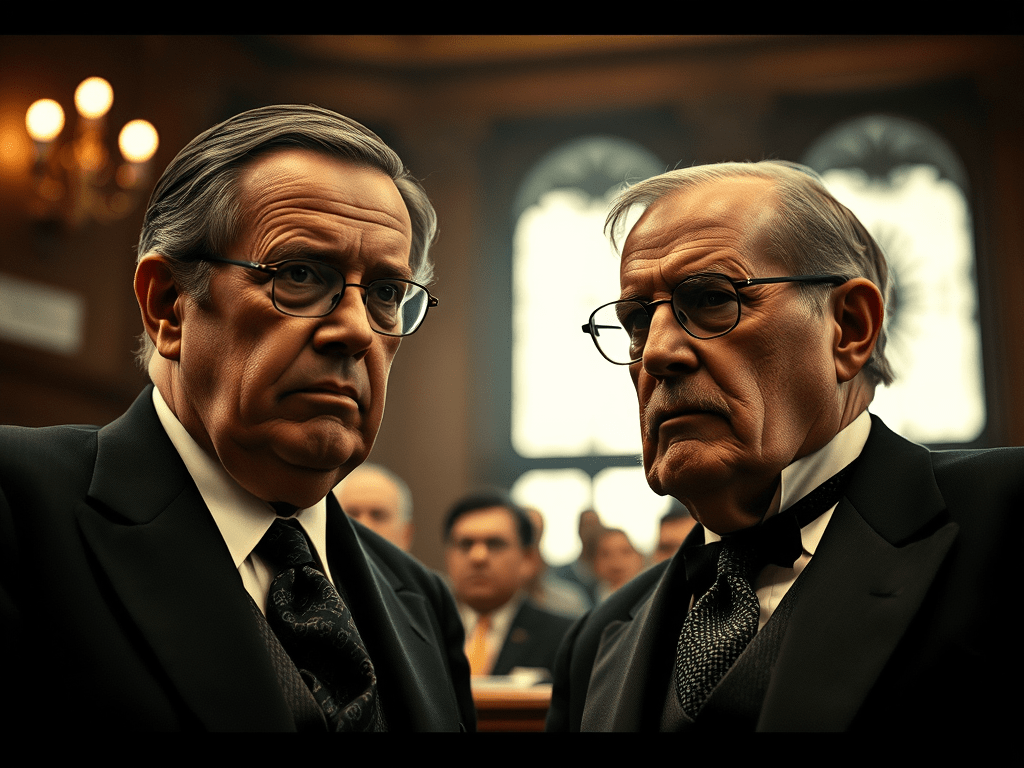
Today marks 100 years since the start of the infamous Scopes Trial of 1925. This was a moment in American history that continues to resonate today. Known as the “Monkey Trial,” the case focused on the teaching of evolution in schools. It highlighted the tension between modern science and religious beliefs.
Follow us on Instagram, Facebook and LinkedIn.
Frequently Asked Questions
What was the Scopes Trial about?
The Scopes Trial focused on the teaching of evolution in public schools. It questioned whether this violated laws that mandated teaching Biblical creationism.
Who were the main figures in the Scopes Trial?
The trial featured William Jennings Bryan, who was for the prosecution. Clarence Darrow was for the defence. John Scopes was the defendant.
What was the outcome of the Scopes Trial?
John Scopes was found guilty of teaching evolution and fined, though the verdict was later overturned. However, the trial had a lasting impact on education and the law.
Why is the Scopes Trial important in history?
The trial highlighted the conflict between science and religion in the public sphere. It paved the way for future discussions on academic freedom and educational standards.
What impact did the Scopes Trial have on education?
Over time, the trial helped shift public opinion. This led to the eventual acceptance of evolution in American science education. It also highlighted the importance of free thought in schools.
The Background: Evolution vs. Religion
In the 1920s, the United States was deeply divided on issues of science and religion. This division was particularly pronounced with regard to Charles Darwin’s theory of evolution. Fundamentalist Christian groups strongly opposed the teaching of evolution in schools, arguing that it contradicted the Biblical account of creation. Tennessee, like several other states at the time, passed laws banning the teaching of evolution in public schools. It was against this backdrop that the Scopes Trial unfolded.
Who Was John Scopes?
John T. Scopes, a young high school teacher in Dayton, Tennessee, became the central figure in this trial. Scopes was charged with violating Tennessee’s Butler Act. This law made it illegal to teach any theory. It denied the story of divine creation as described in the Bible. The American Civil Liberties Union (ACLU) saw this as an opportunity to challenge the law. Scopes agreed to be the defendant in a test case. This would put the controversial law on trial.
The Trial: A National Sensation
The trial, which took place in the summer of 1925, quickly became a media spectacle. It attracted widespread attention, with journalists flocking to the small town of Dayton to cover the proceedings. The trial featured two of the most famous figures of the time. William Jennings Bryan was a three-time presidential candidate and a staunch defender of Biblical literalism. Clarence Darrow was a renowned defence attorney and advocate for free thought.
Darrow’s defence argued that banning the teaching of evolution was a violation of free speech and intellectual freedom. Bryan, on the other hand, maintained that teaching evolution undermined moral values and faith in God. The courtroom was packed daily, with the trial becoming a public drama broadcast over the radio to a nationwide audience.
The Outcome: Scopes Found Guilty
In the end, John Scopes was found guilty and fined $100, but the trial’s importance went far beyond the verdict. It was later overturned on a technicality, but the debates sparked by the trial carried on for decades. The Scopes Trial was significant because it exposed deep cultural divides in America—divides that revolved around science, religion and education.
The Legacy: Shaping Science and Education
Although Scopes lost the trial, the long-term impact of the case was a victory for scientific thought. Over the years, the strict laws banning the teaching of evolution were slowly repealed or ignored. The trial also raised important questions about academic freedom. It questioned the role of religion in public education. These issues remain relevant to this day.
The Scopes Trial became a symbol of the struggle between progress and tradition, between modernity and religious conservatism. Even now, 100 years later, debates about the role of science in schools persist. Discussions on religion’s place in education continue across the globe.
Why Does This Matter for History Students?
The Scopes Trial is an excellent case study for GCSE and A-Level history students. It demonstrates how legal battles can reflect wider societal tensions. It also highlights how events can shape education, law and public attitudes over the long term. Understanding the Scopes Trial provides a window into the broader cultural conflicts of the early 20th century. It helps students see how those debates still resonate today.
The Continuing Debate: Evolution in Schools Today
The legacy of the Scopes Trial extends well into the 21st century. Debates around science education are contentious in some parts of the United States and the wider world. This is particularly true for teaching evolution. The Scopes Trial serves as a reminder. It highlights the ongoing challenges in balancing religious beliefs with scientific understanding in a diverse society.
How Apollo Scholars Can Help
Book your online or in-person History tutoring session with Apollo Scholars here.
Unlock our exclusive content in our Mission Control hub.
Find additional resources on historical topics here.

Leave a comment