
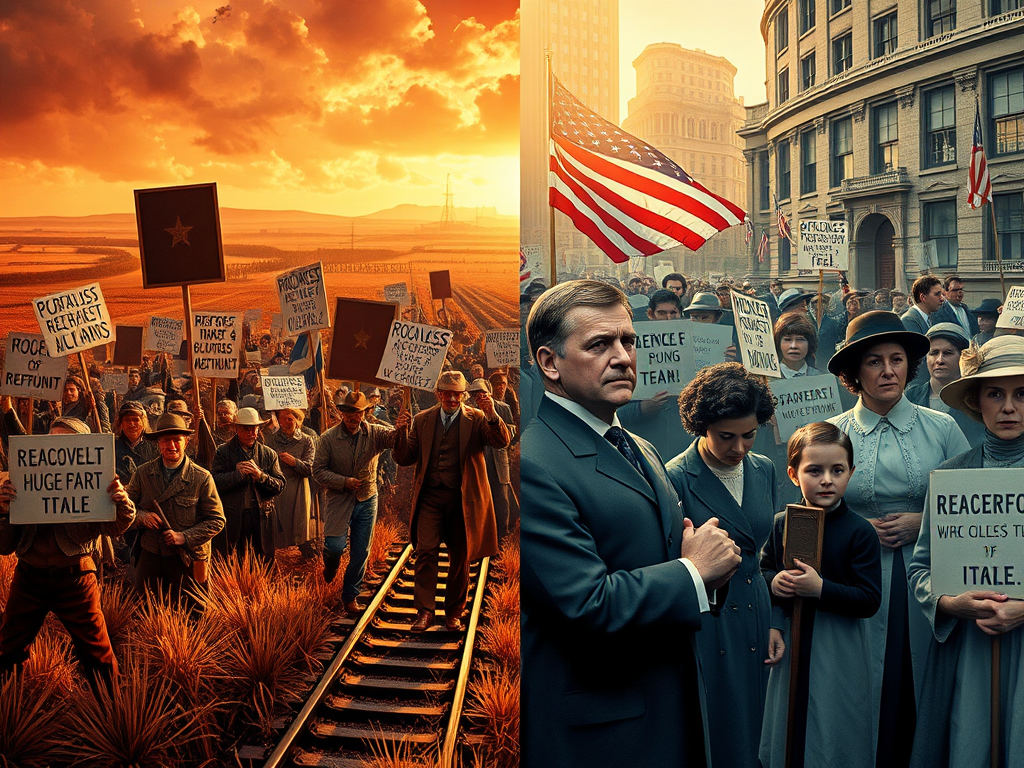
As the 19th century drew to a close, America faced mounting social and political challenges created by rapid industrialisation, political corruption and deepening inequalities. Out of this unrest, powerful reform movements emerged, Populism and Progressivism, which sought to give a voice to ordinary citizens, curb the power of monopolies, and make government more responsive and accountable. For students of American history, understanding these movements is essential to grasping how the nation began to address the contradictions of the Gilded Age and move toward a more modern political and social landscape.
FAQs: Understanding Populism, Progressivism and Reform in America
What time period does this era cover?
This period generaly spans the late 19th century and early 20th centuries, when the Populist and Progressive movements sought political, social and economic reforms.
What was the Populist movement about?
Populism emerged mainly among farmers and rural communities, advocating for economic fairness, regulation of big business and political reforms to empower ordinary citizens.
What were the key goals of the Progressive movement?
Progressives pushed for reforms to tackle corruption, improve working conditions, regulate monopolies, expand democracy and address social injustices in rapidly industrialising cities.
Who were some notable leaders of these movements?
Key figures included William Jennings Bryan (Populist), Theodore Roosevelt, and Jane Addams (Progressive), among others advocating reform and social justice.
How did these movements impact American society?
They led to significant reforms, including antitrust laws, labour protections, women’s suffrage and greater government oversight, shaping the modern role of government in society.
Subscribe to get access
Read more of this content when you subscribe today.


Leave a comment