
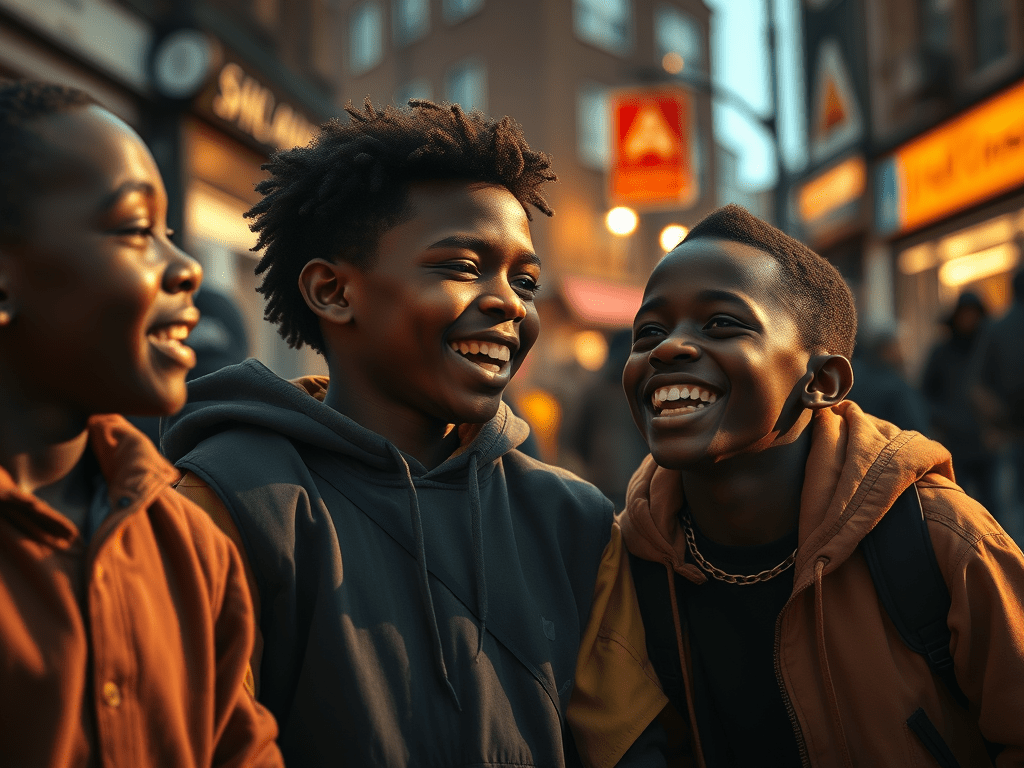
Caleb Femi’s poem Thirteen is a powerful and multi-layered exploration of what it means to be on the edge of adolescence, caught between the innocence of childhood and the harsh realities of growing up. It stands out because of its raw, modern voice and its focus on the experiences of minorities in inner-city London.
For GCSE students, this poem is not only a fascinating piece of modern literature but also an opportunity to explore themes of youth, identity, violence, memory and belonging through sharp imagery, structure and voice.
Context
Caleb Femi is a poet, photographer and filmmaker who grew up in Peckham, South London. As the first Young People’s Laureate for London, his work often shines a light on the lives of young Black men in urban communities. Femi uses his personal experiences and observations to highlight the joys, struggles and vulnerabilities of youth.
Thirteen is particularly significant because it captures the transitional period of early adolescence: a moment in life that feels both exciting and dangerous, free yet fragile. The poem gives readers a window into an age often misunderstood, where children face the pressures of adulthood far too soon.
Overview and Summary
The poem presents a vivid, fragmented series of images that reflect what it feels like to be thirteen years old. It celebrates the laughter, freedom and camaraderie of adolescence while also hinting at danger, violence and the loss of innocence.
Rather than offering a neat narrative, Femi layers short, striking impressions and moments of light and dark. This mirrors the overwhelming and contradictory emotions of being thirteen: the fun, the fear and the awareness of growing responsibility.
At its heart, Thirteen is a poem about how environment and society shape young lives, and how fragile the line is between innocence and experience.
Key Themes in Caleb Femi’s Thirteen
1. Youth and Innocence
The poem recalls the joy and energy of adolescence, using bright and playful imagery to capture the spirit of youth. At thirteen, laughter and friendship dominate, and the world feels full of discovery.
“a loud laugh in the dark”
This quote blends the innocence of laughter with the suggestion of danger, showing how fragile that joy can be.
2. Identity and Belonging
Adolescence is a time when young people are forming their identities. Femi explores how belonging to a group of friends is vital for survival and confidence. However, this desire to fit in can also bring risks, as young people are pushed into situations that expose them to harm.
The repetition of “Thirteen is…” creates a rhythm that mirrors the multiple, conflicting layers of identity at this age.
3. Violence and Fear
Femi does not shy away from the dangers of growing up in an urban environment. Violence is always lurking in the background, reminding readers that childhood innocence can be cut short by real threats.
“the first time you realise the world can hurt you”
This chilling line captures the moment innocence is shattered. It is a universal idea; that painful awareness of vulnerability, but here it is sharpened by the realities of inner-city life.
4. Memory and Nostalgia
The reflective voice suggests an adult speaker looking back on adolescence with both fondness and sadness. The nostalgia in the poem is bittersweet: the joy of friendship and laughter is remembered, but so is the knowledge of how quickly it could be overshadowed by violence.
This duality creates a haunting tone, as if the adult speaker mourns both what was lost and what might have been.
Key Quotes with Analysis
- “Thirteen is a loud laugh in the dark”
- Contrasts joy (laugh) with danger (dark).
- Suggests how youth can feel carefree yet simultaneously overshadowed by risk.
- The sensory impact makes this image memorable for the reader.
- “Thirteen is the first time you realise the world can hurt you”
- A moment of painful self-awareness, where innocence gives way to experience.
- The blunt phrasing reinforces the suddenness of this realisation.
- Could link to poems like Exposure (Wilfred Owen), which also highlight human vulnerability.
- “Thirteen is…” (repeated throughout)
- Repetition mirrors the multiple, layered experiences of being thirteen.
- The fragmented structure reflects the chaos and confusion of adolescence.
- The rhythm creates a chant-like effect, as though capturing collective memory rather than one individual’s story.
Structural Features
- Fragmented style: The poem is built from snapshots rather than a single narrative, reflecting the overwhelming, fast-paced experience of youth.
- Repetition: “Thirteen is…” creates cohesion but also highlights the multiplicity of meanings attached to adolescence.
- Shifts in tone: From lighthearted to sombre, mirroring the unstable emotions of teenage life.
- Free verse: No fixed rhyme scheme, reflecting the lack of order and the unpredictability of adolescence.
Hidden Meanings
On one level, Thirteen is a nostalgic celebration of youth. However, beneath the surface lies a critique of the environment in which many young people grow up, where joy and danger sit side by side.
Femi reminds us that the lives of thirteen-year-olds are shaped not only by laughter and friendship, but also by the harsh realities of violence, social pressure and vulnerability. It is both personal and political: a poem about identity, but also about the ways society treats its young people.
Exam Question Prompt
“How does Femi present the experiences of young people in Thirteen? In your answer, discuss how language, structure, and form are used to convey the themes of adolescence and identity.”
Step 1: Introduction
Start by briefly introducing the poem, the poet and the main ideas. Keep it concise but clear.
Example:
“In Thirteen, Caleb Femi explores the intense and often conflicting experiences of early adolescence. Drawing on his own upbringing in Peckham, South London, Femi presents youth as a mixture of joy, freedom, vulnerability and fear. The poem captures how young people navigate their identity and place in a complex urban environment.”
Tip: Use context to show understanding of the poet’s perspective.
Step 2: Language Analysis
Focus on specific word choices, metaphors, imagery and figurative language. Link it to the themes of adolescence and identity.
Key points to include:
- Vivid imagery: Femi uses sensory details to make the experiences of being thirteen feel immediate.
- “a loud laugh in the dark” – shows both joy and underlying danger.
- Blunt, direct phrasing: “the first time you realise the world can hurt you” – emphasises vulnerability and the loss of innocence.
- Repetition: “Thirteen is…” – reinforces the many layers of adolescence and the multiplicity of identity.
- Contrast of tone: Lighthearted, playful words versus darker, ominous images reflect the tension of teenage life.
Example phrasing:
“Femi’s use of imagery such as ‘a loud laugh in the dark’ captures the exhilaration of youth, while the dark undertone hints at danger. Repetition of ‘Thirteen is…’ emphasises the many conflicting experiences that shape adolescence, reinforcing the theme of identity in transition.”
Step 3: Structure Analysis
Look at how the poem is built and how it contributes to meaning.
Key points to include:
- Fragmented structure: Short lines and snapshots mirror the intensity and confusion of being thirteen.
- Free verse: Lack of rhyme or consistent rhythm reflects the unpredictability of adolescence.
- Shifts in tone: Alternates between playful and serious moments, reflecting the duality of teenage experience.
Example phrasing:
“The fragmented structure and free verse of the poem mirror the chaotic and unpredictable nature of adolescence. Sudden shifts from joy to fear reflect how young people oscillate between excitement and vulnerability as they form their identities.”
Step 4: Form Analysis
Consider the broader form of the poem and its impact.
Key points to include:
- First-person perspective: Creates intimacy and authenticity, making the reader feel closer to the experiences described.
- Reflective, nostalgic voice: Suggests an adult looking back, combining memory with insight.
- Short, declarative statements: Convey the immediacy of teenage experiences.
Example phrasing:
“The first-person form gives a sense of immediacy and personal reflection, as if Femi is recalling his own adolescence. Short, declarative statements create a punchy rhythm that mirrors the energy and intensity of youth.”
Step 5: Themes
Connect your analysis to the key themes.
Key themes to address:
- Youth and freedom – Laughter, play, exploration.
- Vulnerability and danger – Awareness of violence and social pressures.
- Identity and belonging – Peer influence, self-definition in the city.
- Memory and nostalgia – Reflective tone showing the passage from childhood to adulthood.
Example phrasing:
“Through Femi’s careful use of language, structure and form, the poem presents adolescence as a time of both exhilaration and anxiety. The poet conveys the joys and freedoms of youth while simultaneously revealing the pressures and dangers that shape identity.”
Step 6: Conclusion
Summarise your argument and link it to the question.
Example:
“In Thirteen, Femi effectively presents the complex experiences of young people, showing how adolescence is shaped by both joy and vulnerability. Through his use of vivid language, fragmented structure and reflective first-person form, Femi explores themes of identity, belonging and the fleeting nature of youth.”
Step 7: Exam Tips
- Always quote the poem – even short lines count.
- Use PEE(L) paragraphs: Point → Evidence → Explain → Link.
- Compare contrasting moments in the poem to show depth.
- Link analysis to themes explicitly.
- Refer to context briefly if relevant (urban setting, poet’s background).
- Practice writing 20–25 minute responses using this structure.
Why This Poem Matters
For GCSE English students, Thirteen is a vital reminder that literature is not just about the past. It is about the here and now, about lived experiences that resonate today. Caleb Femi gives a voice to young people whose lives are often overlooked, capturing both the light and shadow of adolescence in a way that feels authentic, urgent and unforgettable.
Boost Your Grades with Apollo Scholars
At Apollo Scholars, we help students move beyond simple summaries and into deep, exam-ready analysis. Our guides unpack complex poems like Thirteen with key quotes, essay models and revision strategies to make learning English Literature clearer and more rewarding.
Buy our revision guides today and take the first step towards exam success.

Leave a comment