
Welcome Back to Our Daily World Space Week Series!
So far in our World Space Week 2025 series, we have explored the origins of space exploration, from Sputnik 1 to the Apollo missions of the 1960s, and what it really means to live in space.
Today, we will dive into the technology and innovations that make space life possible, and how these breakthroughs inspire students to dream, experiment and solve big challenges.
Robotics: The Hands That Work in Space
Humans cannot do everything in space, and sometimes, sending a robot is smarter, safer and faster.
- Robotic arms like Canadarm on the Space Shuttle and the ISS help move cargo, capture satellites and even assist astronauts during spacewalks.
- Mars rovers like Curiosity and Perseverance explore planets too dangerous for humans.
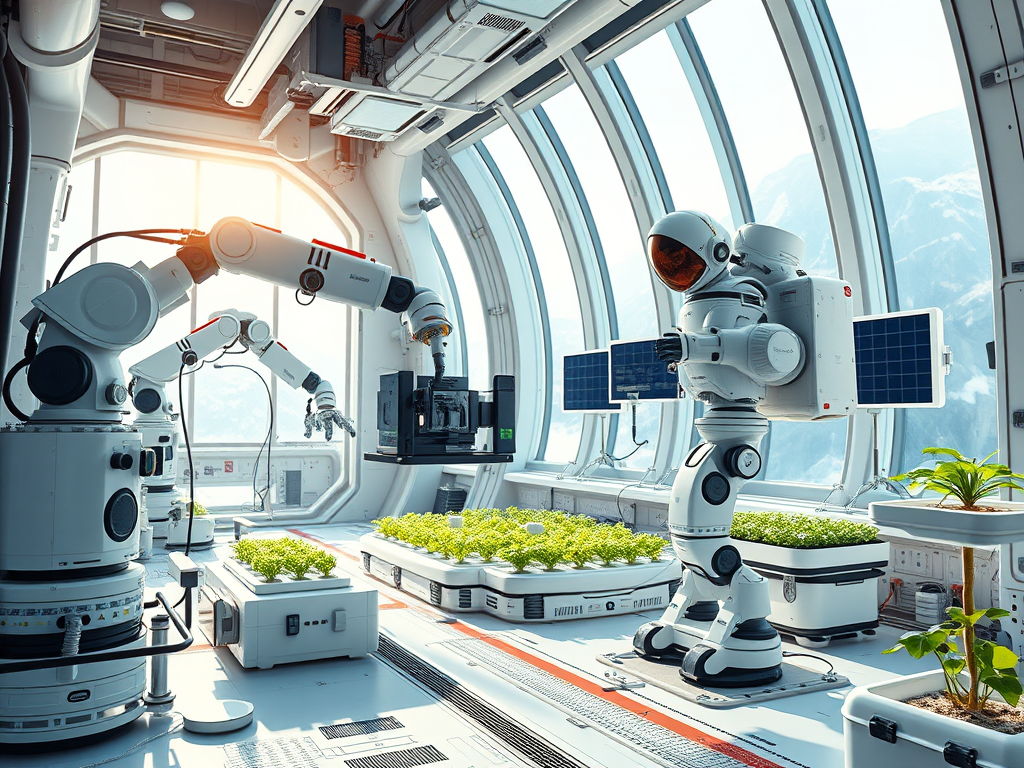
- Robotic helpers on space stations can perform routine maintenance, monitor experiments and even assist in daily tasks.
Robotics teaches students the value of engineering, coding and problem-solving, skills that are crucial for both space exploration and innovation on Earth.
3D Printing: Building in Space
Transporting materials from Earth to space is expensive. That is why 3D printing is revolutionising space living.
- Astronauts on the ISS can print tools, spare parts and experimental items on-demand.
- Future Mars missions plan to print habitats using local materials, like Martian soil, reducing the need to transport heavy supplies.
3D printing shows students that creativity and STEM go hand-in-hand; you can design a solution on paper and bring it to life, even millions of miles from Earth.
Life Support Systems: Breathing, Eating and Staying Alive
Living in space means creating closed-loop systems that provide air, water and food.
- Oxygen is recycled from carbon dioxide using chemical scrubbers.
- Water is purified and reused, even from urine and sweat!
- Food systems include pre-packaged meals, hydroponic gardens and experiments with growing fresh produce in microgravity.
These systems are marvels of engineering and biology, showing students how maths, physics and chemistry come together to solve real-world challenges.
Solar Power and Energy Management
Without sunlight or a power grid, energy must come from space-friendly sources.
- Solar panels provide electricity for satellites, space stations and rovers.
- Battery and energy storage systems ensure power is available even when the Sun is not shining.
Managing energy in space teaches students about sustainability, efficiency and the importance of innovation, lessons that are just as valuable on Earth.
STEM and Student Inspiration
At Apollo Scholars, we believe every student can be part of this future. Learning STEM today is the first step toward:
- Designing robotic helpers for space or Earth.
- Inventing new ways to grow food sustainably.
- Creating life-saving technology that works on Earth and beyond.

“Space technology shows students that no challenge is too big when you combine curiosity, creativity and STEM skills. From the Moon to Mars, the problems we solve today in classrooms could become tomorrow’s solutions for life in space.”
Matt
Founder, Apollo Scholars
Student Challenge: Invent a Space Innovation
Here is a challenge for today:
- Think of one problem astronauts face in space (like recycling water or protecting from radiation).
- Brainstorm an innovation or tool that could solve it.
- Sketch it or describe how it works.
Share your ideas with #WorldSpaceWeek and #ApolloScholars. Your invention could inspire future space explorers.
Final Thought: Innovation Begins with Curiosity
Every tool, rover and habitat in space started with a question:
“How can we survive and thrive in a place humans were not meant to live?”
The same is true for students today. Every experiment, project, or idea is a step toward solving problems that can change the world, on Earth or beyond it.
Stay tuned as we explore the global impact of space exploration and how discoveries in space are shaping life on our planet.


Leave a comment