
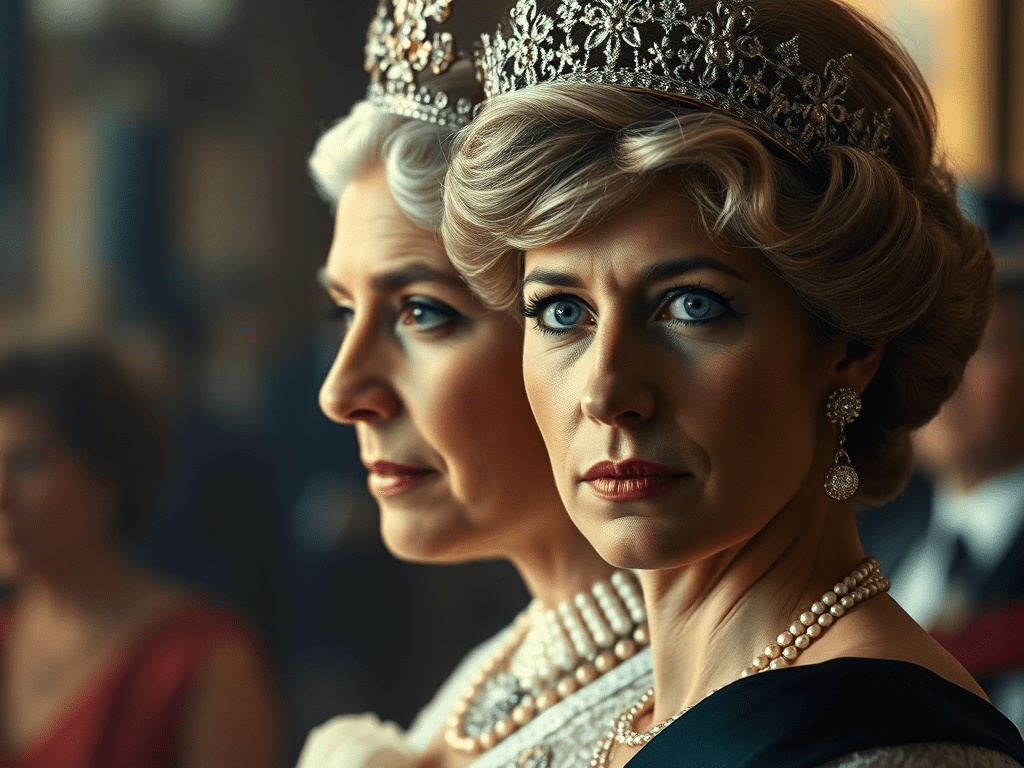
How Queen Elizabeth II Balanced Family and Duty
When the young Queen ascended the throne in 1952, she inherited not only a country in transition but a dynasty that had to embody continuity.
By the 1980s and 1990s, that balance between private duty and public life became her greatest test.
What Is “The Firm”? Inside the Royal Family’s Working Institution
The term “The Firm”, often used by Prince Philip, describes the monarchy as a working organisation built on service, protocol and discipline. Behind the glamour lies a professional structure designed to keep the Crown functioning smoothly and the monarchy relevant.
Educational Insight:
Students studying modern Britain can view “The Firm” as a case study in how institutions manage tradition and change simultaneously.
The Marriage of Prince Charles and Lady Diana: From Fairytale to Fallout
The 1981 Royal Wedding That Captured the World
On 29 July 1981, nearly 750 million viewers watched the wedding of Prince Charles and Lady Diana Spencer, a global event symbolising renewal after decades of post-war change.
Behind the Palace Walls: Why the Marriage Struggled
Age gaps, emotional distance and public expectations quickly strained the relationship.
By the late 1980s, rumours of infidelity and unhappiness became front-page news, reshaping how the public viewed the monarchy itself.
How the Media Changed the Monarchy
Television and tabloids transformed the royal family into public figures whose every gesture could be broadcast worldwide. The 1969 Royal Family documentary and later press coverage blurred the line between public duty and private life.
The 1995 Panorama interview, where Diana said there were “three of us in this marriage”, became a cultural flashpoint, forcing the monarchy to confront a new age of transparency and celebrity.
Educational Insight:
This period is essential for GCSE and A-Level students studying The Making of Modern Britain, illustrating the media’s growing role in shaping national identity.
The Death of Diana, Princess of Wales: How Britain and the Queen Responded
When Princess Diana died on 31 August 1997, national grief turned to anger at the monarchy’s silence.
The Queen, staying at Balmoral with her grandsons, eventually addressed the nation, a moment that marked a profound shift in royal communication.
Her televised speech, delivered “as your Queen and as a grandmother,” helped reconnect the Crown with the public.
Prince Charles, Camilla and the Modernisation of the Monarchy
The early 2000s saw careful reconstruction of royal reputation.
Charles’s marriage to Camilla Parker Bowles in 2005, attended by the Queen, symbolised reconciliation and adaptation.
By the 2020s, this groundwork enabled King Charles III to take the throne with growing public support.
How the Royal Family Adapted to the Digital Age
Learning from past crises, Elizabeth II opened the monarchy to new forms of engagement, such as public walkabouts, televised Jubilee celebrations and the launch of the Royal Family’s first website in 1997.
These steps marked a shift from distance to dialogue, allowing the Crown to survive in an era of instant communication.
Queen Elizabeth II’s Legacy: Lessons from the Royal Family’s Struggles
Through personal heartbreak and public pressure, Elizabeth II proved that the monarchy could evolve without losing its essence.
Her quiet resilience turned scandal into survival, transforming “The Firm” from a Victorian relic into a living, adaptive symbol of national continuity.

“The Queen’s family challenges were not just private stories; they were lessons in resilience and change. She showed Britain that leadership means learning, even when the world is watching. For young people studying modern history, her story is proof that tradition endures only when it is willing to grow.”
Matt
Founder, Apollo Scholars
Previous: The Global Queen: Elizabeth II, Diplomacy and the Commonwealth
Next: The Queen and the People: Duty, Devotion and the Heart of a Nation
Elizabeth II Blog Series
Elizabeth II: The Princess Who Became Queen
Power, Politics and the Crown: Elizabeth II and Her Prime Ministers
The Global Queen: Elizabeth II, Diplomacy and the Commonwealth
The Family, the Firm and the Public Eye: Diana, Charles and the Royal Drama
The Queen and the People: Duty, Devotion and the Heart of a Nation
The Making of Modern Britain: Social, Economic, and Cultural Change
Crisis and Controversy: Scandal, Strikes and the Monarchy Tested
End of an Era: Elizabeth II’s Legacy and the Rise of King Charles III


Leave a comment