
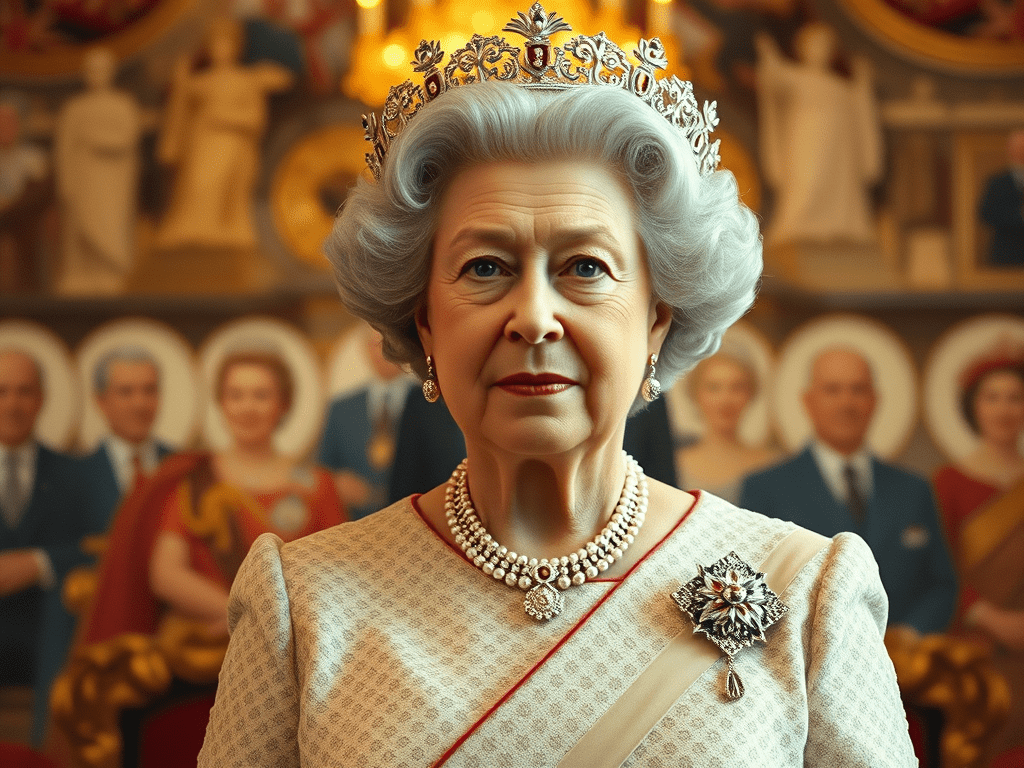
Introduction: The Queen at the Heart of British Power
When Elizabeth Alexandra Mary Windsor became Queen in 1952, Britain was a nation still recovering from war, managing a fading empire and stepping cautiously into a new modern age. Few could have predicted that her reign would span 70 years and fifteen Prime Ministers, from Winston Churchill, born in the Victorian era, to Liz Truss, born over a century later.
Throughout these decades, the Queen stood apart from party politics but never from history. She listened, advised and observed; a living link across generations of British leadership. Her weekly audiences with Prime Ministers, conducted in private and never recorded, became one of the most enduring institutions in modern governance.
For seventy years, she led the nation with unwavering composure, diplomacy and constitutional integrity. Yet perhaps the most profound aspect of her influence was her mastery of soft power; the quiet strength of example, persuasion and presence. Without passing laws or making speeches on policy, Elizabeth II shaped Britain’s image on the world stage. Through her steadiness, symbolism and subtle diplomacy, she projected stability and continuity even as governments rose and fell, empires ended, and new alliances emerged.
This blog explores the partnerships, tensions and transformations that defined her relationships with Britain’s leaders; from the post-war “affluent society” to the social revolutions of the 1960s, the crises of the 1970s, the Thatcher years and the uncertain politics of the 21st century.
The Early Years (1952–1964): Churchill to Douglas-Home and the Affluent Society
Winston Churchill: The Mentor of a Young Monarch
When Elizabeth became Queen at just 25, her first Prime Minister was Winston Churchill, a man revered for leading Britain through war. Their relationship was one of mutual admiration; Churchill treated her with grandfatherly affection, while she relied on his experience. He guided her understanding of constitutional monarchy, diplomacy and discretion.
Churchill helped the young Queen master the delicate balance between reigning and ruling, which became the foundation of her modern constitutional monarchy.
Anthony Eden and the Suez Crisis: The End of Empire
Eden’s 1956 decision to invade Egypt during the Suez Crisis was a turning point for Britain’s global standing. While the Queen remained neutral, the episode demonstrated her role as a stabilising symbol during international humiliation and political division.
Harold Macmillan and the Affluent Society
Under Macmillan, Britain entered a period of economic growth and rising living standards. His phrase “You’ve never had it so good” captured the mood of the 1950s. The Queen’s world tours and Commonwealth visits strengthened Britain’s image abroad.
Alec Douglas-Home: Tradition Meets Transition
An aristocrat chosen in the twilight of deference, Douglas-Home reflected a bygone political style. His friendship with the Queen was genuine, marking the end of the post-war establishment and the dawn of modern politics.
Educational Insight:
Elizabeth’s early years were about learning restraint and influence without interference; skills that would sustain her reign through decades of change.
The Age of Reform (1964–1979): Wilson to Callaghan and a Nation in Flux
Harold Wilson and the Permissive Society
Wilson’s premiership coincided with a Britain transformed by youth culture, technology, and liberal social reforms, such as abortion, homosexuality, and the death penalty were all re-examined. The Queen and Wilson enjoyed a warm, informal relationship. He was one of the few Prime Ministers she is said to have affectionately called “Harold.”
Edward Heath and the European Dream
In 1973, Heath took Britain into the European Economic Community (EEC), a defining moment in post-war history. The Queen, though officially neutral, was a quiet supporter of stability and cooperation.
James Callaghan and the Winter of Discontent
Callaghan’s government faced economic collapse and mass strikes in 1978–79. Through it all, the Queen’s calm presence reassured the public, a reminder that institutions outlast crises.
Educational Insight:
This period highlights the monarchy’s resilience during social upheaval and shows how Elizabeth II provided continuity amid shifting values and ideologies.
The Thatcher Era and Beyond (1979–1997): Iron and Grace
Queen Elizabeth II and Margaret Thatcher: Two Titans of Their Time
Both women defined their age; one political, one constitutional. Reports of tension surfaced: the Queen’s preference for moderation clashed with Thatcher’s combative style. Yet both shared a fierce sense of duty and self-discipline.
Their partnership reflected a Britain divided by ideology yet united by tradition. When Thatcher later received the Order of Merit, it symbolised mutual respect between two of the most powerful women in British history.
John Major: Calm in the Queen’s “Annus Horribilis”
In 1992, the Queen’s “Annus Horribilis,” royal divorces and the Windsor Castle fire shook the monarchy. Major handled the crises with discretion and empathy, earning the Queen’s trust and respect.
Educational Insight:
These decades revealed Elizabeth’s strength as a balancing figure between public expectation and private endurance. Her adaptability became her greatest asset.
The Modern Monarchy (1997–2022): From Blair to Truss
Tony Blair: New Labour and The People’s Princess
The death of Diana, Princess of Wales, in 1997 tested the monarchy like never before. Blair’s phrase “The People’s Princess” struck a chord with the public, while the Queen’s initial reserve drew criticism. Yet she responded, addressing the nation directly; a turning point in royal transparency.
Gordon Brown and the Financial Crisis
The Queen’s steady presence during the 2008 financial crisis reminded the nation that leadership takes many forms.
David Cameron and the Scottish Referendum
In 2014, as Scotland debated independence, the Queen urged unity and careful reflection, a subtle but powerful reminder of shared national identity.
Theresa May and Brexit Britain
Her Christmas broadcast during the Brexit divisions encouraged “coming together,” reinforcing her lifelong message of national cohesion.
Boris Johnson and the COVID-19 Pandemic
From Windsor Castle, the Queen addressed the nation: “We will meet again.” Her words became a national moment of comfort and resilience.
Liz Truss: The Queen’s Final Prime Minister
On 6 September 2022, Elizabeth II appointed Liz Truss at Balmoral, her last official act before her death two days later. A lifetime of duty ended as it began: in service to the nation.
Conclusion: A Monarch Above Politics, Yet Shaping It Quietly
Across fifteen Prime Ministers, Elizabeth II reigned through eras of empire and austerity, social revolution and digital transformation. She never dictated policy, yet her constancy shaped Britain’s moral and cultural identity.
Her life shows that power is not only about authority, it is about steadiness, empathy and restraint.

“The Queen’s quiet wisdom outlasted every political storm. She did not just live through history; she steadied it.”
Matt
Founder, Apollo Scholars
Next Blog in the Series
Next: The Global Queen: Elizabeth II, Diplomacy and the Commonwealth
Previous: Elizabeth II: The Princess Who Became Queen
Explore the Series: Elizabeth II – Her Life, Her Reign and the Making of Modern Britain
Elizabeth II; The Princess Who Became Queen
Power, Politics and the Crown: Elizabeth II and Her Prime Ministers (current)
The Global Queen: Elizabeth II, Diplomacy and the Commonwealth
The Family, the Firm and the Public Eye: Diana, Charles and the Royal Drama
The Queen and the People; Duty, Devotion and the Heart of a Nation
The Making of Modern Britain: Social, Economic and Cultural Change
Elizabeth II: Crises, Scandals and the Monarchy Tested
End of an Era; Elizabeth II’s Legacy and the Rise of King Charles III


Leave a comment