
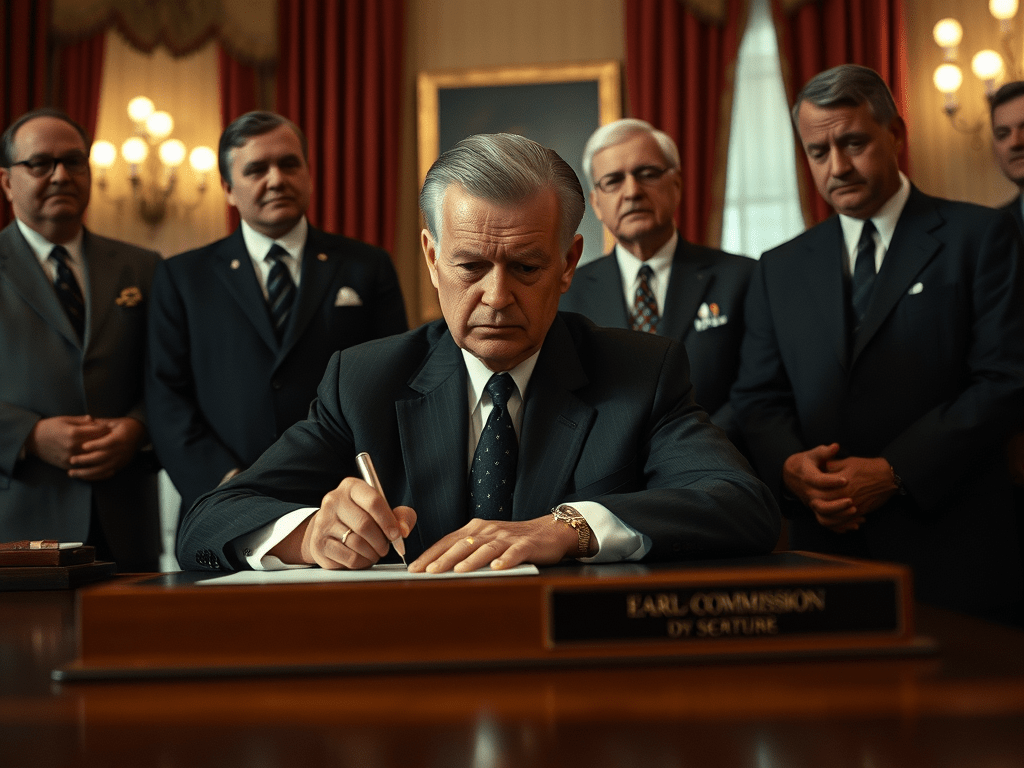
On 29 November 1963, just one week after the shocking assassination of President John F. Kennedy in Dallas, Texas, newly sworn-in U.S. President Lyndon B. Johnson took a decisive step that would shape American history. He established the Warren Commission, a special investigative committee tasked with uncovering the truth behind one of the most dramatic and disputed events of the 20th century.
For students and parents interested in politics, criminology or history, this moment matters, not only for what it discovered, but for how it changed the way modern governments conduct investigations and communicate with the public.
What Was the Warren Commission?
The Warren Commission was an independent investigative body formally known as the President’s Commission on the Assassination of President Kennedy. Its purpose was to examine every detail surrounding Kennedy’s murder on 22 November 1963, including who was responsible and whether a wider plot existed.
This was the first time in U.S. history that a presidential assassination was investigated by such a high-level, multidisciplinary team, combining law, politics, intelligence and military expertise.
Who Was Involved in the Warren Commission?
The Commission was chaired by Chief Justice Earl Warren, one of the most influential legal minds in American history. Its members included:
- Gerald Ford – future U.S. President
- Allen Dulles – former CIA Director
- Richard Russell – U.S. Senator
- John McCloy – diplomat and former World Bank president
- Hale Boggs – U.S. congressman
- James Eastland – U.S. Senator
This group reflected the highest levels of American political power, making the Commission’s conclusions hugely significant.
Why Was the Warren Commission Set Up?
President Johnson formed the Commission for several key reasons:
- Public pressure and national shock – Americans demanded answers after Kennedy’s assassination
- Fear of conspiracy – rumours involving the Soviet Union, Cuba, the Mafia and U.S. intelligence agencies began spreading
- Global stability – during the Cold War, confusion or mistrust could escalate international tensions
The Commission aimed to provide a clear, definitive report to reassure the nation, and the world, that no hidden plot threatened U.S. democracy.
What Did the Warren Commission Find?
Published in September 1964, the Warren Report reached several landmark conclusions:
- Lee Harvey Oswald acted alone in shooting President Kennedy
- Oswald fired three shots from the Texas School Book Depository
- Jack Ruby, who later shot Oswald, had no connection to the assassination
- There was no evidence of a wider conspiracy
These findings were groundbreaking but immediately controversial. Many Americans questioned how such a traumatic event could be the result of a lone individual.
What Was the Impact of the Warren Commission?
The Commission shaped modern investigative practice by:
✔ Setting new standards for federal inquiries
✔ Increasing public expectation for transparent government investigations
✔ Encouraging later historical and forensic research into the JFK assassination
However, its legacy remains divided. Polls consistently show that most Americans do not fully believe the Warren Report, suggesting distrust in official accounts has become part of the cultural memory.
Why Is the Warren Commission Still Debated Today?
The Commission’s work sparked decades of questions, documentaries, films and conspiracy theories. From Oliver Stone’s film JFK to modern YouTube debates, its findings continue to fuel curiosity.
Students today can learn a crucial lesson: history is not only about what happened, but who decides what is recorded, reported and remembered.

“Moments like the Warren Commission remind us that history is not just facts, it is interpretation, judgement and responsibility. When young people learn to question evidence thoughtfully, they gain the power to engage with the world as informed citizens.”
Matt
Founder, Apollo Scholars
Why Does This Event Matter for Students?
Understanding the Warren Commission helps students:
- Develop critical thinking
- Evaluate official sources vs. public belief
- Understand leadership during crisis
- Explore the role of evidence in decision-making


Leave a comment