
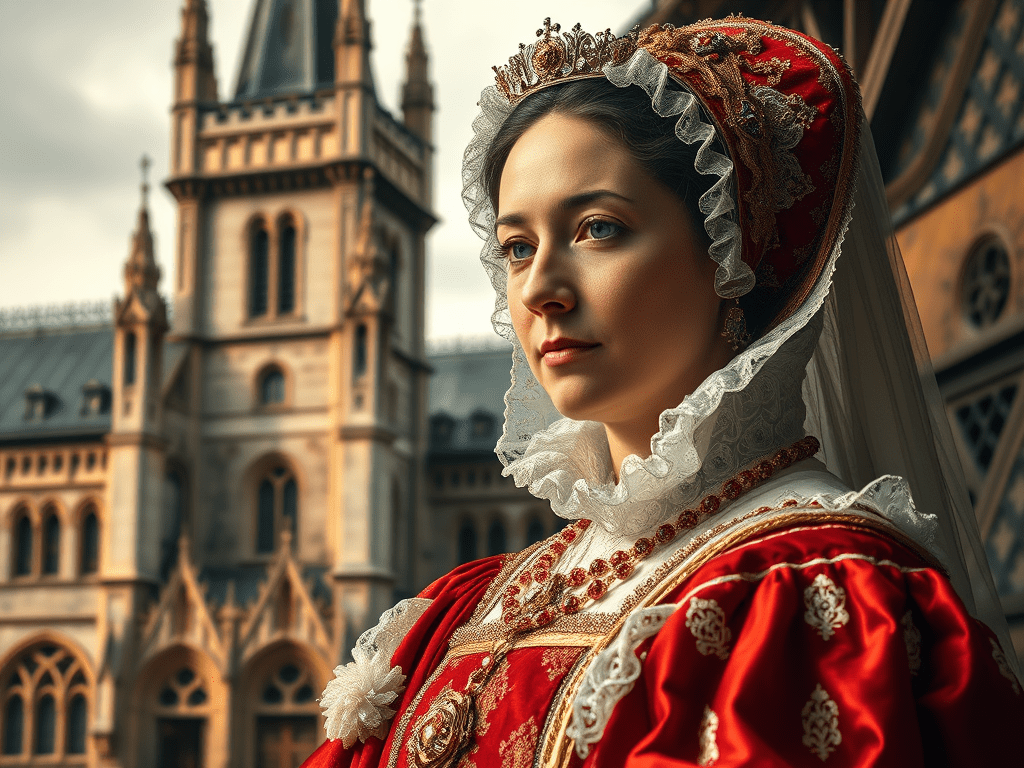
Introduction: Tudor England 1485–1603
Tudor England was one of the most dynamic periods in British history, marked by political, religious and social change, alongside frequent rebellion. Understanding this period requires evaluating both successes and limitations, and recognising the influence of monarchs, government institutions, religion and society.
Historians like G.R. Elton argue that administrative centralisation under Henry VIII strengthened government, while Christopher Haigh highlights how local resistance limited state power. Events such as the Pilgrimage of Grace (1536) and the Northern Rebellion (1569) exemplify the tension between monarchy, religion and society.
This hub provides premium, top-mark model answers for A-Level Tudor England that are:
- Balanced, showing both sides of arguments
- Evaluative, providing clear judgement
- Fully structured for essays, causation, source evaluation and significance questions
Question 1: To what extent was Tudor government effective, 1485–1603?
Free Preview (Accessible to All)
Tudor government was generally effective in consolidating royal authority, managing finances and maintaining stability, but its success was highly dependent on the skill of individual monarchs. While some rulers, like Henry VII and Elizabeth I, strengthened central control and prevented large-scale unrest…
Subscribe to get access
Read more of this content when you subscribe today.
Question 2: How far was religion the main cause of rebellion in Tudor England, 1485–1603?
Step 1: Planning & Structure
This is a causation question, asking you to weigh relative importance.
A top-band answer must:
- Assess religion against other causes
- Explain why some causes mattered more
- Reach a clear judgement
Thematic Structure (High-Level)
Section Purpose Introduction Directly answers the question with judgement Paragraph 1 Religion as a cause Paragraph 2 Economic and social causes Paragraph 3 Political and dynastic causes Conclusion Weighs causes and decides Why this works:
- Avoids rebellion-by-rebellion narrative
- Encourages comparison and evaluation
- Makes judgement easy for the examiner to see
Step 2: Model Answer (Top Mark)
Free Preview (Accessible to All)
Religion was an important cause of rebellion in Tudor England, particularly during periods of rapid religious change, but it was rarely the sole or most significant factor. In most cases, religious grievances intensified deeper economic, social, or political tensions rather than independently causing rebellion…
Subscribe to get access
Read more of this content when you subscribe today.
Step 3: Step-by-Step Annotation (Why Each Part Works)
Section What It Does Examiner Insight Introduction Directly answers “how far” and sets up comparison Clear judgement = high credit Religion Paragraph Shows religion mattered, but not alone Balance is essential Economic Paragraph Explains deeper, structural causes Sustained analysis earns top marks Political Paragraph Shows government weakness as a trigger Adds breadth and sophistication Conclusion Weighs causes and decides This is where top-band answers separate Step 4: Why This Is a Top-Mark Answer
- Directly addresses the question
- Weighs causes against each other
- Uses precise examples without storytelling
- Avoids rebellion-by-rebellion narrative
- Maintains judgement throughout
This is exactly what examiners mean by “sustained evaluation.”
Question 3: “Tudor rebellions were limited in both scale and threat.” How far do you agree?
Step 1: Planning and Structure
This question is testing your ability to:
- Assess historical interpretations
- Decide how far the statement is convincing
- Support judgement with precise evidence
A top-mark answer must:
- Engage directly with the claim
- Show agreement and challenge
- Reach a clear overall judgement
Thematic Structure (Same as Previous Answers)
Section Purpose Introduction States judgement on the interpretation Paragraph 1 Evidence supporting the interpretation Paragraph 2 Evidence challenging the interpretation Paragraph 3 Weighing scale vs threat Conclusion Final judgement Why this works:
- Avoids listing rebellions
- Focuses on interpretation, not narrative
- Makes evaluation explicit for the examiner
Step 2: Model Answer (Top Mark)
Free Preview (Accessible to All)
The view that Tudor rebellions were limited in both scale and threat is convincing to an extent, as most uprisings failed to seriously challenge the survival of the Tudor state. However, this interpretation risks underestimating the scale of some rebellions and the extent to which they exposed significant weaknesses in Tudor government…
This establishes:
- Engagement with the interpretation
- Balanced judgement
- Analytical tone
Subscribe to get access
Read more of this content when you subscribe today.
Step 3: Step-by-Step Annotation (Why Each Part Works)
Section Purpose Examiner Insight Introduction Engages directly with the interpretation Shows awareness Support Paragraph Explains why the view is convincing Balance is essential Challenge Paragraph Uses Pilgrimage of Grace and Wyatt Specific evidence strengthens evaluation Weighing Paragraph Distinguishes scale from threat Sophistication = top band Conclusion Delivers final judgement Required for highest marks Step 4: Why This Is a Top-Mark Interpretation Answer
- Directly engages with the historian’s view
- Balances agreement and challenge
- Uses scale vs threat as analytical lens
- Avoids descriptive rebellion summaries
- Maintains judgement throughout
This is exactly what examiners mean by “evaluation of interpretations.”
Question 4: How significant was the Tudor monarchy in maintaining political stability, 1485–1603?
Step 1: Planning and Structure
This question asks you to:
- Assess significance, not importance in isolation
- Weigh the monarchy against other factors
- Decide how far stability depended on the monarch
A top-mark answer must:
- Explain how the monarchy maintained stability
- Compare it with alternative stabilising factors
- Reach a clear, reasoned judgement
Thematic Structure (Consistent with Previous Answers)
Section Purpose Introduction States overall judgement Paragraph 1 Role of the monarch Paragraph 2 Role of institutions and government Paragraph 3 Role of social control and local authority Conclusion Weighs significance and decides Why this works:
- Avoids reign-by-reign storytelling
- Encourages comparison and evaluation
- Makes judgement clear to the examiner
Step 2: Model Answer (Top Mark)
Free Preview (Accessible to All)
The Tudor monarchy played a highly significant role in maintaining political stability by projecting authority, controlling the nobility and responding decisively to threats. However, stability did not rely on the monarch alone; effective institutions, local governance and social controls were also crucial…
This shows:
- Direct engagement with the question
- Balanced judgement
- Analytical tone
Subscribe to get access
Read more of this content when you subscribe today.
Step 3: Step-by-Step Annotation (Why Each Part Works)
| Section | What It Does | Examiner Insight |
|---|---|---|
| Introduction | States judgement and sets up comparison | Significance must be weighed |
| Monarchy Paragraph | Shows why monarchs mattered most | Direct relevance to question |
| Institutions Paragraph | Adds balance and sophistication | Avoids mono-causal answers |
| Local Government Paragraph | Broadens analysis | Shows depth and context |
| Conclusion | Weighs factors and decides | Essential for top band |
Step 4: Why This Is a Top-Mark Significance Answer
- Directly addresses “how significant”
- Weighs monarchy against alternatives
- Uses precise, relevant evidence
- Maintains evaluation throughout
- Avoids narrative and description
Final Thoughts: Learning the Method, Not Just the Content
These Tudor England model answers are designed to show you how top-level A-Level History responses are structured, argued and evaluated under exam conditions. They prioritise clarity of judgement, analytical paragraphing and sustained evaluation, the core skills examiners consistently reward.
While historical interpretations and named historians are an important part of advanced historical study, we have deliberately not embedded specific historians into the model answers above. This is because we have focused on demonstrating clear reasoning, precise evidence and balanced judgement. Once students master this method, historians’ views can be integrated naturally and selectively to enhance an argument rather than overwhelm it.
At Apollo Scholars, we teach students when, where and how to use historians effectively, a skill explored in depth through our revision guides, paid newsletter and tuition, ensuring interpretation strengthens answers rather than distracts from them.


Leave a comment