
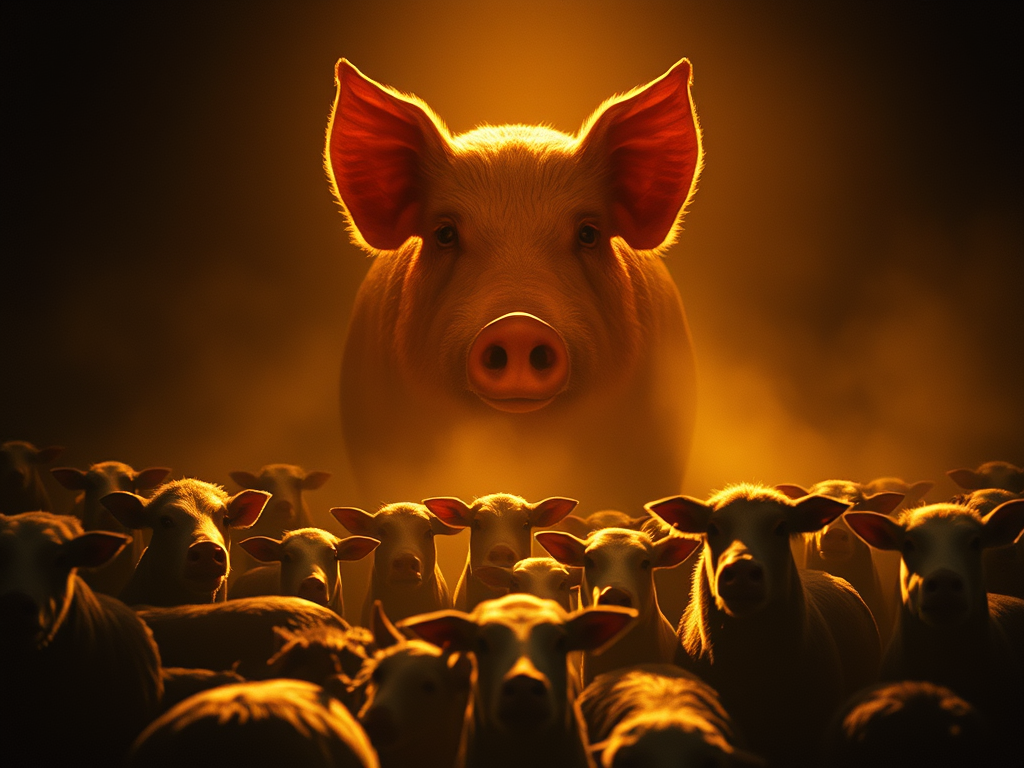
Animal Farm by George Orwell serves as the definitive analytical framework for any student attempting to decode one of the most significant political allegories in modern literature. Published in 1945, Orwell’s novella is far from a simple barnyard fable; it is a surgical dissection of the human psyche. It is a warning against the seductive nature of absolute power. Animal Farm is a grim reflection on how revolutions, even those born from the purest intentions, can descend into the very tyranny they sought to destroy.
To truly excel in literary analysis, one must look beyond the livestock. This guide provides a deep-dive evaluation of Orwell’s masterpiece. It is designed for students who seek to move past plot summaries and into the realm of sophisticated, high-level criticism.
Table of Contents
- The Allegorical Foundation: Beyond the Barnyard
- The Dream of Equality: Evaluating Old Major’s Vision
- The Corruption of Power: The Rise of Napoleon
- The Weaponisation of Language: Propaganda and Squealer
- The Psychology of Control: Napoleon vs. Snowball
- Class Stratification: The Tragedy of Boxer
- Intellectual Superiority: Education as a Tool of Oppression
- The Cyclic Narrative: Evaluating the Ending
- Character Symbolism: A Deep Analysis
- The Relevance of Orwellian Truth in the Modern Age
- High-Level Evaluation: Why Did the Peace Fail?
- Academic Support with Apollo Scholars
Subscribe to get access
Read more of this content when you subscribe today.
Leave a Reply