
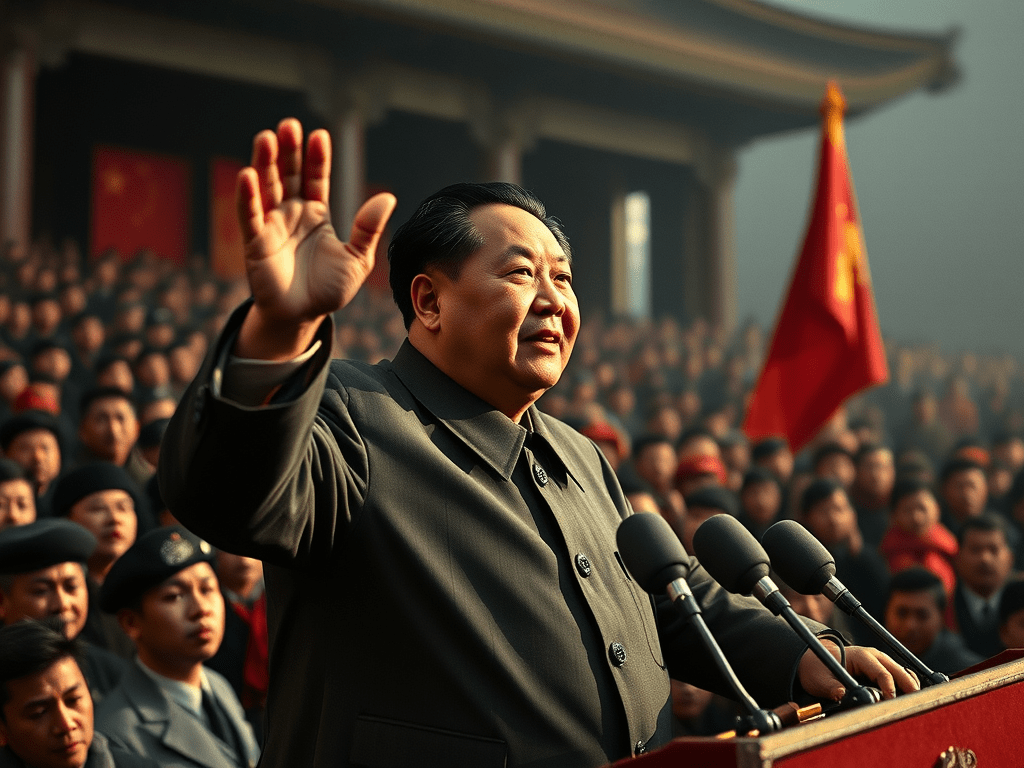
Mao Zedong’s rule over China was marked by sweeping social changes, economic experiments and periods of intense political repression. His leadership began with the founding of the People’s Republic of China in 1949. This set the course for the nation’s modern development. The consequences are still felt today. In this blog, we will delve into the origins of Mao’s rise to power. We will explore the impacts of his rule. Finally, we will discuss the far-reaching consequences that shaped China’s political and social landscape.
Follow us on Instagram, Facebook and LinkedIn.
Origins of Mao’s China
1. The Chinese Civil War and the Rise of Mao Zedong
Mao Zedong’s ascent to power began in the crucible of the Chinese Civil War (1927-1949). The war pitted the Chinese Communist Party (CCP), led by Mao, against the nationalist Kuomintang (KMT), led by Chiang Kai-shek. The conflict was marked by several phases of intense fighting, interrupted by periods of uneasy truce.
Subscribe to get access
Read more of this content when you subscribe today.


Leave a reply to The Great Leap Forward and Its Aftermath: China’s Ambitious Experiment and Its Consequences – Apollo Scholars Cancel reply