
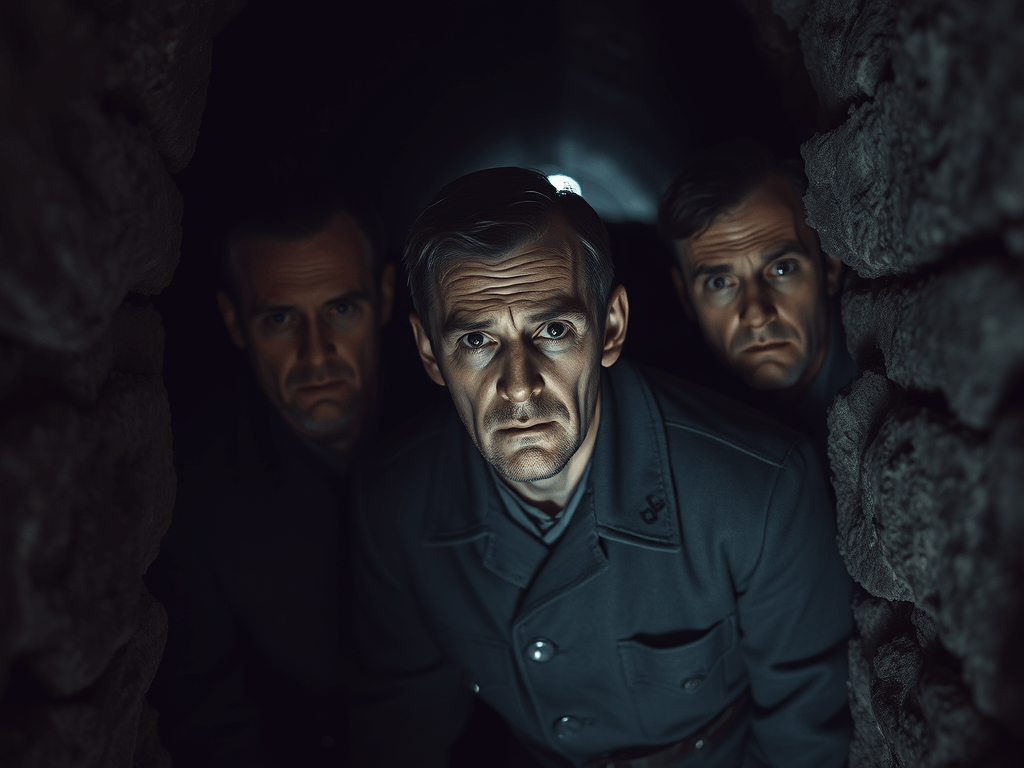
The world was eager to see justice served after World War II ended in 1945. People wanted accountability for the atrocities committed by the Nazi regime. This was particularly true for the crimes of the Holocaust. The Nuremberg Trials were established to prosecute Nazi leaders. Many high-ranking officials received sentences for their roles in the war and genocide. However, not all Nazi war criminals faced justice. Many of them escaped through secret networks known as the Ratlines. These were a series of escape routes. They allowed prominent Nazis and other fascist leaders to flee Europe. This helped them avoid prosecution. Many started new lives, primarily in South America.
In this blog, we’ll delve into what the Ratlines were. We will explain how they operated. We’ll discover who was involved. We’ll also look at their long-term consequences for post-war justice and historical memory.
Follow us on Instagram, Facebook and LinkedIn.
FAQs About the Ratlines and Nazi War Criminals’ Escape
In this section, we address some of the most frequently asked questions about the ratlines. We explore how Nazi war criminals escaped after World War II. We also discuss the long-term consequences of these covert operations.
What were the Ratlines?
The Ratlines were secret escape routes. They were used by Nazi war criminals and collaborators to flee Europe after World War II. These routes helped them evade prosecution. They found refuge in countries like Argentina and Chile.
How did Nazi war criminal escape prosecution?
Many escaped through a network of sympathetic individuals and organizations. This network included elements of the Catholic Church and governments in South America.
Which countries provided refuge to escaped Nazis?
The primary destinations for Nazi war criminals were South American countries such as Argentina, Brazil, Chile and Paraguay. Some also fled to Spain and the Middle East.
Did any infamous Nazis escape through the Ratlines?
Yes, prominent figures like Adolf Eichmann, Josef Mengele, Klaus Barbie and Alois Brunner used the Ratlines. They escaped to countries like Argentina, Syria and Bolivia.
Why did South American countries, particularly Argentina, accept Nazi fugitives?
Argentina, under President Juan Perón, welcomed Nazi fugitives. He believed they could bring industrial, scientific and military expertise to the country. He also shared certain political sympathies with fascism.
The Ratlines: Escape Routes for Nazi War Criminals After World War II
After the end of World War II in 1945, the world was eager to see justice served. The atrocities committed by the Nazi regime, particularly for the crimes of the Holocaust, demanded accountability. The Nuremberg Trials were established to prosecute Nazi leaders. Many high-ranking officials received sentences for their roles in the war and genocide. However, not all Nazi war criminals faced justice. Many of them escaped through secret networks known as the Ratlines. These were a series of escape routes. They allowed prominent Nazis and other fascist leaders to flee Europe. They avoided prosecution and started new lives, primarily in South America.
In this blog, we’ll explore what the Ratlines were. We will look into how they operated and who was involved. We will also examine their long-term consequences for post-war justice and historical memory.
What Were the Ratlines?
The Ratlines were a series of clandestine escape routes. They helped thousands of Nazi officials, collaborators and war criminals flee Europe. This occurred after the fall of the Third Reich. These escape routes primarily led to countries like Argentina, Brazil, Chile, Paraguay and even the Middle East. The term “ratline” comes from a nautical term. It describes the ropes sailors use to climb and escape from danger. In this case, the danger was prosecution for war crimes. The Ratlines offered a path to safety. They helped those responsible for some of the worst atrocities in modern history.
Several routes existed. However, two major networks emerged. One was based in Rome and was primarily facilitated by sympathetic Catholic clergy. The other operated out of Spain. Many former Nazis found temporary refuge there under the fascist regime of General Francisco Franco.
How Did the Ratlines Operate?
The operation of the Ratlines was complex and involved the cooperation of multiple organisations and governments, both knowingly and unknowingly. Key players included:
- The Vatican: One of the most controversial aspects of the Ratlines was the involvement of elements within the Catholic Church. This was particularly evident in Rome. Some members of the Church facilitated the escape of former Nazis. They were often motivated by anti-communist sentiment or the desire to protect European Christians. Priests such as Bishop Alois Hudal held pro-fascist views. They played an instrumental role in helping war criminals secure travel documents. They also assisted in securing funding for their escape. People believe the Vatican Passport Office issued documents. These documents allowed fleeing Nazis to travel through Italy and into South America.
- Sympathetic Governments: The governments of several South American countries were sympathetic to the fascist cause. In particular, Argentina under President Juan Perón showed this sympathy. They welcomed former Nazis with open arms. Perón saw these exiles as a means to leverage European expertise. This was particularly true in areas like military strategy and industrial development. Argentina’s neutral stance during most of the war and its large German immigrant population made it a natural destination.
- International Red Cross: The International Red Cross inadvertently played a role by issuing travel documents. The International Committee of the Red Cross was supposed to perform background checks on applicants. In practice, the word of a priest or bishop often sufficed. This enabled many Nazi fugitives to slip through without proper scrutiny. The travel documents were given to individuals who claimed to be displaced persons or refugees. With these documents in hand, Nazis could travel through Europe. They avoided detection and ultimately fled to South America or the Middle East.
- Former SS Networks: Many former SS officers had established contacts with sympathetic individuals in Spain and Italy. They used their wartime connections to navigate these escape routes. They often used false identities. Sometimes, they relied on bribery to evade capture.
Notable Figures Who Escaped Through the Ratlines
The Ratlines allowed numerous high-profile Nazis to evade justice. Some of the most infamous individuals who escaped include:
- Adolf Eichmann: Adolf Eichmann was one of the primary architects of the Holocaust. He was responsible for the logistics of deporting Jews to concentration and extermination camps. Eichmann fled to Argentina using one of the Ratlines in 1950, under the alias Ricardo Klement. He lived there until 1960, when Israeli Mossad agents captured him and brought him to trial in Israel. Eichmann was found guilty of war crimes and executed in 1962.
- Josef Mengele: Known as the “Angel of Death,” Josef Mengele conducted horrific medical experiments on prisoners at Auschwitz. Mengele also escaped to Argentina through the Ratlines and lived under various aliases. Despite efforts to track him down, Mengele evaded capture and died in Brazil in 1979.
- Klaus Barbie: Nicknamed the “Butcher of Lyon” for his brutal actions as the Gestapo chief in Lyon, France. Klaus Barbie was responsible for the torture and deportation of countless individuals. These individuals included resistance fighters and Jews. He escaped to Bolivia with the help of the Ratlines, where he worked for Bolivian intelligence and aided right-wing governments. He was eventually extradited to France in 1983 and sentenced to life in prison for crimes against humanity.
- Walter Rauff: A former SS officer. He was responsible for the development of mobile gas chambers used to kill Jews. Walter Rauff fled to Chile through the Ratlines. Despite attempts by Nazi hunters to bring him to justice, he lived freely in Chile until his death in 1984.
- Alois Brunner: A key assistant to Adolf Eichmann, Alois Brunner was responsible for sending over 100,000 Jews to concentration camps. After the war, he escaped to Syria, where he served as a government advisor and lived without fear of extradition. Brunner was reportedly still alive in the 1990s but was never brought to justice.
Why Did So Many Nazis Escape Justice?
The success of the Ratlines in helping Nazis escape prosecution can be attributed to several factors:
- Cold War Politics: The period after World War II marked the beginning of the Cold War. The Soviet Union and the United States started to form this conflict. Both superpowers were more concerned with securing allies in the fight against communism than pursuing justice for war criminals. Some former Nazis were recruited by the Americans and Soviets. They were valued for their expertise, particularly in intelligence and military strategy. This was part of Operation Paperclip in the U.S. and its Soviet counterpart. A prime example of this is Werner von Braun. He was the leading figure in the development of rocket technology in Nazi Germany. He later became a pioneer of rocket and space technology in the United States.
- Anti-Communism: For many in the West, the threat of communism overshadowed the need to prosecute Nazi war criminals. Some individuals and organisations, including elements within the Vatican, saw former Nazis as valuable allies in the fight against communism.
- Lack of Resources: In the chaos following the war, tracking down the war criminals was an enormous task. Prosecuting all of them proved equally challenging. Many lower-ranking Nazis managed to slip through the cracks, particularly if they assumed new identities or fled to sympathetic countries.
- Sympathy for Fascism: Some elements within European society remained sympathetic to fascist ideologies. This sympathy, combined with the infrastructure left over from wartime collaboration, helped many Nazis evade capture.
The Long-Term Consequences of the Ratlines
The Ratlines had significant long-term consequences. They affected the pursuit of justice. They also impacted the historical memory of World War II and the Holocaust.
- Evasion of Justice: The escape of high-ranking Nazis like Eichmann, Mengele and Barbie delayed or entirely prevented their prosecution. This evasion left a dark stain on post-war efforts to bring perpetrators to justice. For Holocaust survivors and their families, knowing that many Nazis escaped punishment was painful. It reminded them that justice was often incomplete.
- Impact on South America: The influx of Nazis into South American countries like Argentina and Chile left a lasting legacy. Many of these individuals were welcomed by local fascist movements and right-wing governments, influencing political developments in the region. For example, Klaus Barbie’s involvement in Bolivia helped facilitate coups and the establishment of military dictatorships.
- Nazi Hunters: Many Nazis failed to face justice. This failure gave rise to a dedicated group of individuals known as Nazi hunters, such as Simon Wiesenthal. These individuals devoted their lives to tracking down escaped war criminals and bringing them to justice. Their efforts, while often difficult, led to the capture and prosecution of figures like Eichmann and Barbie.
Conclusion
The Ratlines represent a dark chapter in the aftermath of World War II. Many Nazi leaders were brought to justice. However, thousands of war criminals escaped through these networks. This escape remains a stark reminder of the challenges faced in pursuing justice on a global scale. The existence of the Ratlines shows the complex geopolitical landscape of the post-war world. Cold War tensions, political interests and moral obligations often clashed.
How Apollo Scholars Can Help
Book your online or in-person History tutoring session here.
Unlock our exclusive content in our Mission Control hub.
Find additional resources on History here


Leave a comment