
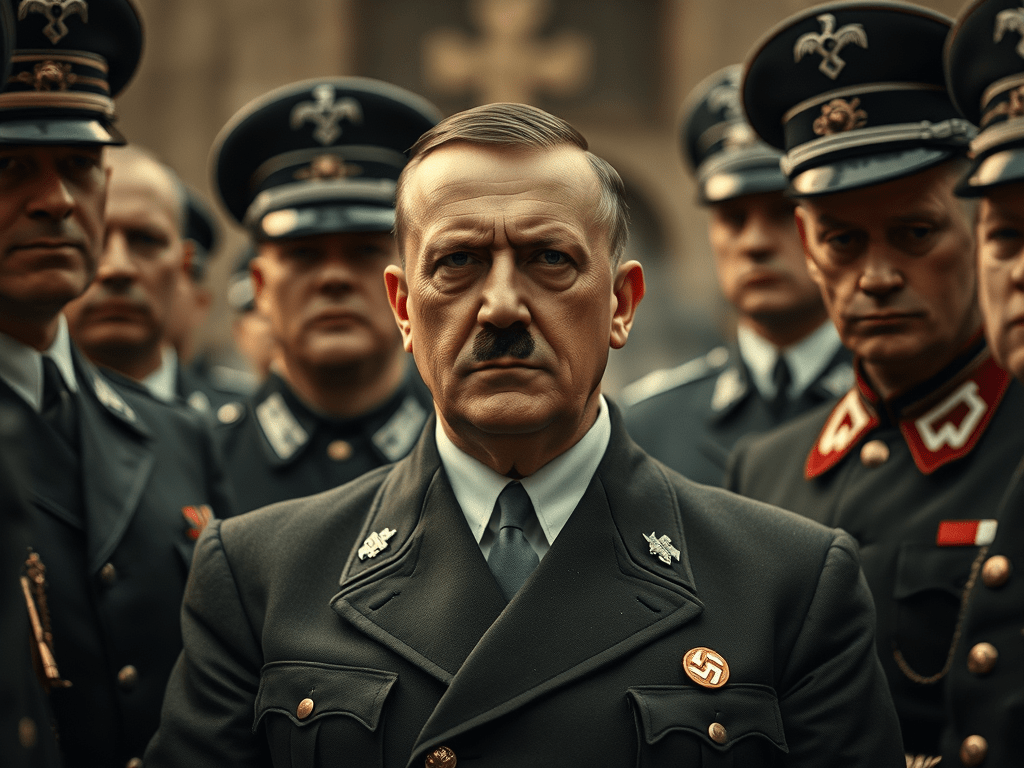
Our blog series on Nazi Germany explores pivotal moments and policies that shaped the country during the Third Reich. These posts cover everything from Hitler’s rise to power to the development of the Holocaust. They provide essential insights for GCSE and A-Level History students. Here’s a summary of our recent articles, offering a comprehensive look into this significant period. Be sure to click through for in-depth exploration of each topic.
1. The Rise of Hitler: Key Factors Behind Nazi Popularity in 1930s Germany
In this blog, we explore the political, social and economic conditions that allowed the Nazi Party to gain power. We examine key events such as the Great Depression. We also look into the weaknesses of the Weimar Republic and the Nazis’ strategic use of propaganda. These elements provide a solid understanding. They explain why Hitler and the Nazis were able to rise so swiftly to power in the 1930s.
2. The Enabling Act of 1933: How Hitler Consolidated Power
This blog examines the pivotal Enabling Act of 1933. This act allowed Hitler to rule by decree. It dismantled the democratic framework of the Weimar Republic. We discuss how this legislation was crucial in consolidating Hitler’s dictatorship. It also had long-term consequences for Germany’s political landscape.
3. The Night of the Long Knives: How Hitler Eliminated His Rivals
This article covers the Night of the Long Knives. This critical event happened in 1934 when Hitler purged the leadership of the SA. He ensured loyalty from the military and consolidated his power. We analyze the significance of this event in shaping Nazi leadership and eliminating internal threats to Hitler’s authority.
4. The Nuremberg Laws and the Road to the Holocaust
This blog examines the Nuremberg Laws of 1935 in detail. These laws legally discriminated against Jews. They laid the groundwork for the Holocaust. These laws set the stage for widespread persecution, providing insight into how systematic racism was institutionalized in Nazi Germany.
5. The Role of Propaganda in Nazi Germany: Controlling Public Opinion
Propaganda was a powerful tool for the Nazi regime. This blog explores the propaganda machine led by Joseph Goebbels. It examines how films, rallies, and media campaigns were used to manipulate public opinion. These methods helped maintain control over the German population.
6. Youth in Nazi Germany: The Hitler Youth and Education
Nazi ideology was deeply rooted in shaping the next generation. This blog looks into how the regime targeted young Germans. They used organizations like the Hitler Youth. They also made changes to the educational system. We also discuss the long-term effects these efforts had on shaping a generation of loyal followers.
7. Life Under Nazi Rule: How Everyday Life Changed in Germany
This post investigates the profound changes to everyday life under Nazi rule. We examine Nazi education policies. We also look at their economic control, propaganda, and the defined roles of women. These policies affected the lives of ordinary Germans. They helped reinforce the regime’s authority.
8. The Munich Agreement and Appeasement: How Europe Responded to Hitler’s Aggression
In this post, we explore the Munich Agreement of 1938, focusing on the policy of appeasement. Was Europe’s response to Hitler’s territorial expansion a justified attempt to avoid war? Or was it a catastrophic failure that emboldened the Nazis?
9. The Wannsee Conference and the Final Solution
The Wannsee Conference of 1942 was a pivotal event. It greatly advanced the Nazis’ Final Solution, which was the plan to systematically exterminate the Jewish population. This blog examines the key figures behind the conference. It also explores the decisions made. These decisions led to one of the darkest chapters in human history, the Holocaust.
10. Resistance in Nazi Germany: How People Fought Back
Despite the heavy control of the Nazi regime, resistance efforts did exist. This blog highlights various resistance movements, from the student-led White Rose group to the July 20 military plot. We discuss how effective these efforts were and their impact on both the regime and post-war perceptions of Nazi Germany.
11. The Nuremberg Trials: Justice After the Holocaust
This blog examines the Nuremberg Trials, where leading Nazi officials were prosecuted for war crimes after World War Two. We explore the impact of these trials on international law. They signify a key moment in human rights. This event marked a pivotal point in global justice following the Holocaust.
12. The Ratlines: How Nazi War Criminals Escaped Justice
After the collapse of Nazi Germany, many war criminals escaped justice. They used the Ratlines, an underground network. This network helped them flee to South America or the Middle East. This blog delves into the details of how key Nazi figures used this network to evade prosecution.
13. Nazi Germany Post-World War Two: Reconstruction and Denazification
This blog explores Germany’s post-war reconstruction. It examines the denazification process and how Germany and the world dealt with the aftermath of the Nazi regime.
Conclusion
These blogs provide a thorough overview of the major events, policies and key figures that shaped Nazi Germany. Students preparing for their GCSE and A-Level History exams will find these articles invaluable. They offer crucial insights into the social, political and ideological structures of the Nazi era. Be sure to click on each post to gain a deeper understanding of this complex and important period in history.
How Apollo Scholars Can Help
At Apollo Scholars, we are committed to helping students gain a deeper understanding of significant historical events. We provide personalized GCSE and A-Level History tutoring, offering tailored lesson plans that focus on critical analysis and historical insight.
With both online tutoring and in-person tutoring options available, we cater to a wide range of learning needs. We guide students through comprehensive discussions. We connect historical events to their broader consequences. We improve students’ ability to express these insights effectively in their exams.
Book your online or in-person History tutoring session here.
Unlock our exclusive content in our Mission Control hub.
Find additional resources on History here.


Leave a reply to The Enabling Act of 1933: How Hitler Consolidated Power – Apollo Scholars Cancel reply