
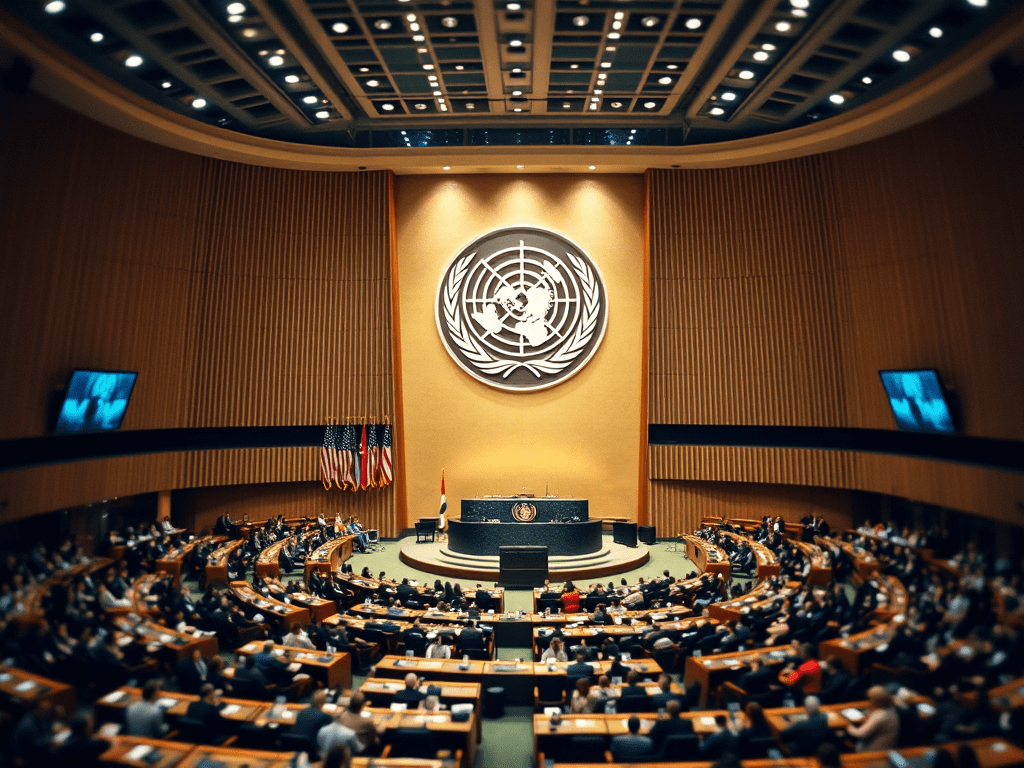
On this day in 1945, the United Nations (UN) was officially established. The UN was born from the ashes of World War II. It aimed to bring the world together. The goal was to prevent the horrors of global conflict from repeating. For GCSE and A-Level History students, understanding the founding of the UN is crucial. It is important in studying modern international relations and global cooperation.
Follow us on Instagram, Facebook and LinkedIn.
Why Was the UN Created?
The world had just endured two devastating world wars in the first half of the 20th century. The League of Nations was created after World War I. It had failed to prevent the rise of militarism. It also could not prevent the outbreak of World War II. World leaders recognised that a stronger and more effective organisation was needed. This organisation could foster peace, mediate disputes and encourage diplomacy.
The UN was officially established on October 24, 1945, when the UN Charter came into effect. This charter had been signed by 50 nations earlier in the year at a conference in San Francisco. The organisation’s main goals were simple but ambitious:
- To maintain international peace and security
- To promote human rights
- To develop friendly relations between nations
- To work towards social progress and better living standards across the world
The Structure of the United Nations
The UN is made up of several key bodies, each with its own role in promoting global peace and cooperation:
- General Assembly: This is like the UN’s parliament, where all member states have equal representation. It discusses international issues and recommends action but cannot enforce decisions.
- Security Council: The most powerful body, responsible for maintaining global peace and security. It has five permanent members—the USA, UK, France, China and Russia—who have veto power over any decisions. The council can authorise military action, impose sanctions and decide peacekeeping missions.
- International Court of Justice: Based in The Hague, Netherlands, this court settles legal disputes between nations.
- Economic and Social Council: It promotes global economic cooperation, helps with social development, and addresses issues like hunger and poverty.
- Secretariat: Headed by the Secretary-General, the Secretariat carries out the day-to-day work of the UN and helps mediate in crises.
The UN’s Role in Global Peace
For many, the UN’s most important role is in maintaining peace and security. It has been involved in peacekeeping missions around the world, mediating conflicts and sending troops to stabilise war-torn regions. Notable UN peacekeeping efforts have occurred in places like Bosnia, Rwanda and Congo. The UN has faced challenges. These include being unable to prevent genocides or intervene effectively in some conflicts. However, it has also successfully brokered peace deals. It has helped rebuild nations after wars.
The UN is also dedicated to human rights. In 1948, it adopted the Universal Declaration of Human Rights. This is a landmark document outlining every person’s rights and freedoms. These rights and freedoms apply regardless of nationality, race, or religion.
The United Nations in the Cold War and Beyond
The UN’s formation also plays an important part in understanding the Cold War, which followed shortly after its establishment. As tensions between the USA and the Soviet Union grew, the UN became a forum. It allowed these superpowers to negotiate. This helped avoid direct military confrontation. This is crucial for A-Level and GCSE students to study. It highlights the delicate balance the UN had to maintain during this period of global division.
Even after the Cold War, the UN’s role has remained significant. The UN tackles global issues like climate change and poverty. It deals with crises such as refugee displacement. The UN continues to shape world affairs. The organisation has adapted to the changing nature of global conflicts. It now has a greater focus on humanitarian aid, climate action and international cooperation.
The Importance of the UN Today
The UN has faced criticisms for being bureaucratic or ineffective at times. However, its core mission remains as vital as ever. This mission includes fostering cooperation between nations and preventing conflict. Today, with global challenges like climate change, pandemics and terrorism, the need for international collaboration has never been more pressing.
For students studying history, the founding of the UN in 1945 represents a pivotal moment in the 20th century. It is also a blueprint for how nations can come together to address common challenges.
Learn More About the UN’s Role in Modern History
The creation of the United Nations is just one of the many significant events that shaped the post-war world. Whether you’re studying World War II, the Cold War, or modern international relations. The UN’s history provides invaluable insights into how global diplomacy has evolved.
At Apollo Scholars, we help GCSE and A-Level history students understand these key historical moments and their significance. Whether it’s through personalised tuition or online resources, we aim to make history both engaging and accessible.
Book your online or in-person history tuition session today.
Unlock our exclusive resources in our Mission Control hub.

Leave a comment