
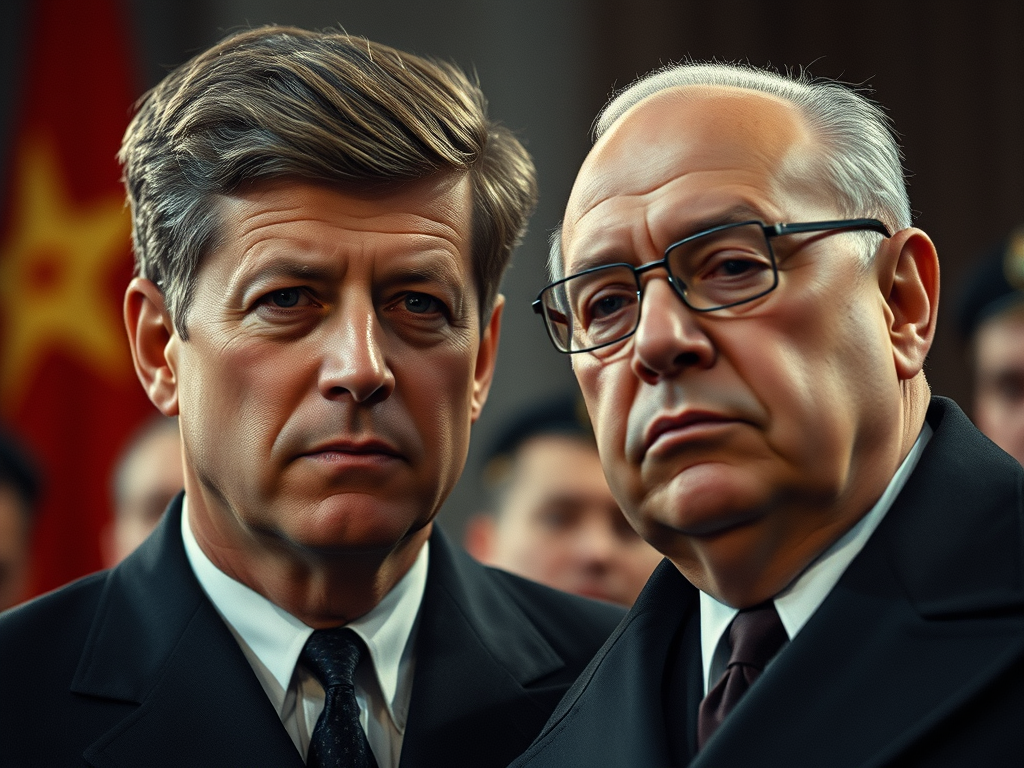
Few historical phenomena have reshaped the global map as fundamentally as the Cold War, a period that defined nearly half a century of human development. Spanning from the closing acts of World War II in 1945 to the dramatic dissolution of the Soviet Union in 1991, this was not a war of traditional conquest, but a “total” conflict of ideologies, economics and existential dread. Consequently, the Cold War is not merely a list of dates; it is an exercise in evaluating how the world was carved into two antagonistic spheres.
This premium guide moves beyond the basics. We will analyse the structural causes of the conflict, evaluate the shifting strategies of “Containment” and “Rollback,” and examine the historiographical debates that define the period.
Table of Contents
- Historiography: Who Started the Cold War?
- The Crucible (1945): Yalta, Potsdam and the End of the Grand Alliance.
- Ideological Foundations: Capitalism vs. Communism.
- The Architecture of Containment: Truman, Marshall and the Iron Curtain.
- Crisis and Brinkmanship: Berlin and the Cuban Missile Crisis.
- The Global Reach: Proxy Wars in Korea, Vietnam and Afghanistan.
- The Nuclear and Technological Front: MAD and the Space Race.
- The Path to Collapse (1980s): Gorbachev, Reagan and Structural Failure.
- Exam Mastery: Structuring the A* Essay.
Subscribe to get access
Read more of this content when you subscribe today.
Leave a Reply