
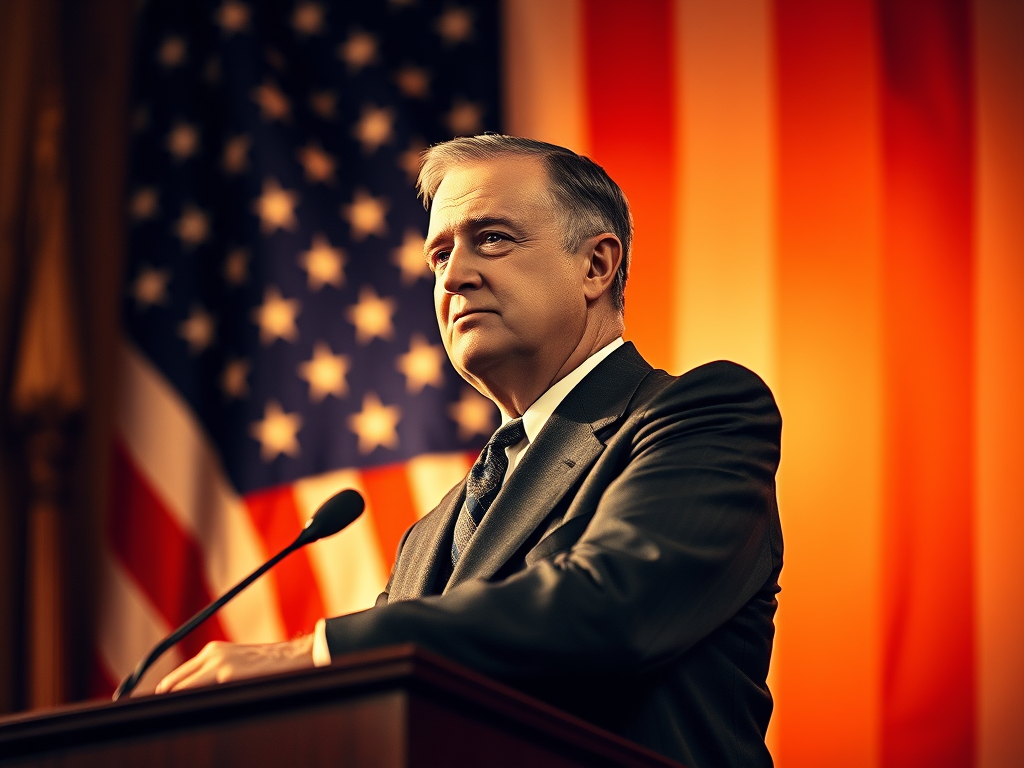
Franklin Delano Roosevelt’s presidency (1933–1945) fundamentally changed the United States and influenced the global order for decades. Serving four terms, he steered the nation through the Great Depression and World War II, leaving behind a political, social and economic legacy that GCSE and A-Level history students must understand in depth.
Transforming the Presidency
Before FDR, U.S. presidents were often more restrained in their use of executive power. Roosevelt broke with that tradition:
- Served an unprecedented four terms (now prevented by the 22nd Amendment, passed in 1951).
- Used radio broadcasts known as “Fireside Chats” to speak directly to the public, strengthening the bond between the president and the people.
- Expanded the role of the presidency as an active problem-solver in both domestic and international affairs.
Impact on U.S. Government and Society
Expansion of Federal Power
- The New Deal permanently increased federal involvement in the economy.
- Created agencies that still exist today, like the Social Security Administration and the Securities and Exchange Commission.
Social Welfare
- Social Security became the foundation of the U.S. welfare state, offering pensions and unemployment benefits.
- Federal programmes set a precedent for future social and economic reforms.
Economic Legacy
- Restored confidence in the financial system through banking reforms.
- Created millions of jobs through public works projects.
- Shifted public expectation: Americans now looked to the federal government for solutions during economic crises.
- While the New Deal did not fully end the Depression, it restructured the economy and improved stability.
Global Impact
Roosevelt’s wartime leadership reshaped international relations:
- Led the U.S. to victory in WWII alongside Britain and the Soviet Union.
- A chief architect of the United Nations, promoting collective security and diplomacy.
- Positioned the U.S. as a post-war superpower, marking the start of the American Century.
Public Memory and Historical Reputation
- Frequently ranked among the top U.S. presidents in scholarly surveys.
- Remembered for his optimism, summed up in the phrase: “The only thing we have to fear is fear itself.”
- His ability to communicate complex policies in simple, reassuring language remains a model for political leaders.
Criticisms and Controversies
- Japanese-American Internment: Over 120,000 Japanese Americans were forcibly relocated during WWII, which is now widely seen as a grave injustice.
- Some argue the New Deal went too far, expanding government power at the expense of free enterprise.
- New Deal programmes often excluded African Americans and women from equal benefits, especially in the segregated South.
- Critics from the political right accused him of undermining capitalism; critics from the left argued he did not go far enough to address inequality.
Why This Matters for GCSE & A-Level Students
FDR’s legacy offers multiple angles for exam questions:
- Change over time: Compare the presidency before and after Roosevelt.
- Impact: Assess whether the New Deal fundamentally solved America’s problems or simply stabilised them.
- Interpretations: Evaluate differing historical views of his leadership.
Exam Tip: In essays, balance achievements with criticisms to show awareness of historical debate. Use specific examples like the Social Security Act, Lend-Lease, and Japanese internment to support points.
Tuition Support from Apollo Scholars
At Apollo Scholars, we help GCSE and A-Level history students:
- Understand cause, consequence and significance in historical topics.
- Learn how to analyse FDR’s policies in both domestic and global contexts.
- Practice writing balanced, well-structured exam answers.
We offer:
- One-to-one online tuition for targeted support.
- Group tuition for collaborative learning and discussion.
- Tutoring support for both content mastery and exam skills.
- Tuition in all of the areas covered by your syllabus.
With our guidance, you will be ready to explain not only what FDR did but why his legacy still matters today.
Leave a Reply to Winston Churchill Biography: Leadership, Achievements and Legacy – Apollo ScholarsCancel reply