
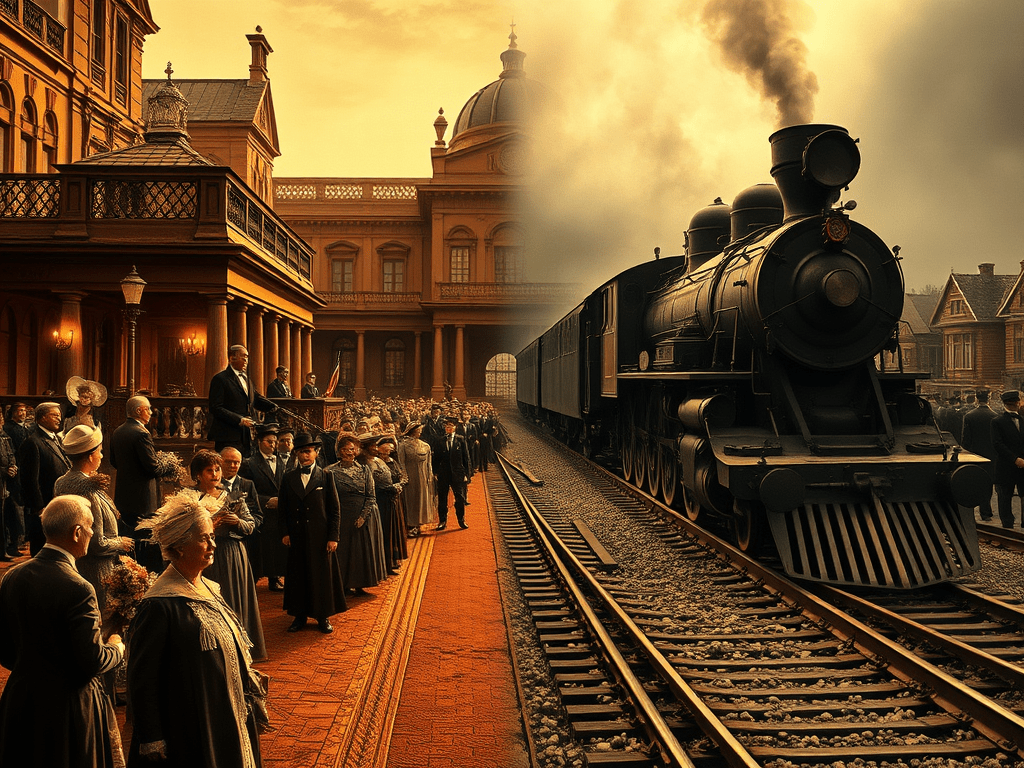
The Gilded Age, a term coined by Mark Twain, describes the period from roughly 1870 to 1900 in the United States, a time when glittering wealth and technological progress masked widespread political corruption, economic inequality and deep social tensions. For history students, this era is critical to understanding how America transformed from a fractured, post-Reconstruction nation into an industrial powerhouse with global ambitions, but at a cost.
FAQs: Understanding the Gilded Age
What period does the Gilded Age refer to?
The Gilded Age typically refers to the late 19th century (1870s–1900), a time of rapid industrialisation, economic growth and social change in the United States.
Why is it called the “Gilded Age”?
The term, popularised by Mark Twain, highlights the era’s shiny surface of wealth and progress, which masked widespread corruption, inequality and social problems.
What were the major economic developments during this era?
The period saw rapid industrial expansion, the rise of railroads, big business and tycoons, alongside significant technological innovations.
How did corruption impact politics in the Gilded Age?
Political machines, patronage and corporate influence were widespread, leading to scandals and undermining public trust in government.
What social issues and divisions arose during this time?
Income inequality, labour unrest, poor working conditions and tensions over immigration and urbanisation marked the era, creating deep social divides.
Subscribe to get access
Read more of this content when you subscribe today.


Leave a comment