
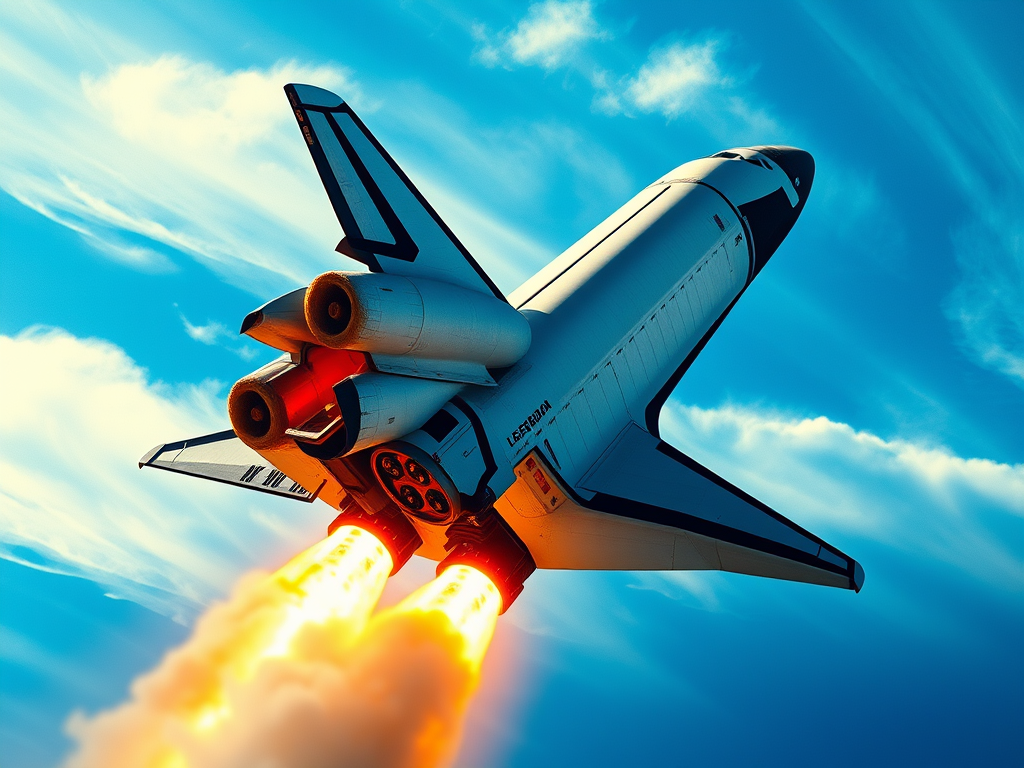
The Space Shuttle Challenger disaster on 28 January 1986 remains one of NASA’s most tragic events. As the world watched, the shuttle broke apart just 73 seconds after liftoff, killing all seven crew members.
This article explores the timeline, causes, crew, and lessons, providing context and analysis suitable for GCSE and A-Level History students.
FAQs About the Challenger Disaster
Q: When did the Challenger disaster happen?
A: 28 January 1986 at 11:39 a.m. EST.
Q: How long after launch did the shuttle explode?
A: 73 seconds after liftoff.
Q: How many astronauts were on board?
A: Seven astronauts.
Q: What caused the Challenger disaster?
A: Failure of an O-ring seal in a solid rocket booster, worsened by cold weather.
Q: Why is the Challenger still remembered today?
A: It highlights lessons about safety, communication and responsibility in science and engineering.
Who Were the Challenger Crew?
The seven astronauts aboard the shuttle represented the best of NASA at the time:
- Francis R. Scobee – Commander
- Michael J. Smith – Pilot
- Judith Resnik – Mission Specialist
- Ellison Onizuka – Mission Specialist
- Ronald McNair – Mission Specialist
- Gregory Jarvis – Payload Specialist
- Christa McAuliffe – Teacher in Space
Christa McAuliffe was set to be the first civilian teacher in space, making the mission a symbol of educational outreach. Her inclusion drew massive public interest, with thousands of students following her journey from the classroom to space.
What Was the Timeline of Events?
- January 27, 1986: Pre-launch preparations complete. Engineers warn about O-ring performance in cold temperatures, but the launch goes ahead.
- January 28, 1986, 11:38 a.m.: Challenger lifts off from Cape Canaveral, Florida.
- 73 seconds after liftoff: The shuttle explodes after the right solid rocket booster O-ring fails.
- Immediate impact: All seven crew members are killed. Families, NASA and the public are shocked.
- Post-disaster investigation: The Rogers Commission investigates the causes, uncovering both technical and managerial failures.
- NASA reforms: Safety protocols, engineering checks and communication processes are overhauled.
What Caused the Challenger Disaster?
The primary cause was the failure of an O-ring seal in the right solid rocket booster. Cold weather had reduced the rubber’s flexibility, allowing burning fuel to escape and rupture the external fuel tank.
The disaster shows how technology, human judgment and organisational culture can combine to create catastrophic outcomes.
What Were the Human and Historical Impacts?
The Challenger disaster had far-reaching consequences:
- Immediate global shock: Millions watched live, including schoolchildren across the U.S.
- Media coverage: The tragedy was broadcast worldwide, making Challenger a symbol of human vulnerability in exploration.
- NASA reforms: Safety protocols, risk management and communication procedures were significantly improved.
- Cultural legacy: Challenger inspired discussions about ethics, leadership and the importance of listening to experts.
- Educational impact: Christa McAuliffe’s story motivated students to pursue science, engineering and teaching.
Why Is the Challenger Disaster Important for Students?
For GCSE and A-Level students, Challenger offers lessons in:
- Science and Technology: Understanding technical failures like the O-ring malfunction, rocket fuel hazards and shuttle engineering.
- Decision Making and Leadership: How organisational pressure and ignored warnings contributed to the disaster.
- Ethics and Responsibility: The importance of valuing human life over schedules or prestige.
- Historical Context: How the 1980s space race, media and public expectations shaped NASA’s decisions.
- Critical Thinking: Analysing primary sources like Rogers Commission reports and news coverage.
Key Takeaways
- The Challenger disaster demonstrates how engineering flaws and human error can have catastrophic consequences.
- It highlights the importance of risk management, ethical decision-making and safety culture in high-stakes industries.
- Understanding Challenger helps students connect historical events with scientific and technological lessons, bridging humanities and STEM learning.

“The Challenger disaster is more than a tragic event in NASA’s history; it is a powerful lesson in human ambition, responsibility and the consequences of decisions under pressure. At Apollo Scholars, we believe that understanding moments like Challenger is not just about remembering what happened but about reflecting on the choices, risks and ethical responsibilities that shaped the outcome. By studying Challenger, young people can learn not just about space exploration, but about leadership, teamwork and the courage it takes to face the unknown.”
Matt
Founder, Apollo Scholars
Summary
On 28 January 1986, the Space Shuttle Challenger exploded just 73 seconds after launch due to an O-ring failure, compounded by cold weather and managerial pressure. All seven crew members, including teacher Christa McAuliffe, tragically lost their lives. The disaster reshaped NASA’s approach to safety, communication and accountability, and remains a critical case study for students learning about history, science and ethics.
Disclaimer: There is no affiliation, association, or connection in any way between Apollo Scholars and NASA. Any references to NASA in this article are for educational and historical purposes only and do not imply an official relationship with Apollo Scholars.
Leave a Reply