
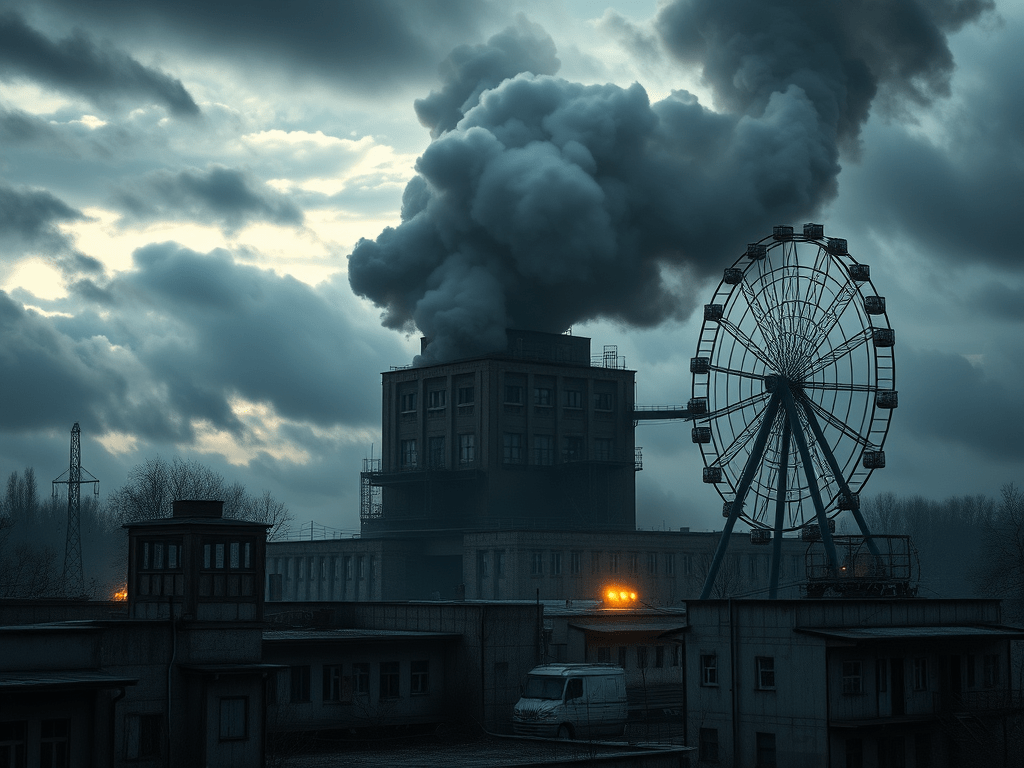
On 26 April 1986, the world witnessed one of the most catastrophic man-made disasters in history. The Chernobyl nuclear disaster, which occurred at the Chernobyl Nuclear Power Plant in the Ukrainian Soviet Socialist Republic, changed the course of nuclear energy policy, environmental awareness and public trust in government. For GCSE and A-Level students studying modern history, Chernobyl serves as a crucial case study of human error, technological risks and international consequences.
What Happened at Chernobyl?
Chernobyl’s Reactor No. 4 exploded during a safety test intended to check how the reactor would behave during a power outage. However, a combination of flawed reactor design, poor safety protocols and operator errors triggered an uncontrollable chain reaction.
- Immediate consequences:
- Two plant workers died on the night of the explosion, and 28 emergency responders and staff succumbed to acute radiation sickness in the following weeks.
- An estimated 400 times more radioactive material was released into the atmosphere than the atomic bomb dropped on Hiroshima.
The disaster captured worldwide attention, revealing the dangers of nuclear energy and the risks of government secrecy.
How Much Damage Did Chernobyl Cause?
Chernobyl’s explosion could have been even more catastrophic. The reactor was highly unstable, and if the containment had failed entirely, it might have caused:
- Radiation contamination across Europe, making large areas uninhabitable for decades.
- Massive environmental destruction, including contamination of rivers, forests and soil that could affect agriculture and wildlife for generations.
- Global nuclear panic, potentially influencing international relations during the Cold War.
In reality, the damage was already profound:
- Evacuation of over 335,000 people from nearby towns, including Pripyat.
- Long-term health consequences, such as an increase in thyroid cancers and other radiation-related illnesses, among residents and workers.
- Environmental devastation, including the infamous Red Forest, where pine trees near the reactor died due to acute radiation exposure.
Even decades later, the disaster left a lasting legacy of radioactive contamination.
Why Was Chernobyl a Seismic Event in World History?
Chernobyl was more than a local disaster; it was a seismic event in world history:
- Cold War Implications: The USSR initially tried to conceal the disaster, delaying evacuation and withholding information. This fuelled global distrust in Soviet governance.
- Nuclear Policy Shift: Countries re-evaluated the safety of nuclear energy, leading to stricter regulations, safety protocols and international oversight.
- Environmental Awareness: The global community began to understand the far-reaching impact of nuclear accidents, making environmental safety a priority in policy-making.
Who Was Affected by the Chernobyl Disaster?
Numbers alone cannot capture the full impact of Chernobyl. The disaster affected thousands of lives:
- The “liquidators”: Over 600,000 workers risked their lives to contain the radiation. Many suffered severe health consequences.
- Displaced families: Entire communities were evacuated, leaving homes, schools and livelihoods behind. Children growing up in contaminated areas faced lifelong uncertainty.
- Generational impact: Psychological trauma, health risks and social displacement affected generations.
How Did Chernobyl Affect the Environment?
Following the explosion, the environment suffered extensively:
- The Red Forest: Named for the pine trees that turned reddish-brown and died due to radiation exposure.
- Contaminated soil and water: Radioactive isotopes spread across large areas, affecting crops, forests and water systems.
- Wildlife recovery: Some areas have seen surprising biodiversity recovery, but radiation levels remain high in parts of the Exclusion Zone.
What Was Done to Contain the Radiation?
Extensive efforts were made to contain the disaster:
- The Sarcophagus: A temporary structure built to enclose Reactor No. 4 and limit radiation release.
- New Safe Confinement (2016): A permanent structure that fully encloses the reactor and allows safe dismantling.
- Exclusion Zone: A 30-kilometre radius around the plant remains largely uninhabited.
For GCSE and A-Level students, this demonstrates the long-term consequences of technological disasters and the complexities of environmental recovery.
What Lessons Can We Learn from Chernobyl?
Chernobyl provides several lessons for students of history:
- Transparency Matters: Government secrecy made the situation worse. Modern crisis management emphasises openness.
- Human Error and Technology: Poor design, inadequate training and operational mistakes show the need for strict safety standards.
- Global Impact: Radiation knows no borders, highlighting the need for international cooperation.
- Historical Perspective: Chernobyl reminds us of the Cold War era and the risks of industrial and technological advancement.
At Apollo Scholars, we always focus on what historical events can teach us about the present and the future.

“Chernobyl is a stark reminder that history is not just about dates and events; it is about understanding the consequences of human decisions. It teaches us that mistakes, secrecy and oversight failures can have global repercussions. Studying it helps students see how lessons from the past can guide better choices in the future.”
Matt
Founder, Apollo Scholars
Why Is Chernobyl Still Relevant Today?
Even decades later, Chernobyl continues to be important:
- Energy debates: Nuclear power remains controversial, and Chernobyl reminds us of the potential risks.
- Historical reflection: Understanding the disaster helps students grasp the interplay between politics, technology and society.
- Human resilience: The courage of the liquidators and displaced families shows the human side of disasters.
Conclusion: Why Chernobyl Matters in History
Chernobyl was more than a nuclear accident; it was a turning point in world history. It exposed vulnerabilities in technology, governance and human decision-making while reshaping environmental and energy policy worldwide. For GCSE and A-Level students, Chernobyl offers lessons that are serious, educational and essential, showing how a single event can ripple across decades, borders and generations.
History teaches us not just to remember events, but to understand them deeply so we can make better decisions in our own time.
At Apollo Scholars, we focus on learning from the past to navigate the future wisely.

Leave a comment