
Welcome Back to Our World Space Week Series!
All this week, Apollo Scholars is celebrating World Space Week 2025, the world’s largest celebration of space and science, with daily blogs that explore the past, present and future of space exploration.
So far, we have looked at how the Apollo missions of the 1960s inspired our name, what it really means to live in space, and the incredible technology that makes it possible.
Today, we are turning our eyes back to Earth to see how space exploration is already making life better for everyone, right here at home.
Satellites: The Silent Helpers Above Us
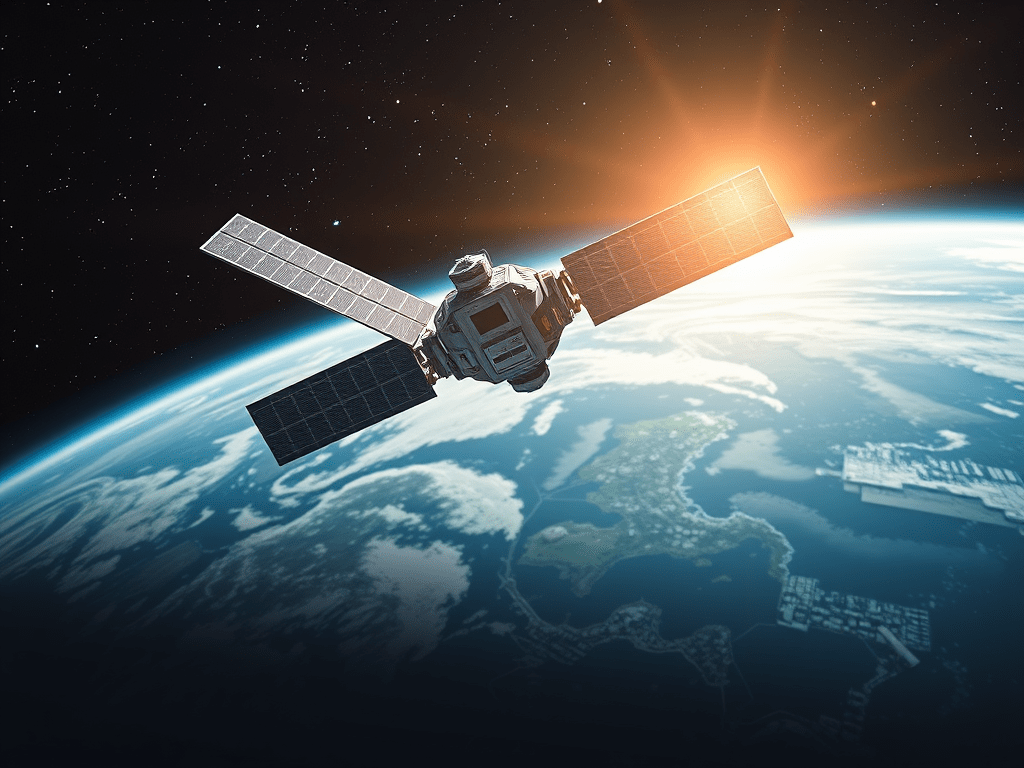
If you checked the weather today, used a map app, or watched live sports, you have already relied on space technology.
Satellites are one of space exploration’s greatest gifts to humanity. They:
- Monitor weather patterns and predict extreme events like hurricanes and floods.
- Provide GPS and navigation that help us travel safely.
- Enable global communication, connecting people from every continent.
- Help scientists track climate change, ocean levels and deforestation.
Every satellite in orbit is a reminder that the work of space scientists, engineers and mathematicians helps protect our planet and improve our daily lives.
Medicine from Space: Science That Heals
It might surprise you to learn that many modern medical breakthroughs started with space research.
Here are just a few examples:
- Heart monitors were developed from NASA’s technology used to track astronauts’ vital signs.
- Digital imaging, used in MRIs and CAT scans, was first created to analyse images from space telescopes.
- Robotic surgery systems are based on precision robotics designed for space missions.

“When we explore space, we are really learning more about ourselves. The technology we build to survive in space often becomes the same technology that saves lives on Earth. That is the power of STEM; discovery with a purpose.”
Matt
Founder, Apollo Scholars
Environmental Protection and Climate Science
Space exploration does not just teach us about the stars; it helps us protect our planet.
Satellites and space sensors monitor:
🌡️ Rising global temperatures
🌊 Melting ice caps
🔥 Wildfire patterns
💨 Air pollution and deforestation
The data collected by space agencies helps scientists, governments and communities make informed decisions about sustainability, conservation and climate action.
In other words, the view from space helps us care for the only home we have ever known, Earth.
Everyday Technology: From Space Labs to Classrooms
Some of the everyday items we use came directly from space exploration:
- Cordless tools were first developed for astronauts on spacewalks.
- Memory foam was designed for spacecraft seats and is now used in mattresses.
- Water filters, scratch-resistant lenses and LED lights all have roots in NASA innovations.
These inventions prove that space exploration drives creativity, not just in labs or rocket launches, but in classrooms and industries around the world.
The Role of STEM Education: Bringing Space Home
Every discovery, invention and breakthrough in space science starts with education. When students study STEM subjects, they are building the exact skills humanity needs to face global challenges.
At Apollo Scholars, we see STEM as the bridge between curiosity and creation, the same kind of curiosity that took humans from the Earth to the Moon.
“The spirit of the Apollo missions still matters today. When young people learn how to question, test and build, they are not just learning; they are preparing to lead the next great discoveries.”
Matt
Founder, Apollo Scholars
Student Challenge: Spot Space in Your Everyday Life
Look around you today and find one piece of technology or knowledge that might have come from space research.
Hint: It could be your phone’s GPS, your school’s weather report, or even the water filter at home!
Write a few sentences about how space exploration made it possible and share your discovery with us using #WorldSpaceWeek and #ApolloScholars.
Final Thought: Why Space Brings Us Together
Space exploration is not just about rockets and astronauts; it is about people, progress and possibility.
It reminds us that when humanity works together, we can solve problems that once seemed impossible. From saving lives with space-inspired technology to protecting our fragile planet, the benefits of space reach every corner of life on Earth.
So next time you look up at the stars, remember: the future of space is built on what we learn today, right here in classrooms like yours.


Leave a reply to Technology and Innovation: Making Life in Space Possible – Apollo Scholars Cancel reply