
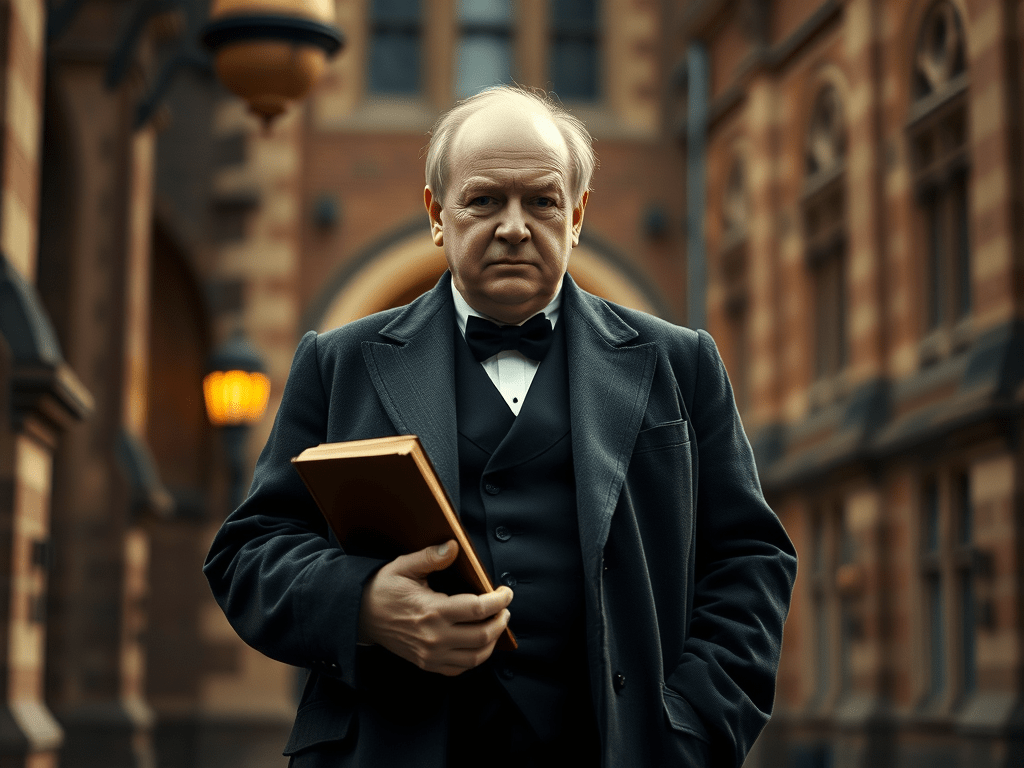
Few leaders in history ignite as much fascination, admiration and fiery debate as Winston Churchill. To some, he is Britain’s greatest Prime Minister, the iron-willed strategist whose leadership in 1940 kept a nation standing against Hitler and helped tip the balance toward Allied victory. To others, he is a figure of contradictions, brilliant yet controversial, celebrated yet critiqued.
For GCSE and A-Level students, Churchill is far more than a name in a textbook. He embodies leadership under pressure, the weight of decision-making and the messy complexity of history itself, a reminder that ambition, circumstance and bold choices can change the world.
Early Life and Education of Winston Churchill
Winston Leonard Spencer Churchill was born on 30 November 1874 at the grand Blenheim Palace in Oxfordshire, a symbol of his aristocratic heritage. He was a member of the distinguished Spencer-Churchill family, whose lineage traced back to dukes and statesmen. His father, Lord Randolph Churchill, was a brilliant but often temperamental Conservative politician, and his mother, Jennie Jerome, was a glamorous American socialite, known for her charm, wit and ambitious nature.
Churchill’s childhood was one of privilege but also emotional complexity. His father was frequently distant and highly critical, placing immense pressure on the young Winston, while his mother’s social life meant she was often absent, leaving him to navigate his formative years largely on his own. Despite these challenges, Churchill developed a resilient character and an independent spirit that would later define his leadership style.
At Harrow School, Churchill struggled with the traditional academic subjects, often finding them tedious, but he discovered a natural talent in history, literature and public speaking. These strengths would lay the foundation for his later career as a writer, orator and statesman. Harrow also nurtured his sense of competition, ambition and courage. These qualities would remain central throughout his life.
After Harrow, Churchill continued his education at the Royal Military Academy Sandhurst, where he trained as a cavalry officer. Sandhurst was rigorous and demanding, but it instilled discipline, physical endurance and a lasting confidence in his abilities. It also cemented his connection to the military, giving him insight into leadership, strategy and the realities of command. These lessons would profoundly shape his later political and wartime career.
Even in these early years, the combination of privilege, challenge and education began to forge a young man with an unshakeable sense of purpose, a flair for boldness and a lifelong drive to leave a mark on history.
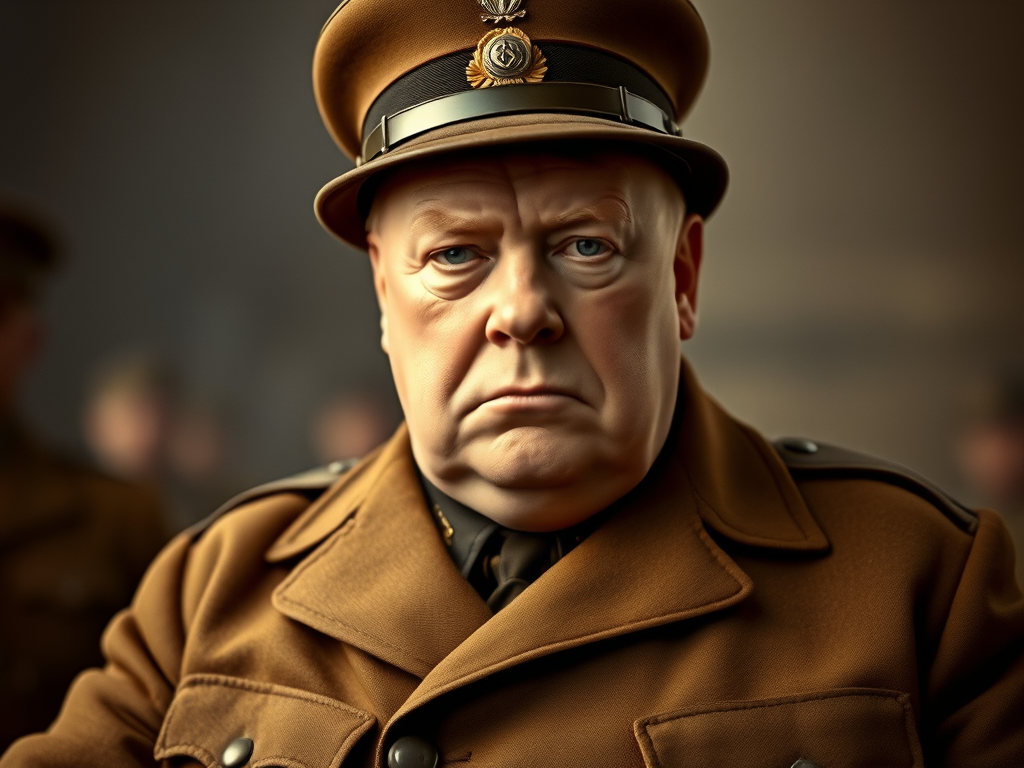
Churchill the Soldier and Journalist
Before entering the political arena, Winston Churchill carved out a reputation through adventure, courage and the written word. From a young age, he sought experiences that combined danger with the chance to observe and document history in the making.
In Cuba (1895), Churchill witnessed Spanish forces clashing with Cuban rebels, gaining insight into colonial conflict and the human cost of war. His time in India (1896–1897) saw him actively participate in military campaigns on the volatile North-West Frontier, experiences that tested his courage, resilience and leadership in harsh conditions.
Churchill’s military career reached a dramatic moment in Sudan (1898), where he took part in the Battle of Omdurman, notable as one of the last significant cavalry charges in British history. Here, he saw the brutal realities of modern warfare and demonstrated the daring and initiative that would later define his public image.
His most famous adventure came in South Africa (1899) during the Second Boer War, where he worked as a war correspondent. Captured by the Boers, Churchill famously escaped from a prisoner-of-war camp, travelling hundreds of miles to freedom. The daring escape captured the imagination of the British public and made him a national hero almost overnight.
Alongside his military exploits, Churchill established himself as a skilled writer and observer. His books, including The Story of the Malakand Field Force and The River War, combined detailed reporting with vivid narrative, earning him both financial security and widespread recognition. Writing became a lifelong passion, sharpening his ability to communicate ideas with clarity, persuasion and flair.
These adventures were more than personal achievements. They shaped Churchill’s self-confidence, sense of destiny and belief in bold action, qualities that would become hallmarks of his leadership during Britain’s darkest hours. By the time he entered Parliament, Churchill was not just a politician-in-the-making, but a man who had tested himself in the crucible of history and emerged ready to confront the challenges ahead.
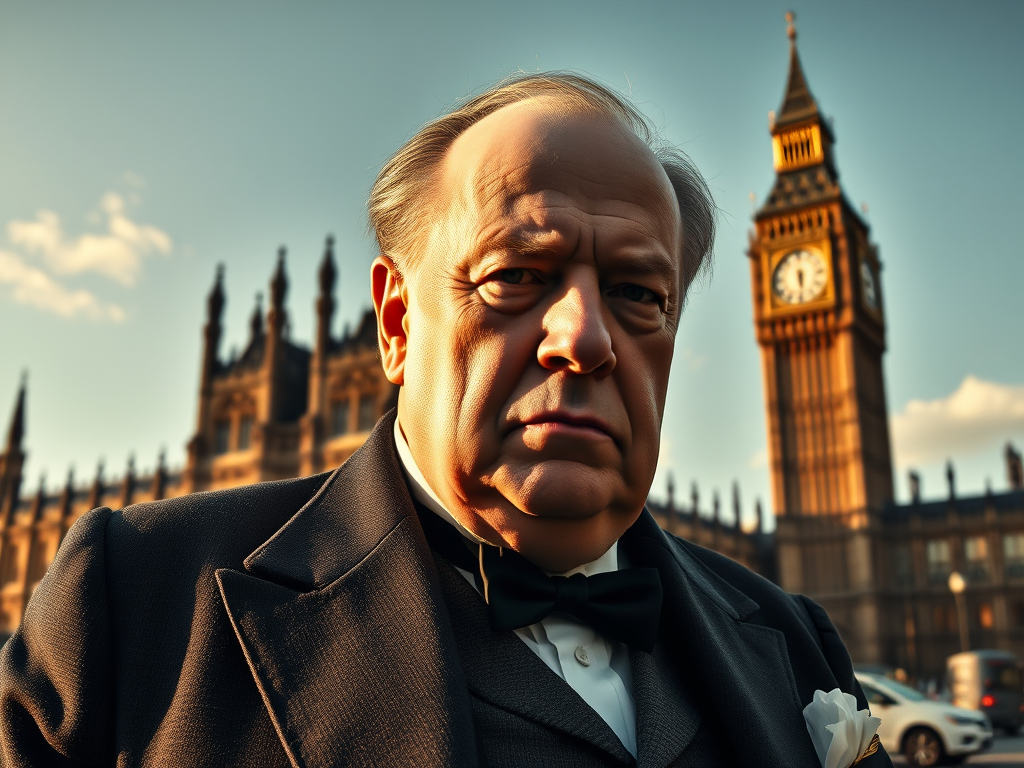
Churchill’s Early Political Career
Winston Churchill entered the political stage in 1900, elected as a Conservative Member of Parliament at just 25 years old. Even at this early stage, he demonstrated ambition, eloquence and a flair for public life. However, his principles would soon put him at odds with his party. In 1904, Churchill made the dramatic decision to cross the floor and join the Liberal Party. He argued that free trade and progressive social reforms were vital for the nation, even if it meant angering former colleagues. Critics accused him of opportunism, branding him a turncoat, but Churchill defended his choice as one of principle, showing early on that his vision for Britain often outweighed party loyalty. This willingness to take political risks became a hallmark of his career.
Once with the Liberal government, Churchill threw himself into the progressive reforms that would leave a lasting impact on British society. He championed Old Age Pensions (1908), providing financial support to the elderly, and helped establish Labour Exchanges (1909), which acted as early job centres to reduce unemployment and match workers with opportunities. Through the Trade Board Acts, he introduced minimum wages for certain industries, aiming to protect the most vulnerable workers and modernise labour relations. These initiatives demonstrated Churchill’s commitment to social reform and his belief that government could play a constructive role in improving citizens’ lives.
Churchill also looked to the future of national security, taking bold steps to modernise the Royal Navy. Recognising the strategic limitations of coal-powered ships, he spearheaded the shift to oil-powered vessels; a forward-thinking decision that enhanced naval efficiency and mobility, and later proved crucial during World War I. This willingness to embrace innovation highlighted Churchill’s capacity to combine practical policymaking with visionary thinking.
Even in his early political career, Churchill’s combination of principle, ambition, and readiness to challenge the status quo set him apart. He was a politician unafraid of controversy, driven by the belief that decisive action, whether in social reform or national defence, could shape the future of Britain. These formative years laid the foundation for the bold, often unorthodox leadership style that would later define him during the nation’s most perilous moments.
Churchill in World War One
By 1911, Winston Churchill had risen to the position of First Lord of the Admiralty, placing him at the heart of Britain’s naval power. Recognising the growing threat from Germany and the changing nature of modern warfare, he worked tirelessly to modernise the Royal Navy, promoting innovations such as new battleships and submarines, improving naval strategy and ensuring Britain was prepared for the looming conflict. His focus on modernisation demonstrated his forward-thinking approach and willingness to challenge tradition in pursuit of strategic advantage.
In 1915, Churchill embarked on one of the most ambitious and controversial operations of his career: the Gallipoli Campaign, also known as the Dardanelles campaign. His plan aimed to open a supply route to Russia, an ally on the Eastern Front, and simultaneously weaken the Ottoman Empire, one of Germany’s allies. However, the campaign suffered from poor planning, inadequate intelligence, logistical challenges and fierce Ottoman resistance. The result was devastating: heavy casualties and strategic failure. As First Lord of the Admiralty, Churchill bore much of the blame and was forced to resign, marking a significant setback in his political career.
Yet even in failure, the campaign revealed key aspects of Churchill’s character. His boldness and willingness to take risks reflected a visionary approach to warfare, while the experience would leave him with hard-earned lessons about planning, leadership and accountability.
Refusing to retreat into politics quietly, Churchill then returned to active military service on the Western Front in France. Serving on the front lines with the Royal Scots Fusiliers, he experienced the brutal realities of trench warfare. This period demonstrated his resilience, courage and determination, traits that would define his leadership in the years to come. Churchill’s time in World War One, both in high office and on the battlefield, was a crucible that tested his abilities, shaped his strategic thinking and cemented his reputation as a leader willing to act decisively, even under enormous pressure.
The Interwar Years: Warnings and Controversy
The decades between the First and Second World Wars were politically turbulent and personally challenging for Winston Churchill. After serving in various government roles, he became Chancellor of the Exchequer (1924–1929). One of his most controversial acts was returning Britain to the Gold Standard, a move meant to stabilise the pound and restore confidence in the economy. However, it overvalued the currency, making British exports expensive, which hurt trade and increased unemployment. While intended as a display of economic discipline, the decision drew sharp criticism and damaged his reputation as a practical policymaker.
Churchill’s imperialist views also placed him at odds with growing movements for independence. He opposed Indian self-rule, clashing with Mahatma Gandhi and other leaders advocating for independence, reflecting his belief in Britain’s civilising mission and global responsibility. During the Edward VIII abdication crisis (1936), he defended the king’s decision to marry Wallis Simpson, further demonstrating his loyalty to the monarchy and the traditional order. His steadfast commitment to the British Empire often drew criticism at home and abroad, particularly as the world shifted toward self-determination and decolonisation.
Yet amid these controversies, Churchill demonstrated remarkable foresight. While most of British politics in the 1930s focused on appeasement, the belief that concessions could prevent another war, Churchill warned repeatedly about Hitler’s ambitions. He argued that Germany posed an existential threat, called for rearmament and pressed the government to prepare for conflict. Though largely ignored at the time, these warnings proved prescient and cemented his reputation as a leader who could see the dangers others missed.
Becoming Prime Minister: 1940
On 10 May 1940, following Neville Chamberlain’s resignation, Churchill became Prime Minister at a moment of national crisis. France was falling to Nazi Germany, the British Expeditionary Force had been evacuated from Dunkirk, and the threat of German invasion loomed large. The country was gripped by fear, and morale was low. Churchill immediately set out to rally the nation, combining strategic decisiveness with inspiring rhetoric, showing a determination to fight even when the odds seemed insurmountable.
Famous Speeches That Inspired a Nation
Churchill’s speeches were more than words; they were weapons of morale. In Britain’s darkest hours, when defeat seemed imminent, his oratory galvanised a nation and inspired a sense of unity, purpose, and defiance.
One of his most famous speeches came just days after becoming Prime Minister in May 1940, delivered to the House of Commons:
- “I have nothing to offer but blood, toil, tears, and sweat.”
This speech was remarkable for its honesty and gravity. Churchill did not promise an easy victory; instead, he prepared the nation for the hardships ahead, instilling a sober determination to endure and fight.
As the Battle of France unfolded and the threat of German invasion grew, Churchill delivered another stirring address:
- “We shall fight on the beaches, we shall fight on the landing grounds, we shall fight in the fields and in the streets, we shall fight in the hills; we shall never surrender.”
These words transformed fear into courage, emphasising resilience and defiance in the face of overwhelming odds. The speech reminded Britons that survival depended on unwavering resolve and collective effort, reinforcing the idea that Britain would not yield to tyranny.
Finally, after the Battle of Britain, Churchill reflected on the nation’s bravery and the historic significance of their struggle:
- “This was their finest hour.”
Here, he celebrated ordinary citizens, soldiers, airmen and civilians alike, as participants in a defining moment of history. The speech helped foster national pride, morale and a sense of destiny, framing the war not just as survival, but as a moral and historic mission.
Churchill’s speeches worked on multiple levels. They informed, reassured and mobilised the public. He combined clarity, emotion and rhetorical flourish, often drawing on history, shared values and vivid imagery. His words shaped public perception, strengthened resolve and unified the nation during moments of extreme crisis. In essence, Churchill demonstrated that leadership is not only about strategy and decisions, but also about the ability to inspire and rally people, making words as powerful as any weapon on the battlefield.
Churchill’s Leadership and Strategy in WWII
As both Prime Minister and Minister of Defence, Churchill centralised Britain’s military leadership, taking a hands-on role in strategy. Some of his key contributions included:
- Strengthening the Allied alliance: He built strong working relationships with U.S. President Franklin D. Roosevelt and Soviet leader Joseph Stalin, crucial for coordinated efforts against Germany.
- Securing U.S. support through Lend-Lease: Before America formally entered the war, he ensured vital supplies and equipment reached Britain.
- Overseeing campaigns: Churchill played a role in planning and supervising operations in North Africa, the Mediterranean and later the invasions of Italy and Normandy.
His leadership style was proactive and bold, though not without failures. Campaigns such as Norway (1940) and Dieppe (1942) demonstrated miscalculations, while some critics questioned his interference in military planning. Yet his vision, energy and willingness to take calculated risks often outweighed these shortcomings, keeping Britain in the fight when surrender might have seemed easier.
Controversies and Criticisms
Even during wartime, Churchill’s decisions drew scrutiny:
- Bengal Famine (1943): Millions of Indians died of starvation. Critics accused his government of prioritising resources for the war over humanitarian aid.
- Bombing of Dresden (1945): The deliberate targeting of civilians raised ethical questions about wartime conduct.
- Empire: Churchill remained resistant to decolonisation, which increasingly conflicted with post-war realities and anti-imperialist movements.
These controversies highlight that Churchill, like all leaders, was complex and imperfect, capable of brilliance and error in equal measure.
Post-War Life and the Cold War
- 1945 Election Defeat: Despite victory in Europe, Churchill lost to Clement Attlee’s Labour Party. The public sought social reform, including the creation of the NHS, reflecting priorities beyond wartime leadership.
- Iron Curtain Speech (1946): Churchill warned of Soviet expansion in Eastern Europe, coining the phrase “Iron Curtain” and helping shape early Cold War geopolitics.
- Second Premiership (1951–1955): Returning as Prime Minister, Churchill focused on foreign policy and nuclear deterrence, though health issues limited domestic reform initiatives.

“Winston Churchill is a complex and difficult character in many ways, but it is precisely this complexity that makes him worth studying. His leadership in Britain’s darkest hour revealed a rare combination of courage, vision and resilience – qualities that steadied a nation on the brink of collapse. Yet his life also reminds us that greatness is never without flaws: his misjudgments and controversies stand alongside his triumphs, forcing us to see him as a man rather than a myth.
For students, Churchill’s story teaches that history is not a ledger of victories or mistakes, but a discipline of perspective, of weighing achievements against failures, understanding context as well as consequence and recognising how individual choices can alter the course of events. To grapple with Churchill is to confront the paradox of leadership itself: that strength is often bound up with imperfection, and that one person’s vision, for better or worse, can shape the destiny of nations.”
Matt
Founder, Apollo Scholars
Churchill as Writer, Historian and Public Figure
Churchill was a prolific author, writing extensively on history, war and biography. His Second World War memoirs shaped public understanding of the conflict and earned him the Nobel Prize in Literature (1953). He also wrote about English history, including the life of his ancestor, the Duke of Marlborough. Writing was not only a passion but a way to influence public opinion and preserve his legacy.
Summary: Churchill’s Achievements
- Inspirational leadership during WWII
- Defending democracy against Hitler
- Forging and maintaining the Allied alliance
- Early social reforms in domestic policy
- Delivering the Iron Curtain speech, shaping the Cold War
- Nobel Prize in Literature
Churchill In Popular Culture
Churchill’s larger-than-life persona has made him a fixture of popular culture, helping to shape public perceptions of his leadership and character. Actors such as Gary Oldman in Darkest Hour brought his wartime resilience and rhetorical genius vividly to the screen, earning Oldman an Academy Award for his portrayal. On television, John Lithgow’s depiction in The Crown highlighted Churchill’s complex personality, blending humour, stubbornness and political acumen. Beyond these, Churchill has appeared in numerous films, documentaries, and even video games, demonstrating how his legacy continues to resonate in popular culture as a symbol of courage, determination and eloquent leadership.
Churchill’s Legacy and Why He Matters Today
Churchill exemplifies how history is shaped by human decisions under pressure. He was brilliant yet flawed, inspiring yet controversial, a reminder that leadership is rarely simple. His life teaches students to weigh achievements and failures, understand context and recognise how individuals can influence the course of history.


Leave a comment