
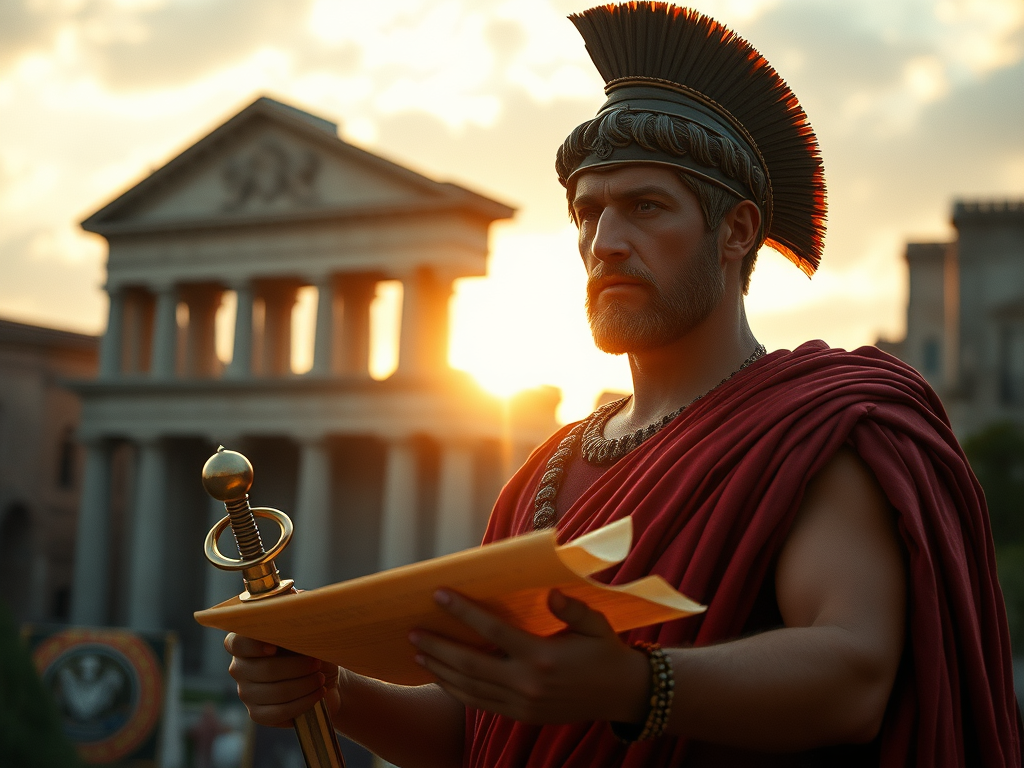
Introduction: Why Study Julius Caesar’s Successes and Mistakes?
Julius Caesar remains one of history’s most remarkable, and divisive, figures. He was a military genius, a political reformer and a skilled writer. Yet, his ambition and concentration of power led to fear, opposition and ultimately his assassination.
For GCSE and A-Level students, understanding Caesar’s achievements and failures provides vital insight into how great leaders can both build and break systems of power.

“Caesar’s story is a lesson in balance: his brilliance brought victory, yet his failures remind us that unchecked power and ambition can lead to downfall. Students benefit from seeing both sides to understand history in full.”
Matt
Founder, Apollo Scholars
What Were Julius Caesar’s Greatest Achievements?
1. Military Conquests and Expansion of Rome
Caesar’s most famous success was his conquest of Gaul (modern-day France, Belgium and parts of Switzerland) between 58 and 50 BC. His campaigns vastly expanded Roman territory and wealth.
2. Reforming the Roman Calendar
Before Caesar, Rome’s calendar was hopelessly inaccurate. Festivals and farming seasons fell out of alignment with the solar year.
In 45 BC, Caesar introduced the Julian calendar, working with the astronomer Sosigenes of Alexandria. It used a 365-day year with a leap year every four years.
This reform was so effective that, with minor adjustments, it is still the basis of the modern Gregorian calendar used worldwide today.
3. Strengthening Rome’s Administration and Economy
Caesar’s domestic reforms aimed to fix corruption and inefficiency:
- Reduced debts and stabilised currency.
- Reorganised local governments and standardised taxation.
- Founded new colonies for veterans and the poor, giving them land and opportunity.
- Expanded citizenship beyond Italy, helping integrate Rome’s vast territories.
These changes made the empire more unified and sustainable.
4. Political Vision and Popular Support
Caesar understood how to appeal to ordinary Romans. Through public games, festivals and reforms, he gained immense popularity.
He positioned himself as a champion of the people (populares), contrasting with the traditional Senate elite (optimates).
His reforms included:
- Limiting luxury spending by senators.
- Rewarding loyal soldiers.
- Redistributing land to veterans.
However, this popularity was a double-edged sword; it strengthened his position but deepened elite resentment.
What Were Julius Caesar’s Failures?
1. Undermining the Republic
Caesar’s rise marked the decline of the Roman Republic. Although he justified his dictatorship as a path to stability, his consolidation of power undermined democratic traditions.
He was appointed “dictator for life” (dictator perpetuo) in 44 BC, a move that alarmed many senators who feared he was becoming a king, a title Romans despised since their monarchy had ended centuries earlier.
2. Overconfidence and Alienation of the Senate
Caesar’s success led to overconfidence. His decision to accept honours such as his image on coins and the right to wear royal dress created suspicion that he wanted absolute power.
The Senate’s resentment culminated in his assassination on the Ides of March (15 March 44 BC). Ironically, his desire to protect Rome from instability led directly to the chaos that followed his death.
3. Civil War and the Cost of Power
Caesar’s crossing of the Rubicon River in 49 BC, declaring “the die is cast” (alea iacta est), triggered a bloody civil war between his forces and those of Pompey.
Although Caesar won, the conflict caused enormous loss of life and permanently weakened the Republic’s institutions.
His failure was not just political; it was moral. In achieving personal dominance, he sacrificed the system of shared governance Rome had built over centuries.
What Are Julius Caesar’s Most Famous Quotes (and What Do They Mean)?
Studying Caesar’s quotes helps students connect his actions to his mindset. Here are some of the most famous, explained for context:
| Quote | Meaning and Context |
|---|---|
| “Veni, vidi, vici” (“I came, I saw, I conquered.”) | Written in 47 BC after his swift victory at the Battle of Zela. It symbolises Caesar’s efficiency and decisiveness. |
| “Alea iacta est” (“The die is cast.”) | Said when crossing the Rubicon, meaning there is no turning back, a commitment to action regardless of risk. |
| “Et tu, Brute?” (“And you, Brutus?”) | From Shakespeare’s play, not a historical quote, but symbolises ultimate betrayal by a trusted friend. |
| “It is better to create than to learn! Creating is the essence of life.” | Reflects Caesar’s confidence and belief in action over passivity. |
| “Men willingly believe what they wish.” | A timeless observation on human nature, still quoted in philosophy and politics today. |
What Can Students Learn from Caesar’s Achievements and Failures?
Julius Caesar’s life teaches that great leadership requires balance, between ambition and humility, power and accountability.
For GCSE and A-Level history, students should focus on evaluation:
- How Caesar’s achievements strengthened Rome.
- How his ambition undermined the very Republic he claimed to protect.
- How his assassination symbolised both his power and his failure to secure lasting peace.
Caesar is both a hero and a warning, a figure whose brilliance and downfall shaped Western political thought for millennia.
How Did Caesar’s Actions Shape the Future of Rome?
Caesar’s death did not end his influence. His adopted heir, Octavian (later Augustus), built on his reforms to establish the Roman Empire.
In a sense, Caesar’s greatest legacy was not what he achieved during his life, but what his actions made possible after his death.
- The Empire lasted over 400 years.
- The Julian calendar shaped global timekeeping.
- His political model inspired leaders and reformers across history.
Conclusion: The Balance of Power and Legacy of Caesar
Julius Caesar was a visionary who expanded Rome, modernised its systems and left a mark on global culture. Yet his flaws, his overconfidence and disregard for shared power, led to his downfall and the Republic’s collapse.
For GCSE and A-Level students, Caesar’s life offers more than facts; it offers reflection. His triumphs and failures are not just ancient history; they are lessons in leadership, consequence and the fragility of power.


Leave a Reply to Who Was Julius Caesar and What Did He Do? – Apollo ScholarsCancel reply