
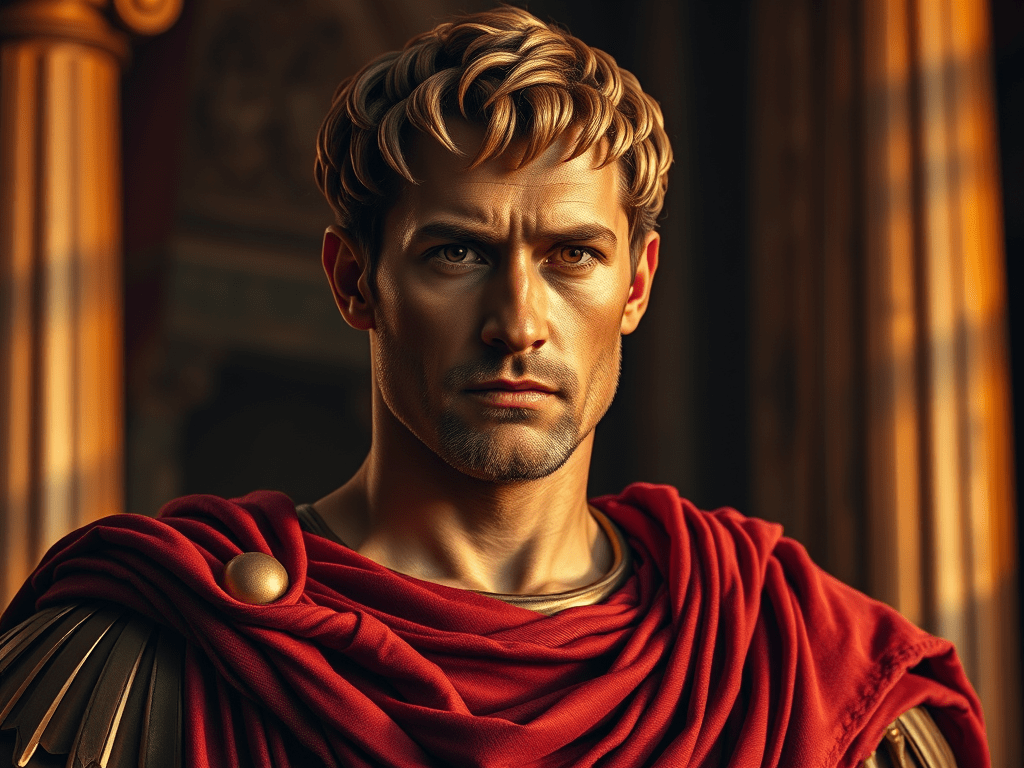
Introduction: Who Was Julius Caesar and Why Is He Still Important?
Julius Caesar (100 BC – 44 BC) is one of the most famous figures in world history. He was a brilliant general, ambitious politician and influential reformer whose life transformed Rome forever. His name has become synonymous with leadership, power and tragedy.
Who was Julius Caesar really, and what did he do to shape history?
For GCSE and A-Level history students, Caesar’s story offers a rich look at how personal ambition, political conflict and historical forces can collide to change the course of civilisation.
In this blog, we will explore Caesar’s early life, his rise to power, his achievements and his shocking assassination.
What Was Julius Caesar’s Early Life Like?
Julius Caesar was born in 100 BC into the ancient but not particularly wealthy Julian family, a patrician lineage that claimed descent from the goddess Venus. His father, also named Gaius Julius Caesar, held local political offices, while his mother Aurelia came from a respected Roman background.
Caesar’s childhood was shaped by both privilege and political instability. The Roman Republic was rife with corruption and power struggles, and political alliances often shifted violently.
He received a rigorous education in reading, writing, philosophy and oratory. These skills were essential for anyone hoping to enter Roman politics. Caesar also studied under some of the best military and rhetorical teachers of his time, developing both intellectual and practical skills that would later define his leadership.
Even in his youth, Caesar showed ambition. At just sixteen, he was appointed flamen dialis, a priest of Jupiter, but political changes forced him to flee Rome when the dictator Sulla came to power. His refusal to divorce his wife Cornelia, despite Sulla’s orders, showed early signs of the determination and defiance that would mark his career.
How Did Julius Caesar Rise to Power?
After Sulla’s death, Caesar returned to Rome and began his rise through the political ranks. He served in the military, gaining valuable experience in Asia Minor, and was awarded the Civic Crown for bravery in battle. His courage and charisma helped him earn the loyalty of soldiers and the admiration of the public.
In 69 BC, Caesar became a quaestor, marking the start of his political career. He climbed the Roman cursus honorum (the sequence of public offices), becoming an aedile, praetor and eventually consul in 59 BC.
One of his most significant political moves was forming the First Triumvirate with Pompey the Great and Crassus. This informal alliance gave Caesar access to military command, money and influence; three things essential for power in Rome.
With this backing, Caesar was appointed governor of Gaul (modern France and Belgium). Over the next decade, he launched military campaigns that expanded Rome’s territory dramatically. His victories brought him immense wealth and fame, but also made the Senate uneasy.
What Were Julius Caesar’s Greatest Achievements?
Caesar’s conquest of Gaul (58–50 BC) was his defining military achievement. His detailed account, Commentarii de Bello Gallico, not only showcased his military genius but also served as propaganda to strengthen his image in Rome.
Beyond the battlefield, Caesar was a skilled reformer and administrator. Among his key accomplishments were:
- Calendar reform: Introducing the Julian calendar, a precursor to the modern system.
- Debt relief: Helping stabilise Rome’s economy after years of war.
- Expansion of citizenship: Extending Roman rights to people in conquered provinces.
- Government reform: Increasing the size of the Senate and improving local administration.
These changes helped unify the vast Roman territories, but they also concentrated power in Caesar’s hands, making him appear less like a Republican leader and more like a monarch.
How Did Caesar Become Dictator and Why Did That Cause Trouble?
In 49 BC, after years of tension with the Senate and his rival Pompey, Caesar made a fateful decision: he crossed the Rubicon River with his army, declaring war on the Republic itself. This bold move sparked a civil war that ended with Caesar victorious and Pompey dead.
When he returned to Rome, Caesar was appointed dictator for life (dictator perpetuo). For some, this was a sign of strength and stability; after years of chaos, Rome had a decisive leader. For others, especially senators who valued the Republic’s democratic traditions, it was a dangerous step toward tyranny.
Caesar’s new position allowed him to pass sweeping reforms, but his dominance bred fear. Statues and honours presented him as a near-divine ruler, and many Romans worried he might crown himself king. This was a title that had been hated in Rome for centuries.
How Did Julius Caesar Die? The Ides of March Explained
On 15 March 44 BC, known as the Ides of March, Julius Caesar entered the Senate expecting to discuss political matters. Instead, he was surrounded by a group of senators, around 60 men, who drew daggers and attacked him.
Among the conspirators were some of his closest allies, including Marcus Junius Brutus and Gaius Cassius Longinus. Caesar was stabbed 23 times and is said to have uttered the famous words “Et tu, Brute?” (“And you, Brutus?”) as he saw his friend among the attackers.
The assassination was meant to save the Republic from dictatorship, but it had the opposite effect. Rome plunged into chaos and civil war, ultimately leading to the rise of Caesar’s adopted heir, Octavian (later Augustus), and the creation of the Roman Empire.
What Can Students Learn from Julius Caesar’s Life and Death?
Caesar’s story is a lesson in ambition, leadership and consequence. His military brilliance and political reforms show what visionary leadership can achieve, but his downfall demonstrates the dangers of excessive power and political arrogance.
For GCSE and A-Level students, understanding Caesar is not just about memorising events. It is about analysing why those events happened, what motivated Caesar, how he gained power, and why his actions still matter.
His life embodies themes of loyalty, betrayal and reform; all critical for interpreting ancient history and the nature of political power.
Conclusion: The Man Who Changed Rome Forever
Julius Caesar’s life reads like a drama. It is filled with ambition, achievement and tragedy. From his early struggles to his conquests in Gaul, his bold reforms and his assassination, Caesar left a legacy that reshaped Rome and the world.
His name became a symbol of leadership itself, inspiring words like “Kaiser” in Germany and “Tsar” in Russia.

“Understanding Caesar’s rise to power is not just about memorising dates; it is about learning how ambition, skill and circumstance intersect to shape history. Students who study his life can learn how decisions echo far beyond their time.”
Matt
Founder, Apollo Scholars
By studying Caesar’s story, students not only prepare for their exams; they gain insight into how individuals can change history, for better or worse.


Leave a reply to What Were Julius Caesar’s Greatest Achievements and Failures? – Apollo Scholars Cancel reply