
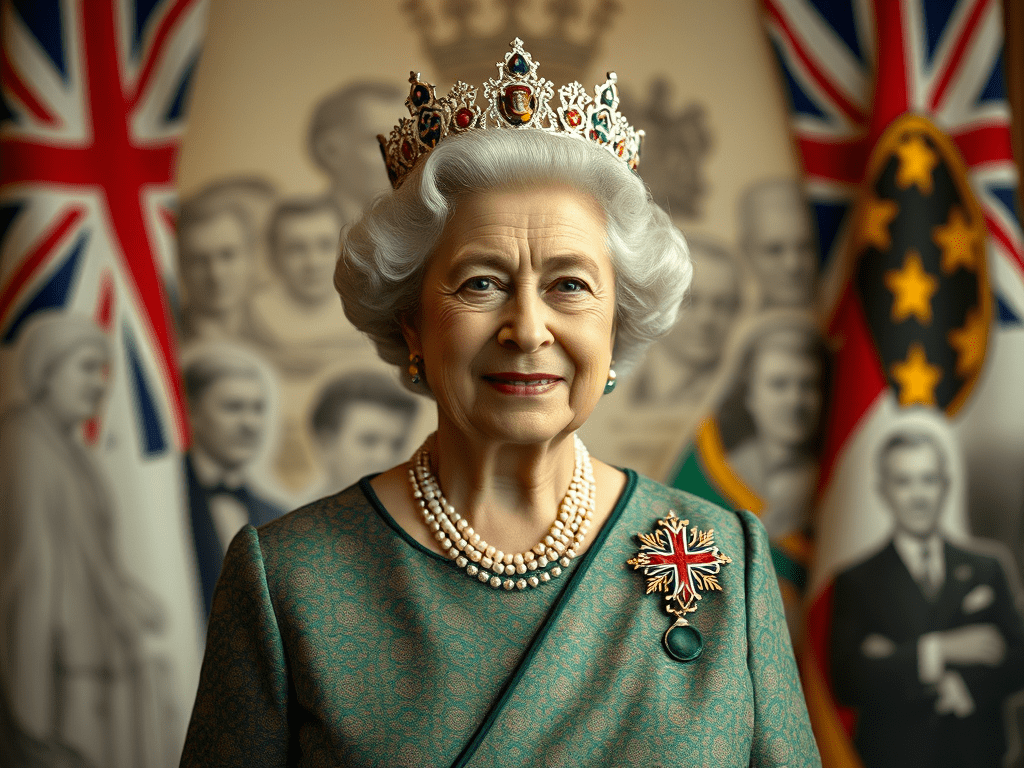
Introduction: A Monarch Without Borders
When Queen Elizabeth II ascended the throne in 1952, Britain was a nation in transition; emerging from the shadow of empire and redefining its place in a new, interconnected world.
Over the next seven decades, she became not just Britain’s monarch, but a global stateswoman, representing stability, dignity and diplomacy. From John F. Kennedy to Nelson Mandela, Ronald Reagan to Xi Jinping, the Queen used her unique position to forge connections across continents and political divides.
Her reign exemplified the power of soft diplomacy; influence through respect, consistency and presence rather than politics.
The Birth of the Global Monarch: The 1953–54 Commonwealth Tour
The Queen’s first major Commonwealth tour in 1953–54 was unprecedented in scale and ambition. Lasting more than six months, it covered 13 nations and 40,000 miles, including Australia, New Zealand, Ceylon (Sri Lanka), Fiji, South Africa, Canada and the Caribbean.
Everywhere she went, crowds gathered in their thousands. For many, it was their first glimpse of a young Queen, a modern monarch representing unity rather than empire.
This tour established her role as a symbol of continuity in a post-colonial world. The warmth she showed to every community, regardless of status or history, transformed her image into that of a global ambassador of goodwill.
Educational Insight:
For GCSE and A-Level students, this tour represents Britain’s evolution from empire to Commonwealth, from ruling to relating, making it a key turning point in post-war international history.
Diplomacy During the Cold War Era
During the Cold War, Elizabeth II became a quiet but significant player in international relations.
Her meetings with world leaders such as Nikita Khrushchev, Charles de Gaulle and Mikhail Gorbachev reflected a period when her steady presence offered reassurance in an age of ideological division.
Her 1965 visit to West Germany symbolised reconciliation after two world wars, and her 1994 State Visit to Russia marked the first by a British monarch in over a millennium of Anglo-Russian history.
Although she had no formal political role, her symbolic power as a trusted and neutral figure allowed her to build bridges across ideological divides.
The Queen and the Presidents: Seven Decades of Transatlantic Friendship
Queen Elizabeth II met 14 U.S. Presidents over her lifetime, from Harry S. Truman in 1951 to Joe Biden in 2021.
Her ability to adapt to changing times while maintaining Britain’s image abroad made her a cornerstone of the “special relationship.”
Harry S. Truman (1951)
As Princess Elizabeth, she met Truman during her first U.S. visit, impressing him with her poise and sense of duty. He admired her “grace and wisdom beyond her years,” setting the tone for decades of mutual respect.
Dwight D. Eisenhower (1957 and 1959)
Her 1957 State Visit included a historic speech at the United Nations, presenting her as a young monarch of peace. Their friendship deepened through personal correspondence, showing the human side of diplomacy.
John F. Kennedy (1961)
Her meeting with President Kennedy and First Lady Jacqueline Kennedy symbolised a new era of modernity and optimism. Both young leaders embodied renewal, charm and a shared vision for a united West during the Cold War.
Richard Nixon (1969)
Amid social unrest and Vietnam protests, the Queen’s meeting with Nixon demonstrated her gift for remaining above politics while representing stability.
Ronald Reagan (1982)
Perhaps her warmest relationship with any U.S. President. They rode horses together at Windsor, and their friendship captured the spirit of the 1980s Anglo-American alliance.
George H.W. Bush and Bill Clinton (1989–1999)
Her meetings with these presidents reflected Britain’s continued relevance during the post-Cold War order. She hosted both with warmth and adaptability, as globalisation reshaped world politics.
Barack Obama (2009–2011)
Obama described her as “one of my favourite people.” Their meetings at Buckingham Palace reflected a deep mutual respect; the Queen admired his composure, while he praised her timeless sense of duty.
Donald Trump (2018–2019)
Despite political controversy, she remained calm and gracious, reinforcing her role as a diplomat beyond politics.
Joe Biden (2021)
In her final presidential meeting, with President Biden at Windsor Castle, she charmed him with her wit and empathy. He later said she reminded him of his mother: “decent, honourable, and caring.”
Educational Insight:
For students, her relationships with U.S. Presidents offer a living timeline of modern diplomacy, showing how a non-political monarch could embody national identity while strengthening alliances.
The Commonwealth: A Family of Nations
The Commonwealth was one of the Queen’s greatest sources of pride.
Under her guidance, it grew from eight to 56 independent member states, united not by empire but by shared values of democracy, equality and cooperation.
She developed a particularly close friendship with Nelson Mandela, who affectionately called her “my friend Elizabeth.” Their warmth symbolised the reconciliation of two nations once divided by history.
Through countless tours, from the Caribbean to Africa, Asia and the Pacific, she used her personal connection to inspire unity and respect. Her visits were not about asserting authority but about listening, learning and linking generations.
Soft Power and the Modern Monarchy
Soft power, influence through culture, tradition and moral authority, was the Queen’s greatest diplomatic tool. She did not legislate or negotiate treaties, yet her presence shaped international relations as powerfully as any statesman’s words.
Her calm, continuity and credibility gave Britain a distinct global identity long after its empire faded.
Conclusion: The World’s Monarch
Through seventy years of service, Queen Elizabeth II became not just the sovereign of the United Kingdom, but a symbol of stability, grace and dialogue in a changing world.
From the smallest Commonwealth island to the White House lawn, she embodied Britain’s best values, including diplomacy, respect and resilience.

“Queen Elizabeth II did not just meet the world, she connected it. Through quiet consistency, she showed that leadership can be both humble and powerful, that tradition and progress can coexist. Her reign reminds us that history is not only shaped by those who make noise, but by those who stand steadfast in silence, representing duty, kindness and respect.”
Matt
Founder, Apollo Scholars
Previous: Power, Politics and the Crown: Elizabeth II and Her Prime Ministers from Churchill to Blair
Next: The Family, the Firm and the Public Eye: Diana, Charles, and the Royal Drama
Elizabeth II Blog Series
Elizabeth II: The Princess Who Became Queen
Power, Politics, and the Crown: Elizabeth II and Her Prime Ministers
The Global Queen: Elizabeth II, Diplomacy and the Commonwealth
The Family, the Firm and the Public Eye: Diana, Charles and the Royal Drama
The Queen and the People: Duty, Devotion and the Heart of a Nation
The Making of Modern Britain: Social, Economic and Cultural Change
Crisis and Controversy: Scandal, Strikes and the Monarchy Tested
End of an Era: Elizabeth II’s Legacy and the Rise of King Charles III


Leave a reply to The Queen and the People: Duty, Devotion and the Heart of a Nation – Apollo Scholars Cancel reply