
Access the Apollo Scholars Exclusive Animal Farm Revision Guide
Before diving into Chapter 1, make sure you have the Apollo Scholars Animal Farm GCSE Revision Guide, designed to help students:
Master chapter-by-chapter summaries
Analyse characters, themes and symbolism in depth
Use model paragraphs and essay techniques
Practice with exam-style questions and sample answers
Achieve top grades in English Literature GCSE
This guide is more than summaries; it is a complete exam toolkit to ensure students understand Orwell’s novel fully and confidently.
What Happens in Chapter 1 of Animal Farm by George Orwell?
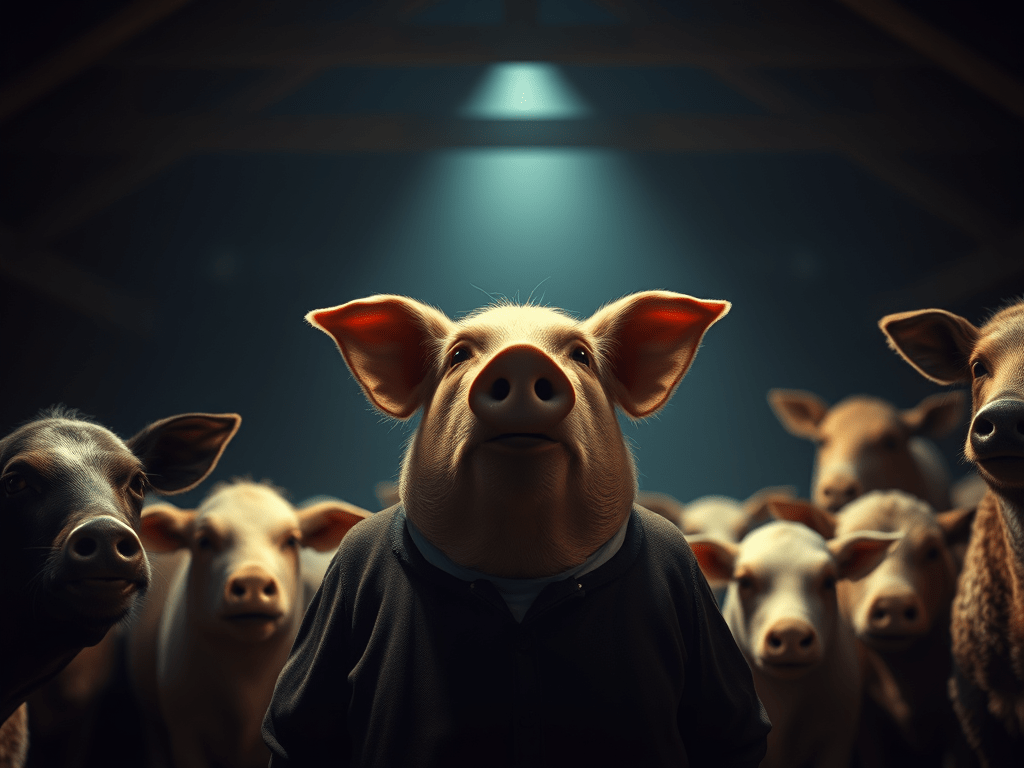
Chapter 1 introduces Manor Farm, where Mr. Jones’ neglect and cruelty leave the animals overworked and underfed. The animals gather secretly after hearing that Old Major, the oldest and wisest pig, has an important dream.
Old Major delivers a speech urging the animals to overthrow humans and establish Animalism, a society based on equality, justice and shared purpose.
The chapter ends with the animals singing “Beasts of England,” a revolutionary anthem symbolising hope and unity.
Who Is Old Major in Animal Farm and Why Is He Important?
Old Major represents revolutionary thinkers like Karl Marx and Lenin. He inspires the animals to challenge authority and dream of a fairer society.
For GCSE students, Old Major is vital because his ideals set the moral and political framework of the novel.
Key Quote:
“All men are enemies. All animals are comrades.”
Orwell demonstrates how simple slogans unite groups but can also be used for propaganda.
What Are the Main Themes in Animal Farm Chapter 1?
- Rebellion and Revolution: The animals begin to question authority and dream of change.
- Equality and Unity: Old Major preaches collective harmony and fairness.
- Exploitation and Oppression: Animals suffer under Mr. Jones’ neglect and cruelty.
- Propaganda and Rhetoric: Old Major’s speech illustrates the power of language to inspire or control.
- Corruption of Ideals: Orwell foreshadows how good intentions can be manipulated by ambition and power.
What Does “Beasts of England” Symbolise in Animal Farm?
The song represents hope, unity and a shared revolutionary identity. Later, Orwell uses it to demonstrate how slogans and propaganda can be twisted to maintain control, making it a key example for GCSE essay analysis.
How Does Orwell Use Setting and Tone in Chapter 1?
The bleak farm and oppressive tone highlight the animals’ suffering. The barn is a symbolic space of rebellion and possibility, while the secretive night-time setting builds tension and emphasises the risk of challenging authority.
How Does Chapter 1 Foreshadow Later Events in Animal Farm?
- The pigs’ early leadership hints at future dominance.
- Repeated slogans and songs foreshadow propaganda use.
- Old Major’s death in Chapter 2 will leave a power vacuum, allowing corruption to grow.
GCSE Insight: Students can analyse how Orwell uses foreshadowing to explore power, loyalty and manipulation.
Why Is Chapter 1 Important for GCSE Students?
Chapter 1 establishes the moral and political contrast between idealism and corruption. Students should focus on:
- Old Major’s speech and rhetorical techniques
- Symbolism in “Beasts of England”
- Setting and tone reflecting oppression and hope

“Old Major’s dream is not just about rebellion; it is about conscience. Orwell shows that ideas can inspire change, but only if we guard them against corruption. For students, this is a reminder that understanding power, language and morality is key to GCSE success.”
Matt
Founder, Apollo Scholars
What Happens Next in Animal Farm?
In Chapter 2, Old Major dies, and the rebellion begins. The pigs start codifying Animalism into rules, and the animals take their first steps toward independence. Orwell also begins planting the seeds of corruption.
👉 Next Blog: Animal Farm Chapter 2: The Rebellion Begins
All Blogs in the Animal Farm GCSE Study Series
✅ Animal Farm Chapter 1: The Dream of Rebellion
Animal Farm Chapter 2: The Rebellion Begins
Animal Farm Chapter 3: Equality, Work and Leadership
Animal Farm Chapter 4: Revolution Spreads and War Comes to the Farm
Animal Farm Chapter 5: Power, Propaganda, and the Rise of Napoleon
Animal Farm Chapter 6: Hard Work, Broken Promises and Corruption
Animal Farm Chapter 7: Betrayal and Terror on Animal Farm
Animal Farm Chapter 8: Corruption, Hypocrisy and Control
Animal Farm Chapter 9: Death, Deception, and Disillusionment
Animal Farm Chapter 10: The Pigs Become Men – The End of the Dream
Animal Farm GCSE Study Hub: Orwell’s Vision, Themes and Context


Leave a reply to Animal Farm Chapter 10 Summary and Analysis: The Pigs Become Men – Apollo Scholars Cancel reply