
Start with the Apollo Scholars Animal Farm GCSE Revision Guide
Before diving into Chapter 10, get your hands on the Apollo Scholars Exclusive Animal Farm GCSE Revision Guide. It is the most comprehensive toolkit for mastering Orwell:
- 📖 Detailed chapter summaries and in-depth analysis
- 💬 Insights into symbolism, themes and historical allegory
- ✍️ Model Grade 9 essays and paragraph structures
- 🧠 Exam-style questions and practice answers to ensure top grades
👉 Download the Apollo Scholars Animal Farm GCSE Revision Guide Here to make sure your understanding goes beyond online notes and secures exam success.
What Happens in Chapter 10 of Animal Farm?
Chapter 10 shows the final collapse of Animalism. The pigs become indistinguishable from humans, completing the full betrayal of the revolution.
Key events include:
- The pigs adopt human habits: walking upright, drinking alcohol and wearing clothes.
- The Seven Commandments are replaced with a single maxim: “All animals are equal, but some animals are more equal than others.”
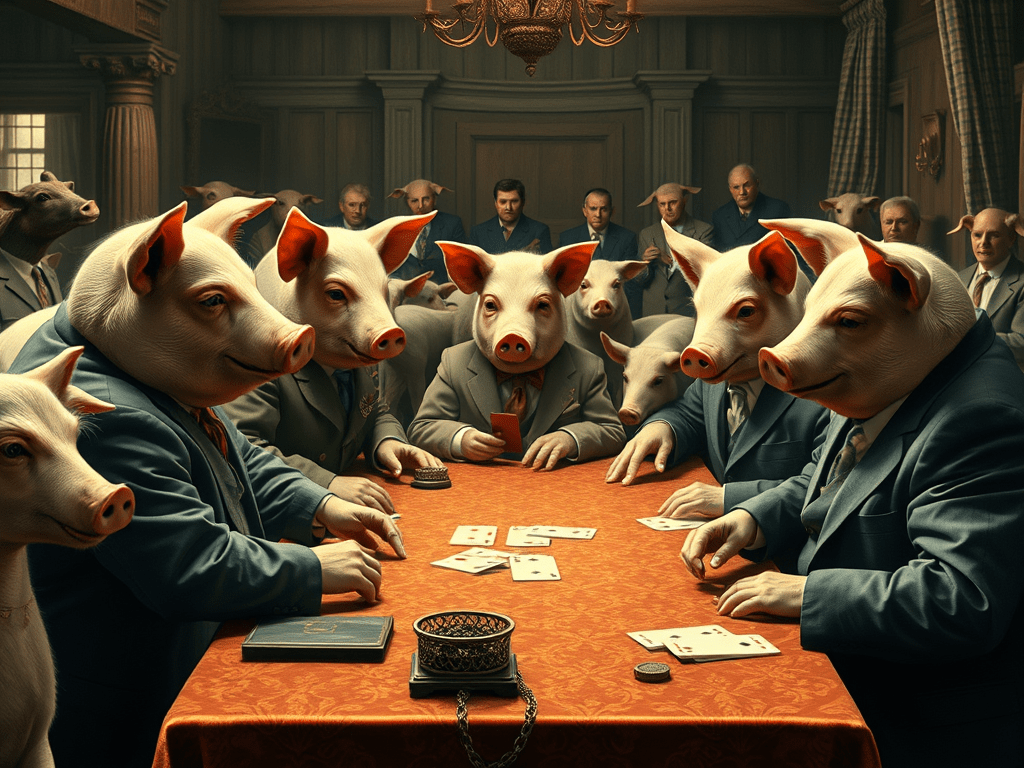
- The other animals observe the pigs playing cards with humans and realise they can no longer distinguish them.
- Napoleon becomes a mirror of the tyrants the animals once overthrew, and the revolution’s ideals are entirely corrupted.
“The creatures outside looked from pig to man, and from man to pig, and from pig to man again; but already it was impossible to say which was which.”
This final image cements Orwell’s warning about the dangers of power, corruption and unchecked leadership.
How Does Orwell Present the Betrayal of the Revolution?
Orwell uses Chapter 10 to show the complete moral failure of the revolution:
- The animals’ hope for equality is gone; they live in worse conditions than before.
- Napoleon and the pigs consolidate wealth and power, enjoying the luxuries they once condemned.
- The transformation of the pigs into humans symbolises tyranny replacing ideology.
GCSE Insight: Students can link this to historical allegory: Napoleon as Stalin, the pigs’ luxury representing the ruling elite and the naive animals as the exploited working class.
What Are the Key Themes in Chapter 10?
| Theme | How It Appears in Chapter 10 |
|---|---|
| Corruption and Power | Napoleon mirrors the human oppressors, abandoning all principles. |
| Betrayal of Ideals | Animalism is entirely corrupted; equality is a lie. |
| Propaganda and Deception | Squealer’s techniques continue to control the animals’ perception. |
| Class and Inequality | The pigs dominate the farm, illustrating social hierarchy. |
| Cyclical Oppression | The animals’ revolution produces the same oppression they sought to escape. |
How Does the Ending Symbolise Orwell’s Political Message?
The final scene is devastatingly ironic:
- The animals can no longer distinguish pigs from humans.
- Orwell communicates that all revolutions risk reproducing the same power structures they oppose.
- It is a warning about the corrupting influence of power and the fragility of idealism.
“The transformation was complete, and the dream of equality lay shattered on the floor of the farmhouse.”
For GCSE students, this is a critical example of allegory, symbolism and thematic conclusion, ideal for essay exploration.
What Lessons Can Students Take from Chapter 10?
- Revolutions can fail if leadership is unchecked and ideals are not protected.
- Propaganda is a powerful tool for controlling perception and rewriting history.
- Blind loyalty, as shown by the animals, leads to exploitation and betrayal.
- Orwell’s allegory links literary analysis with historical context, especially the Russian Revolution and Stalinism.
- Understanding these lessons supports analysis essay marks in GCSE English Literature.

“Chapter 10 completes Orwell’s warning: ideals can die, and power can corrupt even those who once fought for equality. For GCSE students, this chapter is a vital study of leadership, morality and society, teaching that vigilance and critical thinking are essential in any system, literary or real-world. Observing the pigs’ transformation helps students analyse character, symbolism and allegory in the deepest way.”
Matt
Founder, Apollo Scholars
What Happens Next in Animal Farm?
Chapter 10 concludes the novel, leaving readers to reflect on the full arc of the revolution. The animals’ hope has ended, replaced by fear and disillusionment. Students can now link all chapters together for thematic essays, character analysis and exam preparation.
Previous Blog: Animal Farm Chapter 9: Death, Deception and Disillusionment
All Blogs in the Animal Farm GCSE Study Series
Animal Farm Chapter 1: The Dream of Rebellion
Animal Farm Chapter 2: The Rebellion Begins
Animal Farm Chapter 3: Equality, Work and Leadership
Animal Farm Chapter 4: Revolution Spreads and War Comes to the Farm
Animal Farm Chapter 5: Power, Propaganda and the Rise of Napoleon
Animal Farm Chapter 6: Hard Work, Broken Promises and Corruption
Animal Farm Chapter 7: Betrayal and Terror on Animal Farm
Animal Farm Chapter 8: Corruption, Hypocrisy and Control
Animal Farm Chapter 9: Death, Deception and Disillusionment
✅ Animal Farm Chapter 10: The Pigs Become Men – The End of the Dream
Animal Farm GCSE Study Hub: Orwell’s Vision, Themes and Context


Leave a reply to Animal Farm Chapter 5 Summary and Analysis: Power, Propaganda and the Rise of Napoleon – Apollo Scholars Cancel reply