
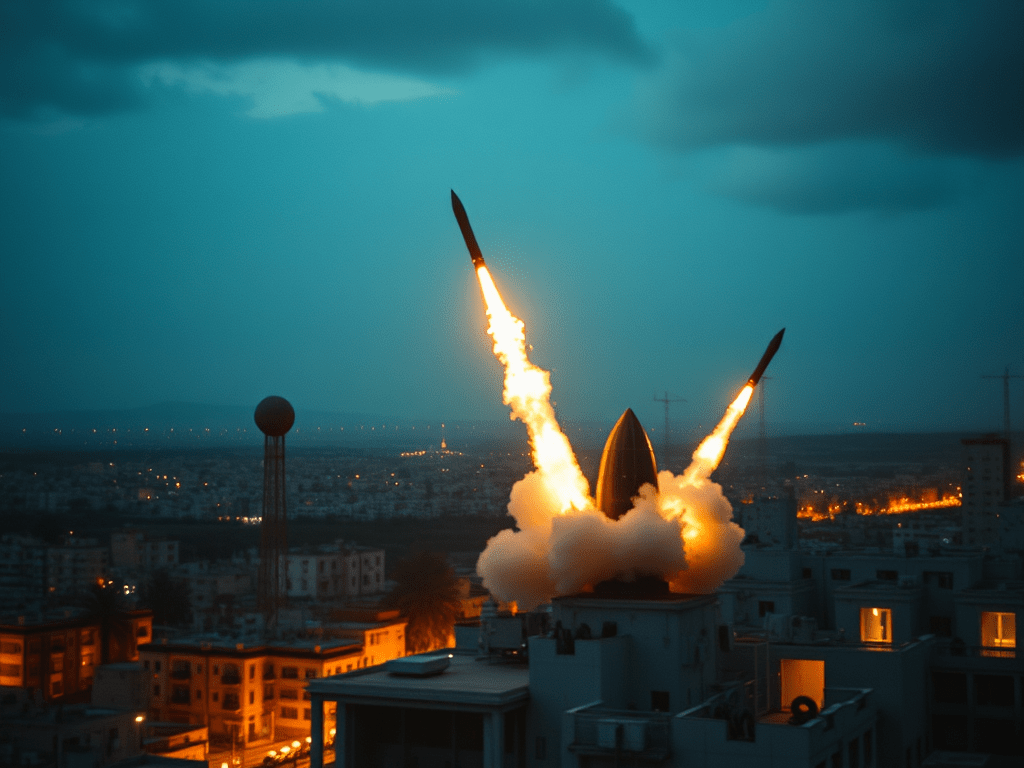
Israel’s Iron Dome is one of the most sophisticated missile defence systems in the world. How exactly does it stop rockets before they reach cities and towns? This Q&A guide explains the technology in a simple, student-friendly way.
To understand the Iron Dome’s origins and overall role, check out our blog on Israel’s Iron Dome.
What Are the Main Steps of Rocket Interception?
The Iron Dome works in three main stages:
- Detection – Radar systems identify rockets immediately after launch.
- Tracking and Analysis – The control system calculates the rocket’s trajectory and predicts where it will land.
- Interception – If the rocket is heading toward a populated area, an interceptor missile is launched to destroy it mid-air.
Related Blog: For real-world effectiveness and success rates, see How Effective Is the Iron Dome in Real Conflicts?
What Technology Makes Interception Possible?
Several technologies work together to make the Iron Dome highly precise:
- Radar Systems: Detect rockets and track their speed and trajectory.
- Battle Management and Control (BMC): Calculates if a rocket threatens civilians.
- Tamir Interceptors: Small missiles that target and destroy incoming rockets mid-air.
The system is designed to prioritise safety while minimising costs, intercepting only rockets that pose a real threat.
Why Doesn’t the Iron Dome Intercept Every Rocket?
Not every rocket is intercepted. The system ignores rockets:
- Predicted to land in open fields
- That pose minimal risk to civilians
This saves resources and money, making the system more efficient.
Related Blog: Learn more about Who Invented the Iron Dome and How Was It Developed?
Can the Iron Dome Handle Multiple Rockets at Once?
Yes, but there are limits:
- Each battery can track multiple rockets simultaneously.
- Extremely large-scale attacks can temporarily overwhelm the system.
- Continuous upgrades and additional batteries improve coverage and response.
Related Blog: For how it fits into Israel’s broader protection plan, see How the Iron Dome Fits Into Israel’s Wider Defence Strategy
Why Is This Important for GCSE and A-Level Students?
Studying the Iron Dome’s interception process helps students:
- Understand modern military technology (Physics and Technology links).
- Analyse state security measures (Politics and Geography).
- Discuss cost vs efficiency in real-world defence systems (Economics).
This makes it a useful exam case study for questions on technology, conflict and security.
Read the full series here:
- Who Invented The Iron Dome And How Was It Developed?
- How Effective Is The Iron Dome In Real Conflicts?
- How Does The Iron Dome Fit Into Israel’s Wider Defence Strategy?
- Why Should GCSE And A-Level Students Learn About The Iron Dome?
- How Was The Iron Dome Developed And What Are Its Wider Impacts?

“Breaking down complex systems like the Iron Dome helps students see how theory meets real life. By understanding the technology behind rocket interception, learners can make strong, informed points in exams.”
Matt,
Founder, Apollo Scholars
Key Takeaways
- The Iron Dome intercepts rockets using radar, control systems and Tamir interceptors.
- Only rockets threatening populated areas are targeted to save resources.
- Each battery can track multiple threats, but large-scale attacks remain a challenge.
- Highly relevant for exam case studies in GCSE and A-Level courses.


Leave a comment