
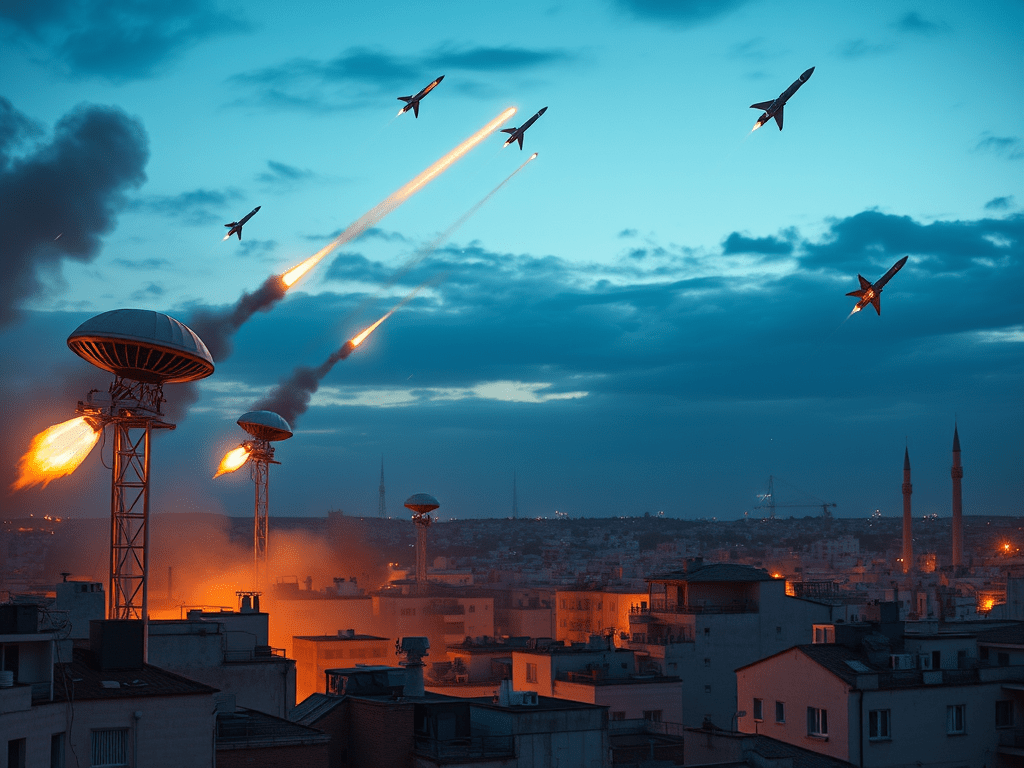
The Iron Dome often gets the most attention, but it is not Israel’s only defence system. Instead, it forms part of a layered defence strategy designed to protect the country from different types of threats.
This blog explains how the Iron Dome fits into that bigger picture, clearly and simply for GCSE and A-Level students.
Start here: If you want a full overview of the Iron Dome itself, read our blog on Israel’s Iron Dome.
What Is a Layered Defence System?
A layered defence system uses multiple levels of protection, each designed to stop different threats.
This matters because:
- Not all missiles are the same
- Threats vary in range, speed and destructive power
- No single system can stop everything
Israel uses several systems together to reduce risk and protect civilians.
What Threats Is the Iron Dome Designed to Stop?
The Iron Dome focuses on short-range threats, such as:
- Rockets
- Artillery shells
- Mortars
These weapons are often launched with little warning and can reach cities in seconds.
Related Blog: Learn how these rockets are stopped in practice in How Does the Iron Dome Intercept Rockets?
What Other Defence Systems Does Israel Use?
Israel’s wider defence strategy includes three main layers:
Iron Dome
- Stops short-range rockets
- Protects cities and civilian areas
- Most commonly used system
David’s Sling
- Designed for medium-range missiles
- Protects against more advanced threats
- Fills the gap between Iron Dome and Arrow
Arrow System
- Targets long-range ballistic missiles
- Designed to intercept threats high above the atmosphere
- Focuses on national-level defence
Together, these systems create overlapping protection.
Why Doesn’t Israel Rely on the Iron Dome Alone?
Relying on one system would be risky because:
- The Iron Dome cannot stop long-range ballistic missiles
- Large-scale attacks could overwhelm a single layer
- Different threats require different technologies
A layered approach spreads risk and increases overall effectiveness.
Related Blog: See how well the Iron Dome performs under pressure in How Effective Is the Iron Dome in Real Conflicts?
How Does This Strategy Reduce Civilian Casualties?
This defence strategy:
- Gives civilians more warning time
- Intercepts threats at different stages
- Reduces damage to infrastructure and homes
While it does not prevent conflict, it significantly reduces harm, especially in urban areas.
Why Is This Important for GCSE and A-Level Students?
This topic links directly to exam content in:
- GCSE Geography: conflict, security and human impact
- A Level Politics: state security and defence policy
- A Level Economics: cost-benefit analysis of defence spending
It is especially useful for evaluation questions, where students must explain why one solution alone is not enough.
Read the full series here:
- Who Invented The Iron Dome And How Was It Developed?
- How Effective Is The Iron Dome In Real Conflicts?
- How Does The Iron Dome Intercept Rockets?
- Why Should GCSE And A-Level Students Learn About The Iron Dome?
- How Was The Iron Dome Developed And What Are Its Wider Impacts?

“Understanding how different systems work together helps students develop stronger analytical skills. A layered defence strategy is a great example of how governments respond to complex real-world challenges.”
Matt
Founder, Apollo Scholars
Key Takeaways
- The Iron Dome is one layer, not the whole system
- Israel uses multiple defence systems to stop different threats
- Layered defence reduces risk and civilian harm
- A strong case study for GCSE and A-Level exams


Leave a reply to How Effective Is the Iron Dome in Real Conflicts? – Apollo Scholars Cancel reply