
What is William Blake’s “London” actually about?
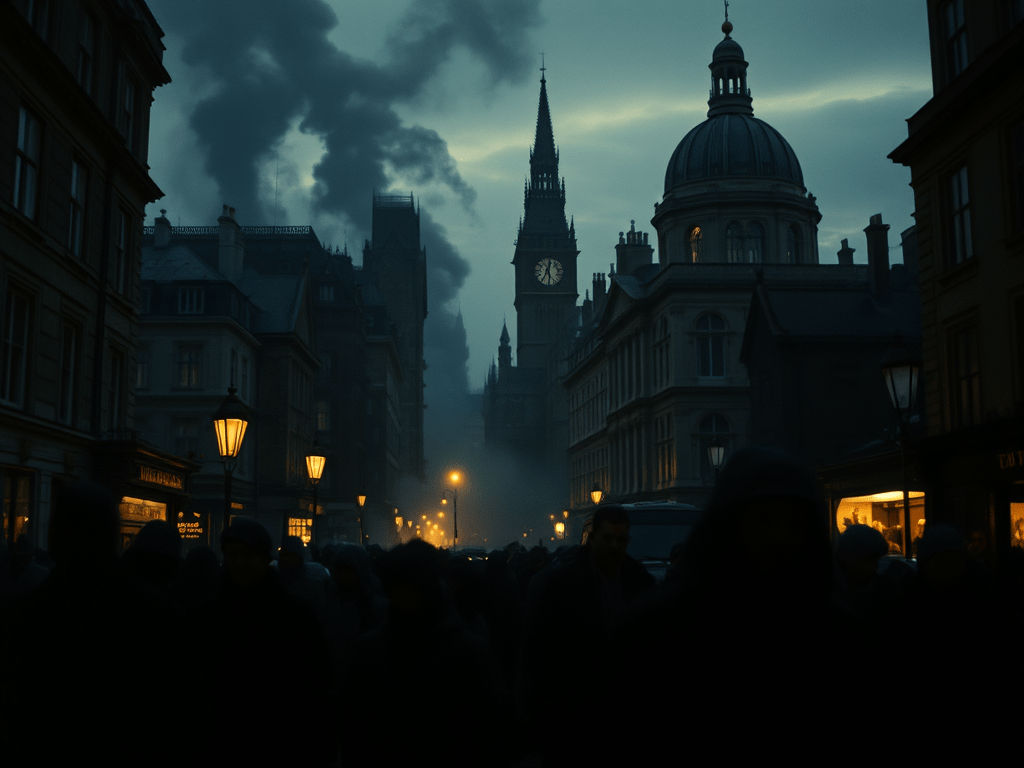
William Blake’s poem “London” explores the dark, oppressive reality of life in the city during the late 18th century. Instead of celebrating London as powerful and wealthy, he highlights misery, poverty, corruption, and human suffering. Blake walks through the streets, seeing pain etched on people’s faces, hearing cries from adults and children alike, and witnessing how powerful institutions control and damage ordinary lives.
The poem challenges the idea that London is a proud symbol of strength and civilisation. Instead, Blake presents it as a city chained by power, greed, and injustice.
What historical context do you need to understand “London”?
To really “get” this poem, it helps to know the world Blake was reacting to:
- London was the heart of the British Empire, full of wealth… but also extreme inequality.
- The Industrial Revolution was beginning, bringing pollution, overcrowding and harsh living conditions.
- Child labour, prostitution, disease and poverty were everywhere.
- Religious and political institutions held enormous control over people’s lives.
- Blake himself was a Romantic poet, deeply concerned with human freedom, emotion and imagination.
So when Blake describes London, he is not just observing a city. He is exposing a system that crushes people.
What are the key themes in William Blake’s “London”?
Power and Control
Blake attacks the powerful institutions that should protect people but instead trap them:
- The Church
- The Monarchy
- The Government
- The Industrial system
He famously writes about the “mind-forg’d manacles”, showing how people are mentally imprisoned by rules, expectations and authority.
Wealth vs Suffering
London is supposedly rich and glorious… yet Blake sees only misery:
- Beggars
- Child chimney sweeps
- Soldiers sacrificed for power
- Families destroyed by disease
He exposes the uncomfortable truth: wealth sits alongside human suffering, and those in power ignore it.
Human Misery and Emotional Pain
The poem is full of emotion:
- “marks of weakness”
- “marks of woe”
- “cry of every Man”
- “infant’s cry of fear”
Everyone suffers. Nobody escapes, not even babies.
Corruption and Hypocrisy
Blake directly attacks institutions:
- The Church is linked to suffering rather than salvation.
- The Monarchy is connected with death and destruction.
- Marriage, usually associated with love, becomes tainted by disease and society’s sins.
This is bold, rebellious and deeply powerful.
Subscribe to get access
Read more of this content when you subscribe today.
Do you want deeper expert analysis, exam-ready guidance and elite tutoring support?
You have just read a powerful breakdown, but this is only the beginning.
At Apollo Scholars, we specialise in:
✨ Making complex literature easy and exciting
✨ Building confidence and top-tier analytical skills
✨ Helping students unlock their full academic potential
If you want:
- Smarter learning
- Clearer understanding
- Higher performance
👉 Join Apollo Scholars and transform your learning experience.


Leave a reply to Stop All the Clocks (Funeral Blues) by W.H. Auden – GCSE & A-Level Poem Analysis – Apollo Scholars Cancel reply