
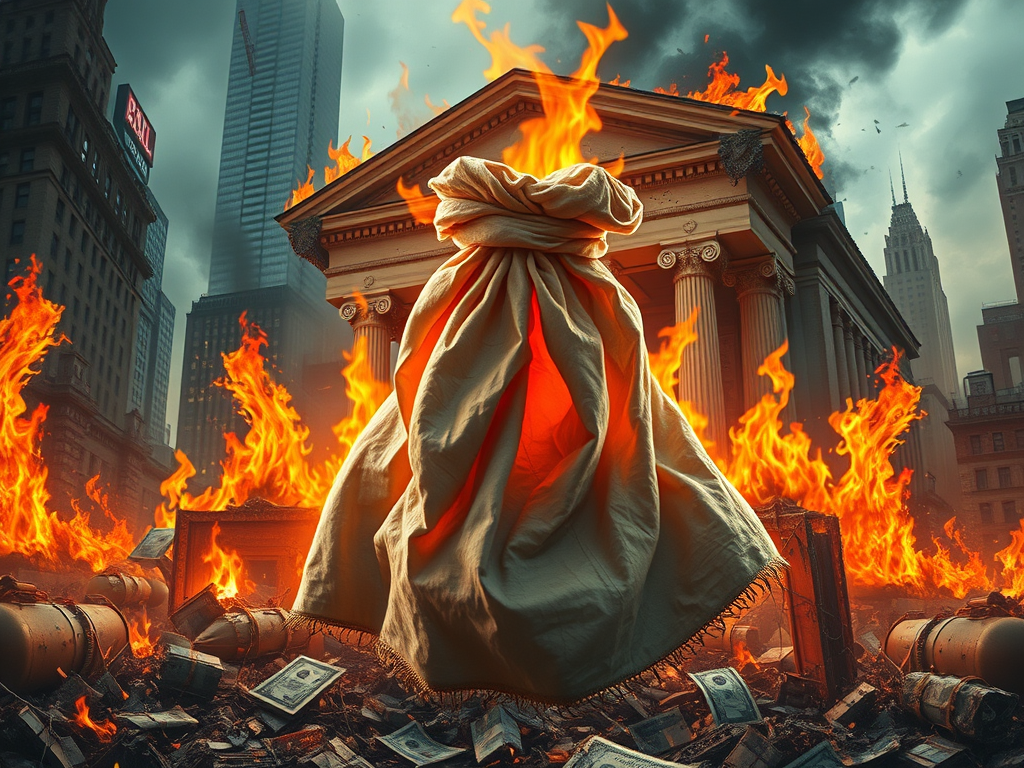
Why did the global economy collapse in 2008? If you ask a physicist, they might call it “systemic instability.” If you ask a historian, they will likely point to greed. However, to truly understand the 2008 Financial Crisis, Apollo Scholars suggest looking at it through a different lens: a fire.
For years, the global financial system was being stuffed with highly flammable material. This “kerosene-soaked rag” was the subprime mortgage market. It was a small, volatile corner of finance that was layered into the very foundation of global banking. When it finally caught fire, the entire world began to burn.
The 2008 Crisis Content Silo: An Apollo Scholars Series
To fully grasp the complexity of the Great Recession, explore our deep-dive chapters curated for the Apollo Scholars community:
- What Actually Caused the 2008 Financial Crisis?
- A deep dive into subprime loans, CDOs and the housing bubble.
- The Lehman Brothers Collapse and the Peak of the Meltdown
- Analysing the “Too Big to Fail” era and the historic bank bailouts.
- The Real-World Impacts of the Great Recession
- How the crisis moved from Wall Street to your front door.
- The Legacy of 2008: Lessons for the Modern Economy
- Regulation, the rise of digital finance, and where risks are hidden today.
What exactly was the 2008 Financial Crisis?
The 2008 financial crisis was a systemic collapse of the world’s banking systems triggered by the bursting of the U.S. housing bubble. It led to the Great Recession, the most severe economic downturn since the 1930s.
As we teach at Apollo Scholars, it was not just a “bad day” for stocks; it was a liquidity crisis. Think of liquidity as the oil in an engine. In 2008, the oil dried up. Banks stopped trusting one another, lending ceased and the global gears of commerce ground to a halt.
What were the main causes of the 2008 market crash?
According to many commentators, the crash was the result of a “perfect storm” of risky financial behaviour and a lack of oversight:
- Subprime Lending: Banks gave mortgages to people with poor credit who could not realistically afford them.
- Securitisation: Wall Street bundled these risky loans into “safe” investments called Mortgage-Backed Securities (MBS).
- Deregulation: Financial “watchdogs” allowed banks to take on massive amounts of debt with very little cash in reserve.
How did the U.S. housing market impact the global economy?
Due to globalisation, a missed mortgage payment in Florida did not just hurt the local bank. Those “toxic” mortgage bundles were sold to investors around the world. When the U.S. housing bubble burst, it pulled the rug out from under the entire global financial system.
The Great Recession: Key Statistics
| Economic Indicator | Impact of the 2008 Crisis |
| Global Wealth Lost | Over $20 Trillion |
| U.S. Jobs Lost | ~8.7 Million |
| Peak Unemployment (USA) | 10% (October 2009) |
| Home Foreclosures | ~3.8 Million families |
Frequently Asked Questions (FAQ)
Who was responsible for the 2008 financial crisis?
The general consensus points to a failure of the “Iron Triangle”:
- Investment Banks: For predatory lending and excessive risk-taking.
- Rating Agencies: For giving “toxic” assets high safety ratings (AAA).
- Regulators: For failing to monitor the “Shadow Banking” system.
What does “Too Big to Fail” mean?
This refers to the idea that some banks (like Citigroup or JPMorgan) are so large and interconnected that their collapse would destroy the entire global economy. This logic was used to justify the $700 billion TARP bailout.
Could a crisis like 2008 happen again?
While we have “fireproofed” the system with the Dodd-Frank Act and higher bank cash reserves, the outlook of many commentators suggests that risk never disappears; it simply moves. Today, economists watch sectors like “Private Credit” and “Commercial Real Estate” for signs of similar instability.
The Bottom Line
Understanding the “kerosene-soaked rag” that started the blaze is the only way to ensure we do not let the same flammable material pile up in the future.
Are you ready to see how the match was struck? Read Chapter 1: What Actually Caused the 2008 Financial Crisis?


Leave a reply to The Scorched Earth: Foreclosures, Unemployment and the Human Cost of the 2008 Financial Crisis – Apollo Scholars Cancel reply