
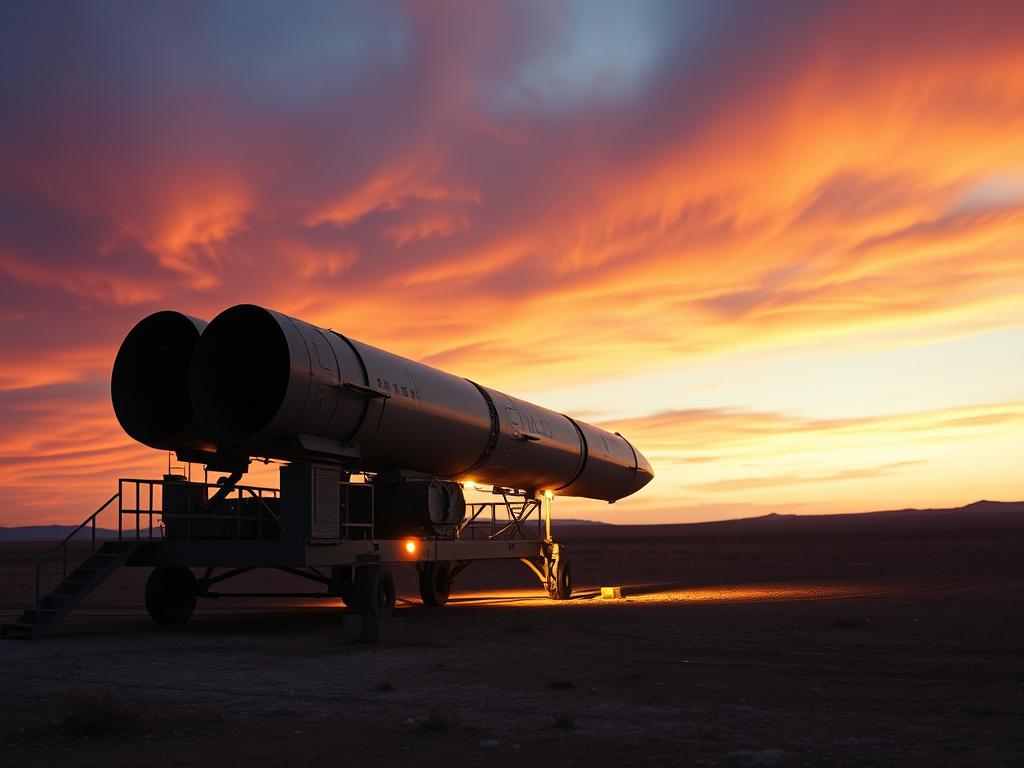
The Cold War arms race and space race transformed the rivalry between the United States and Soviet Union into a competition that extended far beyond traditional military power. From the development of increasingly destructive nuclear weapons to the race to put humans on the Moon, technological achievement became a measure of national strength, political credibility and ideological superiority.
The Cold War was therefore about more than the confrontation between the capitalist West and communist East. It was also a struggle over who could develop the most advanced technology, project the greatest power and convince the world that their political system represented the future.
Technology, Power and the Fear of Destruction
The stakes could hardly have been higher.
The arms race created a world in which a conflict between the two superpowers could potentially destroy civilisation. The development of atomic bombs, hydrogen bombs and intercontinental ballistic missiles (ICBMs) meant that nuclear war was no longer a distant possibility. It could be initiated within minutes.
The space race presented a very different image of technological competition. Rockets, satellites and spacecraft became symbols of scientific progress and national prestige. Yet the connection between the two races was unmistakable: the same rocket technology that could place a satellite into orbit could also deliver a nuclear warhead across an ocean.
This created one of the defining paradoxes of the Cold War. The same technological competition that threatened humanity with destruction also accelerated scientific and technological progress.
The Soviet launch of Sputnik in 1957 demonstrated the scale of this competition. The American response eventually culminated in the Apollo 11 Moon landing in 1969. Between these events, both superpowers invested enormous resources in science, engineering, military research and space exploration.
Who was actually winning? Did the arms race make the world safer through deterrence, or more dangerous by increasing the destructive power available to both sides? Was the space race primarily about scientific discovery, or was it another front in the ideological struggle between capitalism and communism?
Perhaps most importantly, how did these technological competitions change the course of the Cold War?
This guide examines the development of the Cold War arms race and space race, exploring the major technological breakthroughs, strategic calculations and political consequences that shaped the second half of the twentieth century.
Table of Contents
- The Arms Race: From Atomic Monopoly to Nuclear Parity
- Why Did the Soviet Union Develop the Atomic Bomb?
- The Hydrogen Bomb: A New Level of Destruction
- ICBMs and the Transformation of Nuclear Warfare
- Mutually Assured Destruction: Did Nuclear Weapons Prevent War?
- The Cuban Missile Crisis: When the Arms Race Nearly Became a Nuclear War
- The Space Race: From Sputnik to the Moon
- Why Was Sputnik So Significant?
- Yuri Gagarin, NASA and the Battle for Prestige
- Apollo 11: The American Response
- Arms Race and Space Race: Two Sides of the Same Competition
- Propaganda, Technology and Ideological Superiority
- The Economic Cost of the Arms Race
- From Competition to Cooperation: Arms Control and Détente
- Historical Evaluation: Who Won the Technological Cold War?
- The Legacy of the Arms Race and Space Race
- Key Questions and Analytical Conclusions
Subscribe to get access
Read more of this content when you subscribe today.
Leave a Reply