
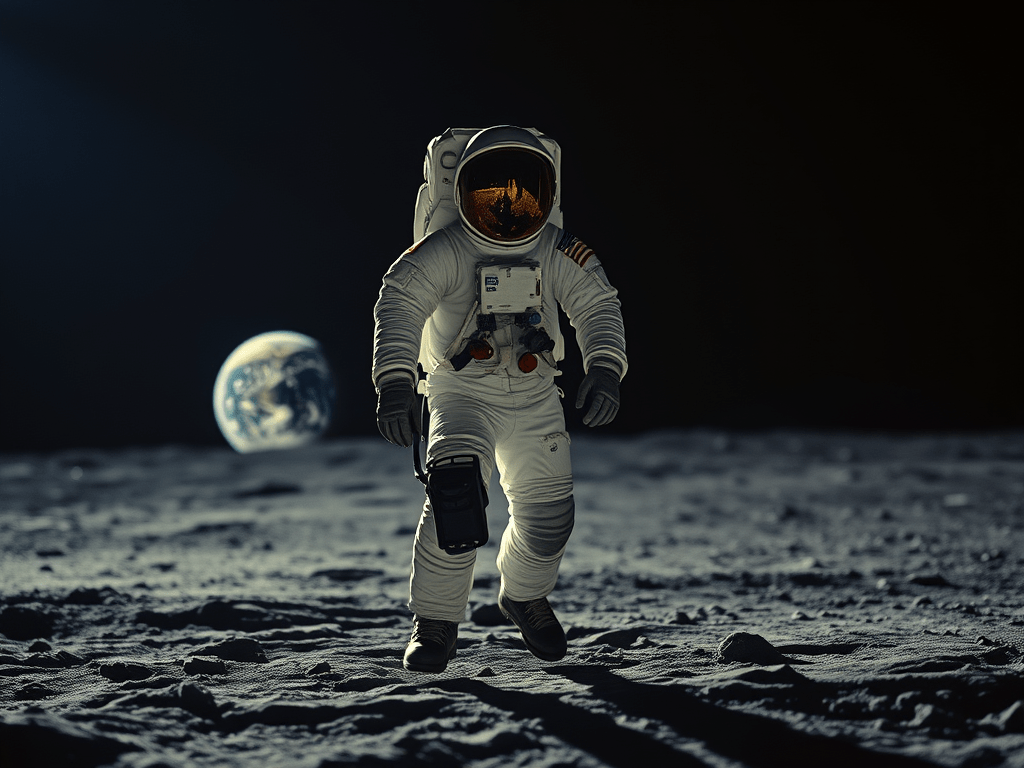
In the grand tapestry of human achievement, few moments shine brighter than the Apollo 11 mission. In 1969, three brave souls didn’t just launch into space. They catapulted into the stratosphere of global fame. They overshadowed even the biggest rockstars of their time. Neil Armstrong, Buzz Aldrin and Michael Collins became household names. Let’s be honest, they were not just astronauts. They were icons of an age!
Follow us on Instagram, Facebook and LinkedIn.
Who were the astronauts on the Apollo 11 mission?
Neil Armstrong, Buzz Aldrin and Michael Collins were the three astronauts who took part in the historic Apollo 11 mission.
What was the significance of the Apollo 11 mission?
Apollo 11 marked the first time humans walked on the moon. Neil Armstrong became the first person to set foot on its surface. He famously declared, “That’s one small step for man, one giant leap for mankind.”
Did Michael Collins walk on the moon?
No, Michael Collins stayed aboard the Command Module. He orbited the moon. Meanwhile, Neil Armstrong and Buzz Aldrin descended to the lunar surface.
How long did the astronauts stay on the moon?
Neil Armstrong and Buzz Aldrin spent about 21 hours on the moon. They spent roughly 2 and a half hours outside the lunar module exploring the surface.
What did the Apollo 11 astronauts do after returning to Earth?
Upon returning, the astronauts were celebrated worldwide. They went on a global tour and met world leaders. They became cultural icons for their role in one of humanity’s greatest achievements.
Blast Off to Stardom
Picture this: It’s July 16, 1969, and the world is buzzing with excitement. The three astronauts are ready to embark on a journey that would change history forever. Neil Armstrong, the cool and collected commander, is set to take humanity’s first step on the moon. Buzz Aldrin, the second man to walk on the lunar surface, has his moon boots polished and ready. And then there’s Michael Collins. Let’s face it, he is the unsung hero of the mission. He stayed in the command module, orbiting the moon. Meanwhile, his buddies were busy walking on the moon! Talk about being the designated driver!
The Saturn V rocket launched into the sky. Millions of fans tuned in to watch. They clutched their snacks like they were at the cinema. With a deafening roar, the engines ignited. The supporting framework peeled away from the craft. Plumes of thick and fiery exhaust fumes billowed sideways from the launchpad. These were hot gases and flames from the rocket’s burning propellants. The rocket surged upward, rapidly accelerating. It moved towards the Earth’s atmosphere and into the vastness of outer space. The vibrations could make anyone feel like they were in the front row, screaming for more. The atmosphere was electric, with the excitement palpable enough to make even the most stoic adult tear up.
The Moonwalk: A Dance with Destiny
On July 20, 1969, Neil Armstrong made history. He uttered the legendary words:
“That’s one small step for man, one giant leap for mankind.”
Neil Armstrong
NASA Astronaut
Let’s just take a moment to appreciate the poetry in those words! Little did he know that his moonwalk would inspire generations of young people. Buzz Aldrin quickly joined him on the lunar surface. The two astronauts took their first steps into the history books. They explored a place that, until that moment, was just a shiny object in the night sky.
Armstrong, Aldrin and Collins’ journey embodied humanity’s deepest and most noble quest: the relentless pursuit of truth and understanding. For centuries, people around the world gazed up at the stars. They sought wisdom, guidance and a sense of belonging in the vast unknown. However, in 1969, the longing to touch the heavens became more than a dream—it became a reality. Mankind no longer only wondered at the stars. Instead, they aimed to explore the seemingly inaccessible by placing a man on the moon. In an act of triumph and hope, they aimed to bring him safely home.
Let’s be real. While they were doing their thing on the moon, Collins was up there orbiting in the command module. He was probably listening to the best of Elvis on a loop. You can just imagine him saying, “Hey guys, don’t forget to take some selfies for me!” Meanwhile, Neil and Buzz were planting flags and collecting moon rocks like they were rare Pokémon cards. Can you imagine the two of them squabbling over who got the coolest moon rock?
The Fame Game: Bigger Than The Beatles
Upon their return to Earth, Neil, Buzz and Michael found themselves in a whirlwind of fame and admiration. They were greeted with parades, awards and the kind of fanfare usually reserved for rockstars. They met everyone of note, from prime ministers and princesses to presidents and princes. They weren’t just heroes. People everywhere wanted to know what it was like to walk on the moon. Children pretended to be astronauts in their rooms by jumping off their chairs. Men wanted to be them, and women wanted to be with them. The astronauts gave interviews. They made public appearances. They even went on a world tour, signing autographs like they were the newest boy band.
At this point, they were so famous that you half-expected to see them on the cover of Rolling Stone. Instead, they ended up on stamps, coins and even cereal boxes! Breakfast never felt so star-studded. You can almost imagine kids pleading with their parents. They begged to buy “Moon Rocks” cereal just to get a glimpse of the astronauts’ faces on the box. “Can we have astronaut-shaped marshmallows too, Mum?”
But amidst all the glory, the trio also faced the heavy weight of fame. Michael Collins, in particular, took a more introspective approach to his stardom. He once remarked, “I have a feeling that I will never be remembered in the same way as Neil and Buzz.” But let’s not forget—while his buddies were walking on the moon, Michael was orbiting it. For a while, he was the most solitary human being. That’s legendary in its own right!
The Legacy
The Apollo 11 mission accomplished more than putting men on the moon. It united humanity in a shared sense of wonder. It also gave us a sense of possibility. The three astronauts showed us that the sky was not the limit, and they inspired countless people to dream big. Today, the moon landing is celebrated as one of humanity’s greatest achievements. Those three astronauts became symbols of exploration and courage. Even now, they remain bigger than rockstars.
The Apollo 11 mission was not just about science and exploration. It was an epic adventure. This adventure blended bravery, humour and an unmistakable spirit of camaraderie. Neil Armstrong, Buzz Aldrin and Michael Collins didn’t just make history—they became legends. The next time you gaze up at the moon, remember it is over 230,000 miles away. Think of those three astronauts. Think of the risks they took to achieve mankind’s most noble goal. They made us believe that with enough grit and determination, anything is possible!
The next time someone mentions a rockstar, remind them who did it first. Neil, Buzz and Michael soared above the clouds.
How Apollo Scholars can help
Book your online or in-person History tutoring session here.
Unlock our exclusive content in our Mission Control hub.
Find additional resources on History here.
For more information, we recommend the BBC World Service podcast, ‘Thirteen Minutes to the Moon‘ which you can also find embedded below.


Leave a reply to Apollo 11 Moon Disaster Speech by Bill Safire – Full Text, Meaning and Analysis – Apollo Scholars Cancel reply