
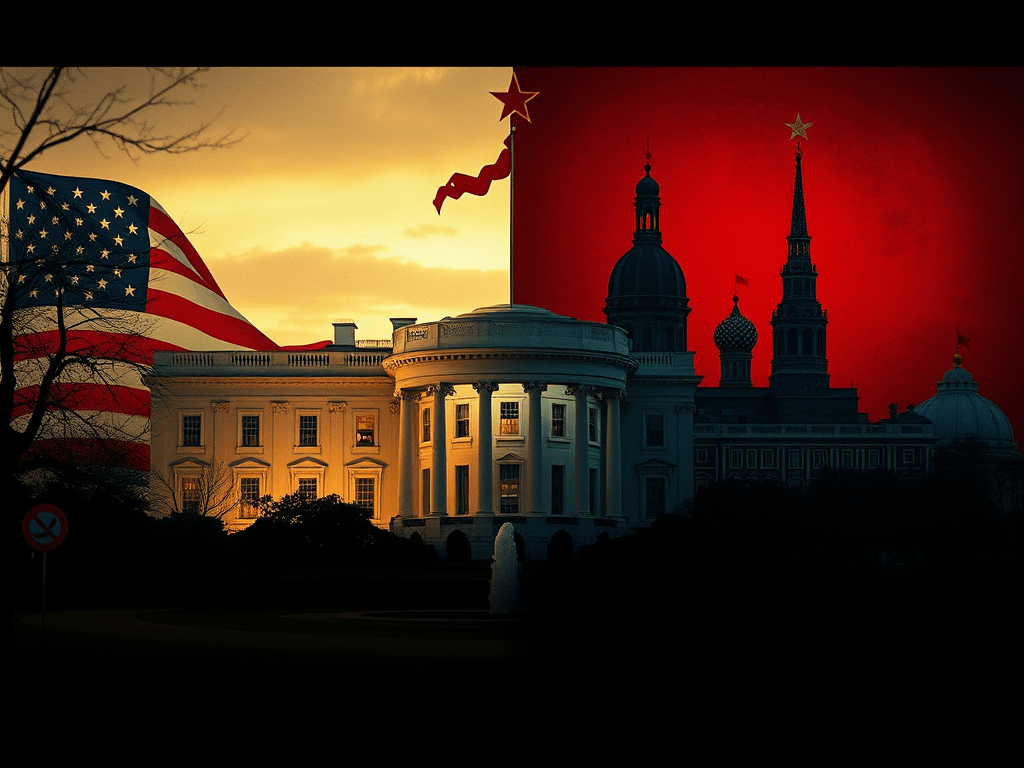
The Cold War was one of the most significant geopolitical conflicts of the 20th century. It shaped international relations for nearly five decades. The era began with the breakdown of alliances. It continued until the eventual collapse of the Soviet Union. This period was marked by ideological battles, military confrontations and moments of diplomatic tension. In this summary, we will guide you through key events in the Cold War. You will find links to more detailed discussions on each topic.
Follow us on Instagram, Facebook and LinkedIn.
1. The Grand Alliance to Bitter Rivals: How the Cold War Began (1945–1949)
The Cold War began when the Grand Alliance fell apart. This alliance had formed during World War II. At the Yalta and Potsdam conferences, ideological differences between the USA, Britain and the Soviet Union led to rising tensions. Learn more about how Stalin, Truman and Attlee shaped the early Cold War here.
2. The Iron Curtain Falls: Soviet Control of Eastern Europe and Western Response
The Soviet occupation of Eastern Europe and the Western response became a defining feature of the Cold War’s early years. From Churchill’s Iron Curtain speech to the Truman Doctrine, this period set the stage for the division of Europe. Dive deeper into these pivotal events here.
3. The Berlin Blockade: The First Major Cold War Conflict (1948–1949)
The Berlin Blockade marked the first major conflict of the Cold War. The USSR attempted to cut off Western access to West Berlin. The Western Allies’ response, the Berlin Airlift, was a turning point that led to the formal division of Germany. Read more about the blockade and airlift here.
4. The Korean War: Cold War Conflict on a Global Stage (1950–1953)
The Korean War witnessed violent clashes between East and West in Asia. The USA, USSR, China and the UN all played significant roles. The conflict had a profound impact on Cold War strategy and international relations. Discover more about the war’s impact here.
5. Arms Race and Space Race: The Cold War’s Technological Battle
The competition to develop nuclear weapons and space technology heightened Cold War tensions. This included the launch of Sputnik and the race to develop ICBMs. Learn how the arms and space races shaped the conflict here.
6. Crisis in Cuba: The Cuban Missile Crisis and the Brink of Nuclear War (1962)
The Cuban Missile Crisis brought the world to the brink of nuclear war. For 13 tense days, the USA and USSR stood on the edge of confrontation. Discover how this crisis changed Cold War diplomacy here.
7. From Brinkmanship to Détente: Cooperation in the Cold War (1963–1979)
The period from brinkmanship to détente saw a shift from intense confrontation to more cooperative diplomacy. These changes were marked by treaties like the Moscow Test Ban Treaty and the SALT talks. Explore this era of cautious cooperation here.
8. The Vietnam War: America’s Quagmire in Southeast Asia (1963–1975)
The Vietnam War escalated under Presidents Johnson and Nixon, significantly affecting U.S. domestic politics and Cold War strategy in Asia. From the Tet Offensive to Nixon’s Vietnamisation policy, discover how the war unfolded here.
9. Gorbachev and the End of the Cold War (1985–1991)
Mikhail Gorbachev’s reforms of glasnost and perestroika were significant. They, combined with economic pressures and the collapse of the Eastern Bloc, brought about the end of the Cold War. Learn more about his role in the final years of the Cold War here.
10. The Collapse of Communism: The Fall of the Soviet Union and Its Global Impact
The Soviet Union collapsed, and Germany reunified. The dissolution of the Warsaw Pact marked the end of Soviet control in Eastern Europe. It also signaled the end of the Cold War itself. Learn about the global consequences of the Soviet Union’s fall here.
By exploring these crucial events, you can gain a deeper understanding of how the Cold War shaped the modern world. Follow the links for a detailed breakdown of each topic.
How Apollo Scholars can help
At Apollo Scholars, we understand that navigating the complexities of history can be challenging. This is especially true when studying pivotal events like the Cold War. We provide personalised support tailored to your learning needs. Whether you need assistance with exam preparation or essay writing, we can help. We focus on fostering critical thinking. We also develop analytical skills. Apollo Scholars is here to help you achieve your academic goals in history and beyond.
Book your online or in-person History tutoring session here.
Unlock our exclusive content in our Mission Control hub.
Find additional resources on historical topics here.


Leave a reply to Apollo Scholars: Comprehensive Learning Resources for Students – Apollo Scholars Cancel reply