
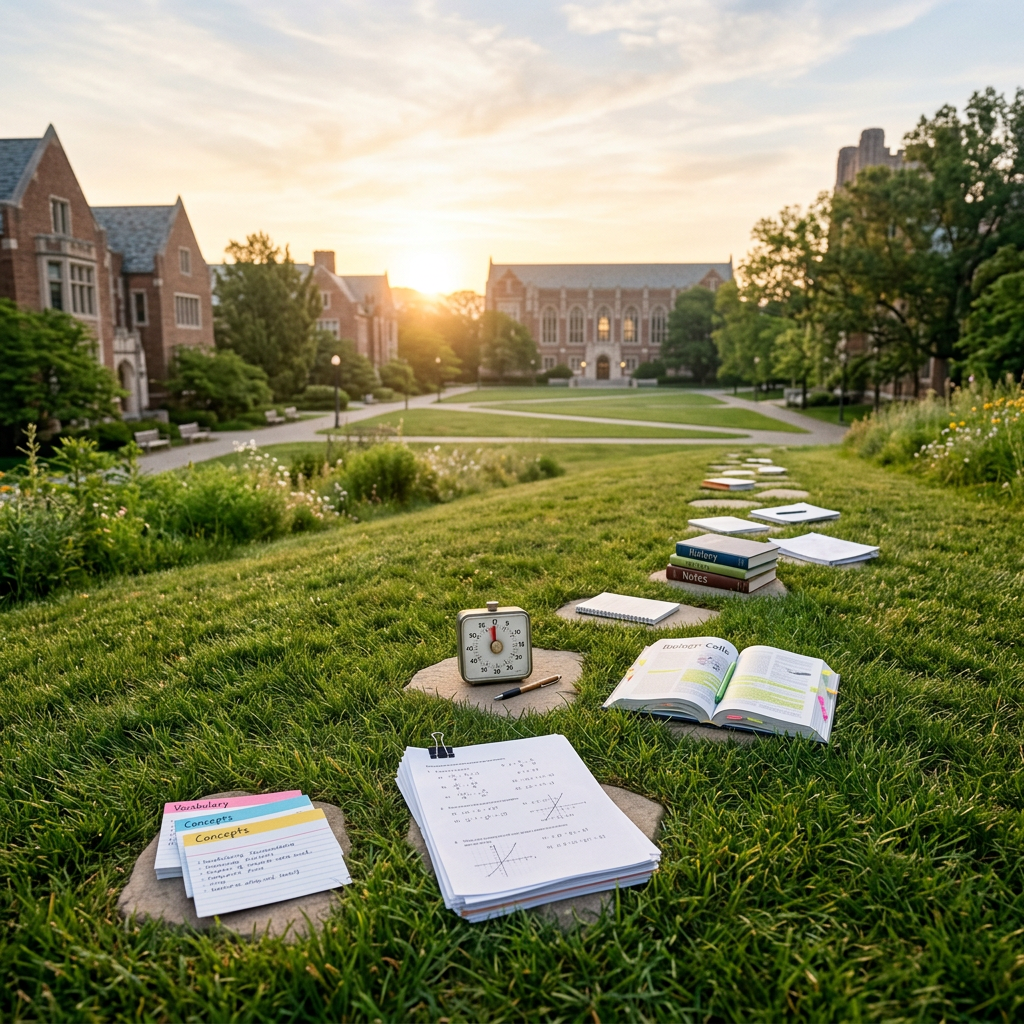
An A-Level revision timetable only works if you follow it. Many students create beautiful colour-coded plans that collapse within a week because they are unrealistic, too rigid or based on wishful thinking. A good timetable is not about packing in as many hours as possible. It is a realistic, flexible plan that makes the right work easy to start. Here is how to build one that survives real life.
Why Most Revision Timetables Fail
The usual reasons are easy to spot:
- They assume every day is free, ignoring lessons, work, sport and family.
- They list vague tasks such as “revise Economics” that are hard to begin.
- They leave no time for rest, so students burn out.
- They have no slack, so one missed session makes the whole plan collapse.
- They are never reviewed or adjusted.
A timetable that avoids these traps is far more likely to last.
Step 1: Start With Your Calendar, Not Your Wish List
Map out fixed commitments first: lessons, work, sport, family and sleep. What remains is your real available time. Planning around this avoids the classic mistake of scheduling ten hours of revision on a day you are in school until four.
Step 2: List Topics And Rate Them
Write down every topic in each subject and rate each as secure, shaky or weak. Give weaker topics more time and the earliest slots, but keep a little time for secure topics so they do not fade. This ensures your hours go where they will improve your grade most.
Step 3: Work In Short, Focused Blocks
Plan sessions of 30 to 50 minutes with short breaks. Name each block specifically, for example “Economics: write two evaluation paragraphs on inflation from memory“, rather than “revise Economics“. Specific tasks are far easier to start and easier to tick off, which builds momentum.
Step 4: Mix Techniques And Subjects
Rotate subjects across the week and use varied methods: recall, past questions, essay planning and feedback review. Studying one subject for an entire day tends to reduce focus and memory. See our revision techniques guide for ideas.
Step 5: Build In Spaced Review
Schedule quick reviews of earlier topics after a day, a week and a month. This turns revision into long-term learning rather than short-term cramming. For subjects heavy on facts, our guide on how to remember A-Level History dates and evidence shows spaced review in action.
Step 6: Protect Rest
Add sleep, meals, exercise and free time to the timetable before anything else. Tired brains retain less, and burnout costs far more time than rest does. A timetable that includes rest is far more likely to last.
Step 7: Leave Buffer Time
Life interrupts. Keep one or two flexible slots each week to catch up when plans slip, so that one bad day does not derail everything.
Step 8: Review And Adjust Weekly
Every Sunday, check what you completed, what you missed and what needs more time. Adjust the next week accordingly. A timetable is a tool that changes as your needs do.
An Example Weekly Timetable
Here is a sample week for a student with three subjects. Adapt the times to your own school day.
| Day | After school (1 hour) | Evening (45 minutes) |
|---|---|---|
| Monday | Subject A: recall and review | Subject B: practice question |
| Tuesday | Subject B: new content from lesson | Subject C: flashcards |
| Wednesday | Subject C: timed practice question | Free evening |
| Thursday | Subject A: essay plans | Subject B: feedback review |
| Friday | Light recall, then rest | Free evening |
| Saturday | Two 50-minute blocks: timed paper | Weekly review and adjustment |
| Sunday | One 50-minute block: weakest topic | Free |
Notice the pattern: variety, regular rest, one weekly timed paper and a weekly review.
How Your Timetable Should Change Over Time
| Stage | Focus |
|---|---|
| During the course | Short post-lesson recall, building a revision bank, keeping a feedback log |
| Start of the revision period | Diagnose weaknesses, create a detailed timetable and begin spaced review |
| Middle of the revision period | Heavy practice with exam questions, targeted work on weak topics |
| Final weeks | Full timed papers, light recall, feedback review and rest |
Timetable Mistakes To Avoid
- Scheduling every minute of every day
- Starting with your favourite subject and never reaching the hardest
- Planning large blocks when you work best in shorter ones
- Forgetting to include practice questions, not just content review
- Treating a missed session as failure rather than adjusting the plan
Are You Ready For The Full Plan?
Use this timetable as part of the wider Apollo Scholars A-Level study plan. If you are struggling to stay on track, read why your A-Level grades might not be improving and sharpen your approach with our exam technique advice. For an overview, see how to improve A-Level grades.
Frequently Asked Questions
How many hours a day should I revise for A-Levels? It varies, but many students do well with one to three focused hours on school days and longer blocks at weekends, increasing in the final weeks.
When should I start my revision timetable? Ideally 8 to 12 weeks before exams for a detailed plan, with lighter recall from the start of the course.
Should I revise one subject a day? Usually not. Mixing subjects across the week improves focus and retention.
What if I fall behind? Use your buffer time, reprioritise your weakest and highest-value topics and adjust the next week. Do not abandon the plan.
Apollo Scholars offers online 1:1 and small group online tuition, and our Store includes revision resources to support your plan. Book a session today.
Leave a Reply