
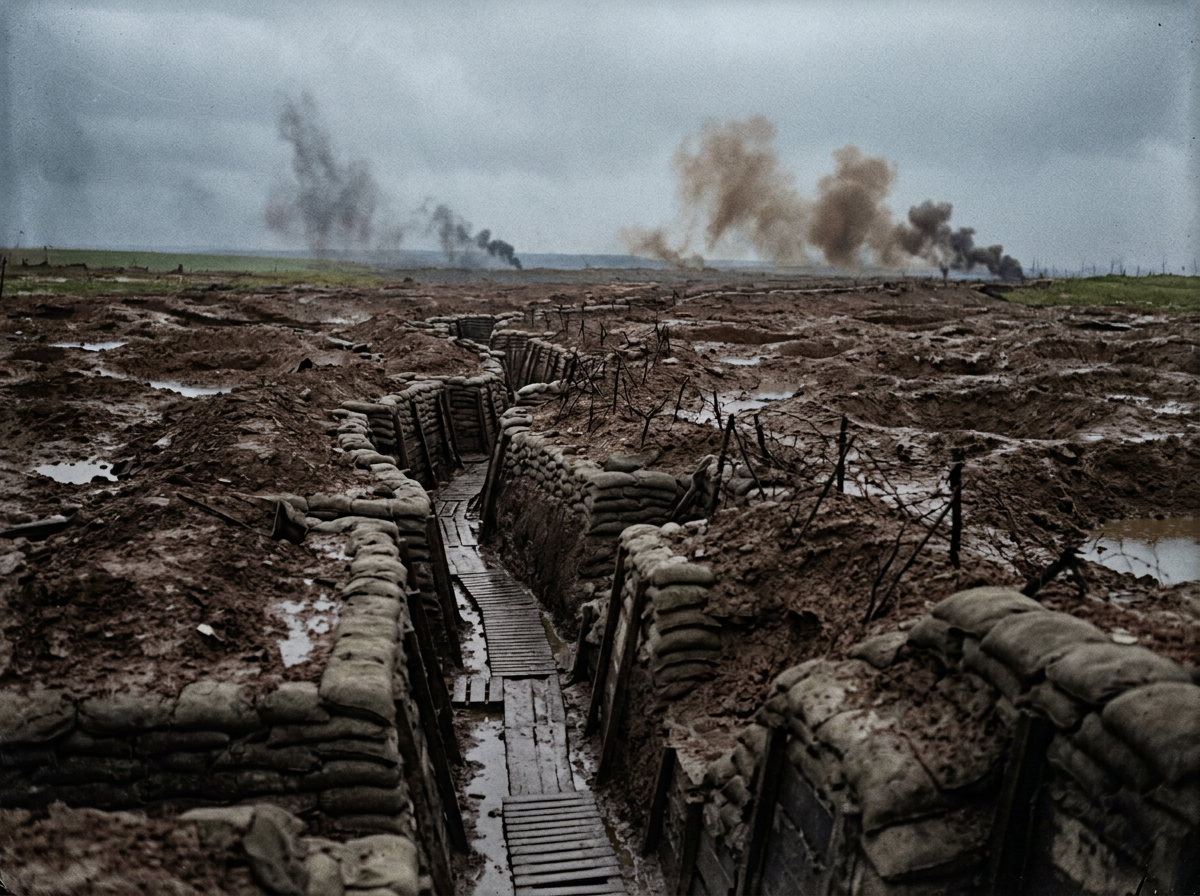
The First World War Western Front was a line of trenches stretching roughly 700 kilometres (about 440 miles) from the North Sea to the Swiss border, and for more than four years it swallowed millions of lives. It is the part of the war that most students picture first, and it is also the part most often misunderstood. Why did the war of movement planned in 1914 freeze into stalemate? Why did generals keep ordering attacks that cost so many lives? And were those generals really incompetent, or were they solving a problem nobody had ever faced before?
This guide explains the fighting from 1914 to 1916 in clear language, covers life in the trenches, Verdun and the Somme and gives you the evaluation needed for GCSE and A-Level questions on tactics, technology and leadership.
Part of our First World War Revision Guide series.
Table of Contents
- Before you start: why the Western Front mattered
- 1914: the Schlieffen Plan, the Marne and the race to the sea
- Life in the trenches
- Why stalemate? Technology, tactics and geography
- 1915: gas, deadlock and failed breakthroughs
- Verdun, 1916: the battle to bleed France white
- The Somme, 1916: the British Army’s baptism of fire
- Learning the hard way: tanks, artillery and new tactics
- Haig and the generals: lions led by donkeys?
- Evaluation: why did the stalemate last so long?
- Exam practice: questions and a model argument
- Your next step
Subscribe to get access
Read more of this content when you subscribe today.
Leave a Reply