
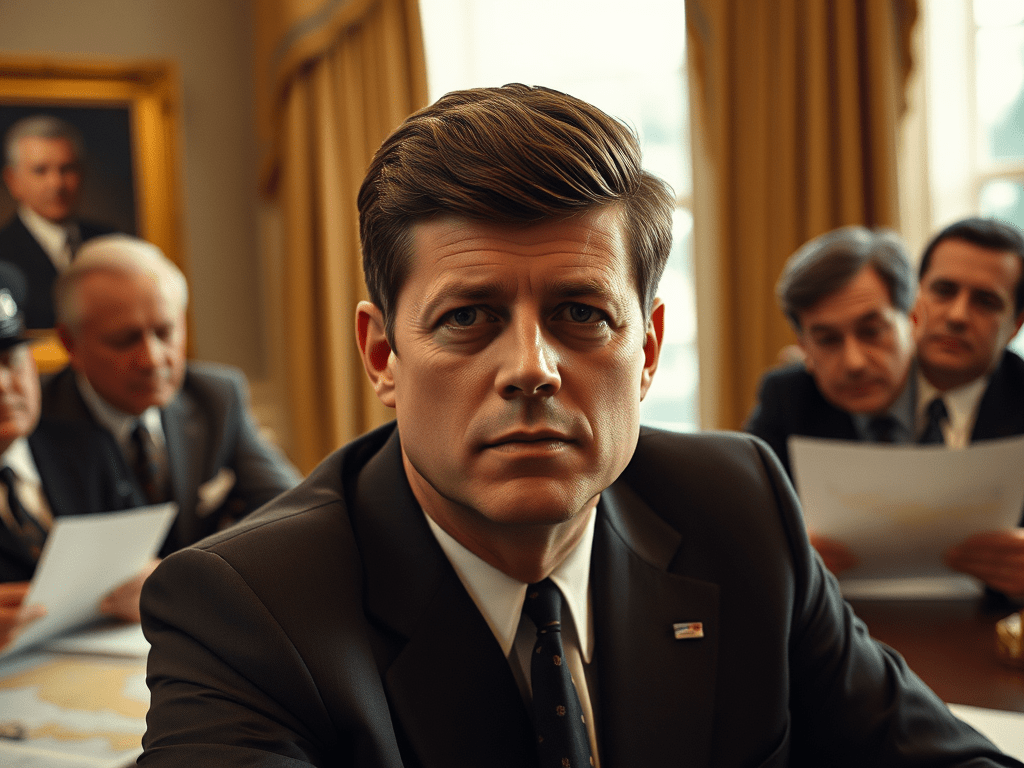
In October 1962, the world teetered on the edge of a nuclear catastrophe. For 13 days, the United States and the Soviet Union engaged in a perilous standoff during the Cuban Missile Crisis. The event marked one of the most dangerous confrontations of the Cold War. Both superpowers inched dangerously close to unleashing unimaginable destruction. At its heart, the Cuban Missile Crisis demonstrated the fragility of global peace. It highlighted the critical importance of diplomacy in averting disaster.
Follow us on Instagram, Facebook and LinkedIn.
FAQs
What was the Cuban Missile Crisis?
The Cuban Missile Crisis was a tense 13-day standoff in October 1962. This standoff was between the United States and the Soviet Union. It was over Soviet nuclear missiles placed in Cuba. It was one of the most critical moments of the Cold War, with the world fearing a nuclear conflict.
Why did the Soviet Union place missiles in Cuba?
The Soviet Union placed missiles in Cuba to counterbalance U.S. nuclear missiles stationed in Turkey and Italy, near the Soviet border. It was also meant to protect Cuba from a potential U.S. invasion, following the 1959 Cuban Revolution led by Fidel Castro.
How did the United States discover the missiles in Cuba?
The United States discovered the Soviet missile installations in Cuba on October 14, 1962, when a U.S. U-2 spy plane captured aerial photographs of missile sites under construction.
What was President Kennedy’s response to the Cuban Missile Crisis?
President John F. Kennedy decided to impose a naval blockade (called a “quarantine”) around Cuba. This was to prevent further Soviet shipments of missiles. He also demanded the removal of the existing ones.
How was the Cuban Missile Crisis resolved?
The Cuban Missile Crisis ended when Soviet Premier Nikita Khrushchev agreed to remove the missiles from Cuba. This was in exchange for a U.S. promise not to invade the island. There was also a secret agreement to remove U.S. missiles from Turkey.
What were the long-term consequences of the Cuban Missile Crisis?
The crisis led to the establishment of a direct communication hotline between Washington and Moscow to avoid future misunderstandings. It also paved the way for arms control agreements, including the Nuclear Test Ban Treaty in 1963.
Related | The Vienna Summit of 1961: A high-stakes Cold War encounter
The Roots of the Crisis
The Cuban Missile Crisis was the result of escalating tensions between the United States and the Soviet Union. These were two global superpowers locked in a bitter Cold War rivalry. The backdrop to this dangerous episode lies in the broader geopolitical landscape of the late 1950s and early 1960s. This period was marked by ideological conflict, arms races and covert operations.
In 1959, Fidel Castro’s revolution ousted the pro-U.S. government in Cuba, establishing a communist regime just 90 miles from American shores. The U.S., under President Dwight D. Eisenhower and later John F. Kennedy, grew increasingly alarmed by the growing Soviet influence in the Western Hemisphere. Cuba sought protection from the United States. It aligned itself closely with the Soviet Union. By 1962, the island nation had become a critical chess piece in the Cold War.
For the Soviet Union, led by Premier Nikita Khrushchev, deploying nuclear missiles in Cuba served multiple strategic purposes. It was not only a way to bolster Cuba’s defences but also a means to counterbalance the U.S. missile bases in Turkey, which were well within striking distance of the Soviet Union. The placement of missiles in Cuba allowed the Soviets to project power and potentially neutralise the U.S.’s perceived nuclear advantage.
As tensions grew, both the U.S. and Soviet Union became embroiled in a bitter and dangerous game of military posturing. This would bring the world to the brink of a nuclear catastrophe.
Related | The Cold War: Origins, Impact and Legacy
Discovery of the Missiles
On October 14, 1962, a routine reconnaissance mission over Cuba revealed a terrifying discovery. An American U-2 spy plane captured photographic evidence of Soviet missile bases under construction on Cuban soil. These medium- and intermediate-range ballistic missiles had the capacity to strike major U.S. cities, from Washington, D.C., to Dallas, with nuclear warheads, potentially killing millions of Americans within minutes of their launch.
Related | The Legacy of US President John. F. Kennedy: Achievements, Impact and Historical View
Upon receiving the intelligence, President John F. Kennedy was faced with an agonising decision. His options were limited and fraught with peril. A military strike on Cuba seemed effective in eliminating the missile threat. However, it could trigger a retaliatory response from the Soviet Union. This response could possibly escalate to a nuclear war. Yet, inaction was equally risky, as it would leave the U.S. vulnerable to a sudden and devastating nuclear attack.
Kennedy’s advisors, including Defence Secretary Robert McNamara and Attorney General Robert Kennedy, debated various strategies. After much deliberation, they decided to impose a naval blockade around Cuba. This blockade would prevent further Soviet military shipments from arriving. This action, referred to as a “quarantine,” was not an outright act of war. It was a firm message to the Soviets that their actions would not be tolerated.
Related | The Berlin Wall: A barrier between two worlds
The Standoff
The world held its breath as the naval quarantine was put into effect on October 22, 1962. In a nationally televised address, President Kennedy informed the American public—and the world—of the Soviet missile presence in Cuba. He also discussed the U.S. response. His words reverberated across the globe. He declared that any missile launched from Cuba would be met with a full retaliatory strike against the Soviet Union.
For the next week, global tensions mounted to an unprecedented level. U.S. warships patrolled the waters surrounding Cuba, while Soviet vessels approached, threatening to breach the blockade. Diplomats worked feverishly behind the scenes, exchanging messages between Washington and Moscow, seeking a resolution that could prevent the unthinkable.
The crisis reached its peak on October 27, a day often referred to as “Black Saturday.” An American U-2 spy plane was shot down over Cuba, and U.S. military forces were placed on DEFCON 2, the highest level of readiness short of actual war. Many believed that the U.S. and the Soviet Union were on the verge of nuclear conflict. This conflict could have wiped out entire cities. It could have led to untold devastation across the globe.
Yet, even as military forces prepared for the worst, diplomatic efforts continued in earnest. Kennedy and Khrushchev both recognised the catastrophic consequences of nuclear war. They were determined to find a solution. This was despite the intense pressure from hardliners within their respective governments.
Resolution and Aftermath
Diplomacy ultimately prevailed. On October 28, 1962, Soviet Premier Khrushchev agreed to remove the nuclear missiles from Cuba in exchange for a U.S. promise not to invade the island. In a secret deal, Kennedy also agreed to remove U.S. nuclear missiles from Turkey, though this aspect of the agreement would not be made public until much later.
The resolution of the Cuban Missile Crisis marked a turning point in Cold War relations. Both superpowers recognised the dangers of nuclear brinkmanship. Efforts were soon made to prevent future crises from escalating to such dangerous levels. A direct communication line, known as the “hotline,” was established between Washington and Moscow. This line allowed for faster and more direct communication between the two leaders in times of crisis. The Cuban Missile Crisis spurred negotiations. These negotiations led to the signing of the Nuclear Test Ban Treaty in 1963. This was a key step in the effort to curb the nuclear arms race.
In retrospect, the Cuban Missile Crisis is often seen as a triumph of diplomacy over military aggression. However, it also serves as a cautionary reminder of how close the world came to disaster. The lessons of the crisis continue to resonate today. Nuclear powers navigate a world where the stakes of conflict remain dangerously high.
Lessons from the Brink
The Cuban Missile Crisis provides a powerful example of the perils of miscalculation, miscommunication and brinkmanship in international relations. For historians, political scientists and policymakers, the crisis remains a case study in crisis management. It highlights the importance of diplomacy in averting catastrophe.
The events of October 1962 offer timeless lessons about the risks of escalation. They also highlight the value of back-channel diplomacy and the essential role of leadership in moments of crisis.
How Apollo Scholars Can Help
Understanding key historical events like the Cuban Missile Crisis is crucial for students preparing for GCSE and A-Level exams. At Apollo Scholars, we provide expert tutoring in history. We ensure students gain a deep understanding of complex events through tailored lessons. Whether you’re grappling with Cold War diplomacy or major world conflicts, we can help you. We offer online tutoring. We also provide location-based sessions in areas such as Addlestone, Cobham, Woking and more.
Book your online or in-person history tuition session today.
Unlock our exclusive resources in our Mission Control hub.


Leave a reply to The American Century: How the United States Shaped the 20th Century – Apollo Scholars Cancel reply