
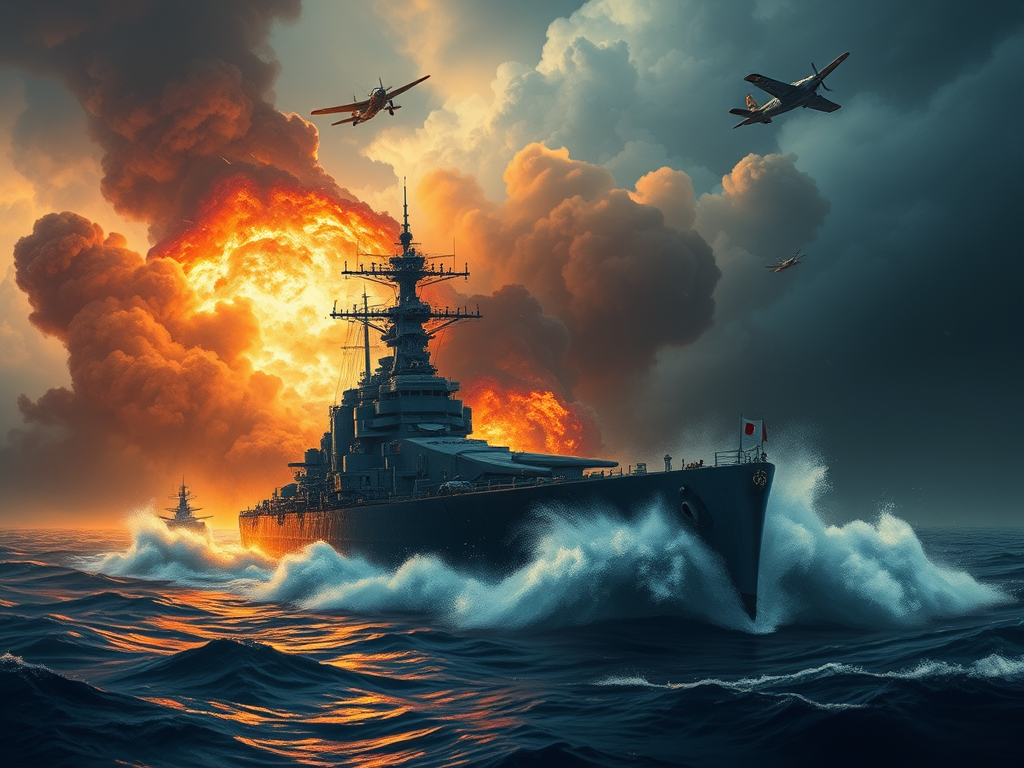
On 7 December 1941, Japanese forces launched a surprise attack on the United States naval base at Pearl Harbour, Hawaii. As a result, the attack inflicted major losses on the US Pacific Fleet and marked a crucial turning point in the Second World War. Furthermore, it brought the United States directly into the conflict and dramatically changed the balance of power.
The following day, US President Franklin D. Roosevelt told Congress:
“Yesterday, December 7, 1941 – a date which will live in infamy – the United States of America was suddenly and deliberately attacked by naval and air forces of the Empire of Japan.”
For GCSE and A Level students, Pearl Harbour is an important case study in how political tensions, resource needs and strategic decisions can change the direction of world events.
Why Did Pearl Harbour Happen? – The Causes
The attack did not happen without warning. Instead, several long-term and short-term factors gradually increased tensions between Japan and the United States. Together, these factors help explain why Japan ultimately launched the attack on Pearl Harbour.
- Japanese Expansion
- Japan wanted to build a larger empire in Asia and the Pacific to gain access to resources like oil, steel and rubber.
- In the 1930s it had expanded into Manchuria and China, alarming the United States and other powers.
- Economic Tensions
- The US disapproved of Japanese expansion and responded with economic sanctions.
- By 1941, America had stopped exporting oil to Japan, a serious problem since Japan relied heavily on imports.
- Diplomatic Breakdown
- Talks between Japan and the US continued into late 1941, but neither side would compromise.
- Japan’s leaders felt that securing resources quickly was essential, and some believed striking the US fleet would prevent American interference.
What Happened on 7 December 1941? – The Attack
The Japanese plan was to damage the US Pacific Fleet enough to allow Japan to expand across Asia without resistance.
- The Attack Force
- Japan sent six aircraft carriers with over 350 planes to strike Pearl Harbour.
- The attack began just before 8am local time.
- The First Wave
- Battleships and airfields were targeted.
- The USS Arizona was destroyed after being hit by a bomb, with heavy loss of life.
- The Second Wave
- Airfields and shipyards were attacked to reduce America’s ability to respond quickly.
- Results
- Eight US battleships were damaged or sunk.
- Around 2,400 Americans were killed and over 1,000 were wounded.
- Japanese losses were far smaller, though they did lose planes.
Importantly, America’s aircraft carriers were not in port, meaning the most vital parts of the fleet survived.
Key Figures
- Japan
- Admiral Isoroku Yamamoto: Designed the plan for the attack.
- Admiral Chuichi Nagumo: Commanded the strike force.
- United States
- President Franklin D. Roosevelt: Guided the political response.
- Admiral Husband Kimmel and General Walter Short: Military commanders at Pearl Harbour.
Consequences of Pearl Harbour
- US Entry into the War
- On 8 December 1941, the United States declared war on Japan.
- This ended American isolation and brought a major new power into the conflict.
- Global Impact
- Within days, Germany and Italy declared war on the US. America now fought in both the Pacific and Europe.
- The US economy and military strength quickly became central to the Allied war effort.
- A Miscalculation by Japan
- Japan hoped the attack would discourage the US, but instead it had the opposite effect.
- American public opinion was united in support of entering the war.
Why It Matters
For GCSE and A Level students, Pearl Harbour illustrates:
- How conflicts over resources and territory can escalate into war.
- The role of strategy and surprise in modern warfare.
- How a single event can act as a turning point with global consequences.
Conclusion
The attack on Pearl Harbour was a significant turning point in world history. Most importantly, it directly led to the United States entering the Second World War, which in turn had major consequences for the eventual outcome of the conflict. As a result, America’s entry transformed the balance of power and strengthened the Allied war effort.
As Roosevelt famously declared, 7 December 1941 was “a date which will live in infamy.” Ultimately, the attack demonstrates how decisions made by governments and military leaders can dramatically alter the course of history.
Revision Tip: In exams, do not simply describe what happened. Instead, explain why the attack occurred and how its consequences reshaped the Second World War. By linking causes, events and consequences, you can demonstrate a much stronger understanding of the topic.
Leave a Reply